When we think of the 1960s we often think of The Beatles, Woodstock and the summer of ’69. But it wasn’t all free love and rock n roll.
The Cold War between The United States of America and Soviet Russia was at its height and the threat of nuclear war was a very real prospect for people all around the world.
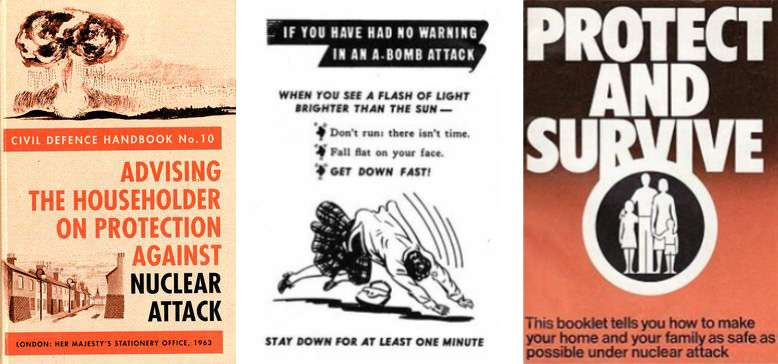
Leaflets and posters like the ones shown here were a common sight – as far as the general public were concerned, a bomb could drop at any time – and they would have no more than 4 minutes to prepare for it.
The threat of nuclear war was so real 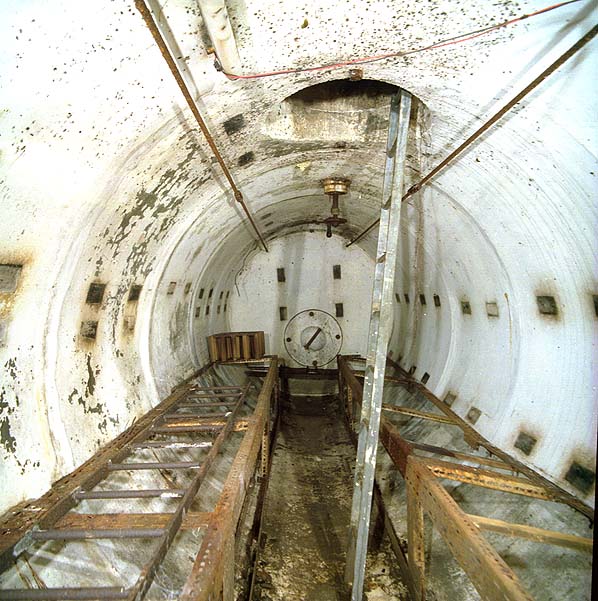 that the British government built hundreds of fallout shelters around the country and some more well-off home owners actually had their own private shelters installed on their property. The shelter pictured was built by Fall Out Shelters (Deal, Kent) in 1962 and is in the back garden of a cottage in a village called Pluckley. The current owner used it as a wine cellar until the damp got to be too much of a problem. Photo credit Nick Catford.
But the purpose of this article is to 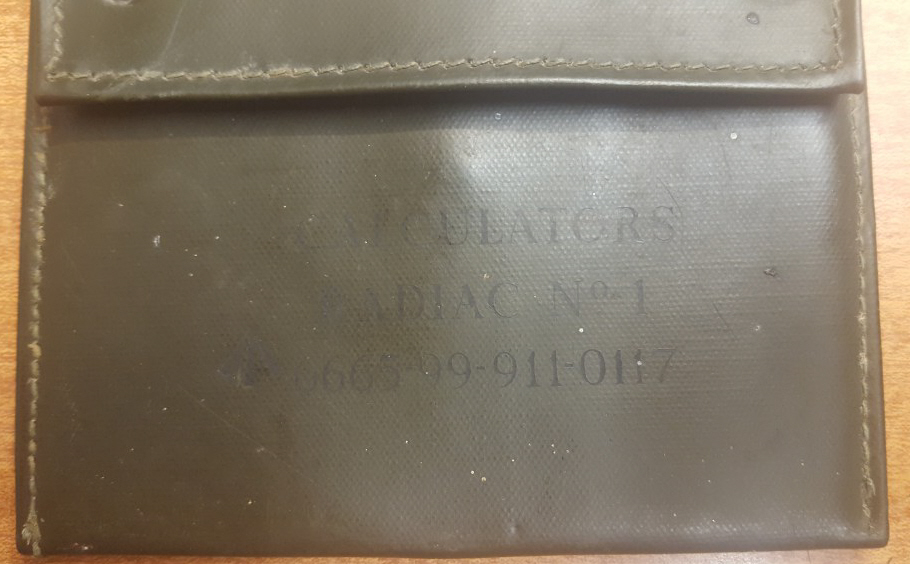
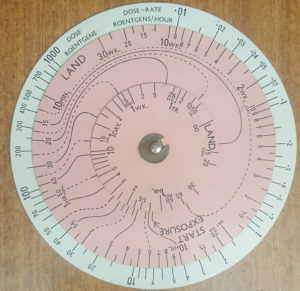
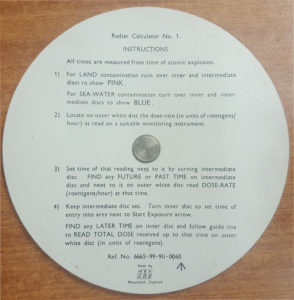
showcase an interesting item I was shown the other day. The RADIAC Calculator No. 1 was produced by a company called Blundell Rules Ltd in the early 1950s. The purpose of the item is to determine when it might be safe to emerge from a fallout shelter by calculating how badly contaminated your surrounding area will be at certain times after a nuclear explosion.
An ebay search shows that it is not a particularly rare item, but I have never seen one before.
The disc can be taken apart and reassembled in a different configuration depending on whether the radiation was caused by a “sea burst” or a “land burst”.
The disc is small and robust and the instructions are clear but whether or not it works remains a bit of a mystery. Luckily, nobody ever had to test whether this little calculator was accurate or not.
The Cold War eventually died down and for the current generation, it’s difficult to imagine that the threat of nuclear war was ever a reality.

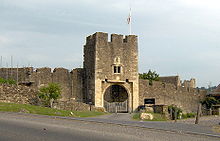 Sir Thomas Hungerford of Rowden (died 1469), the eldest son of Robert Hungerford, 3rd Baron Hungerford, lived chiefly at Rowden, near Chippenham, Wiltshire. After giving some support to Edward IV and the Yorkists, he joined in Warwick’s conspiracy to restore Henry VI in 1469, was attainted, a
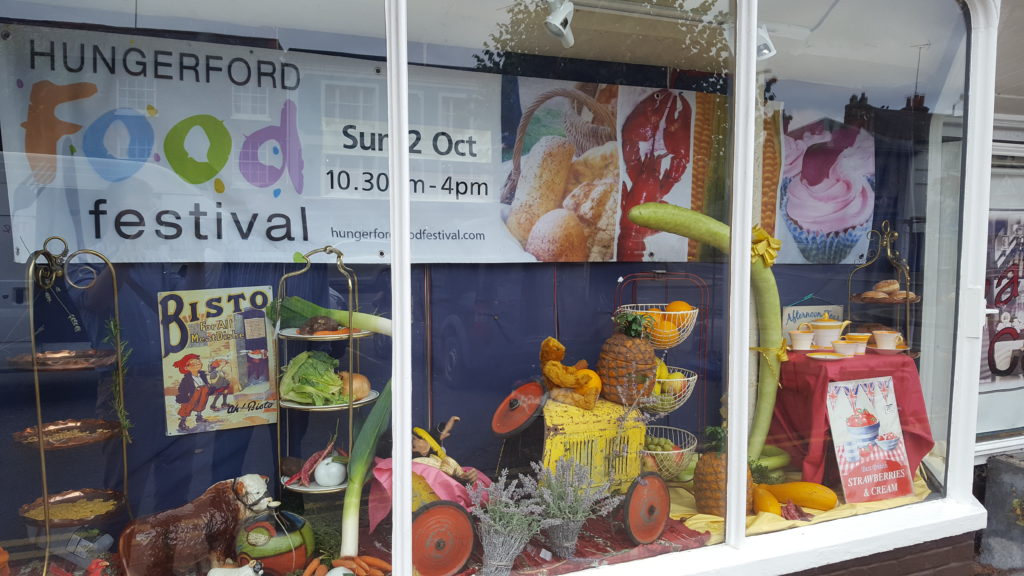
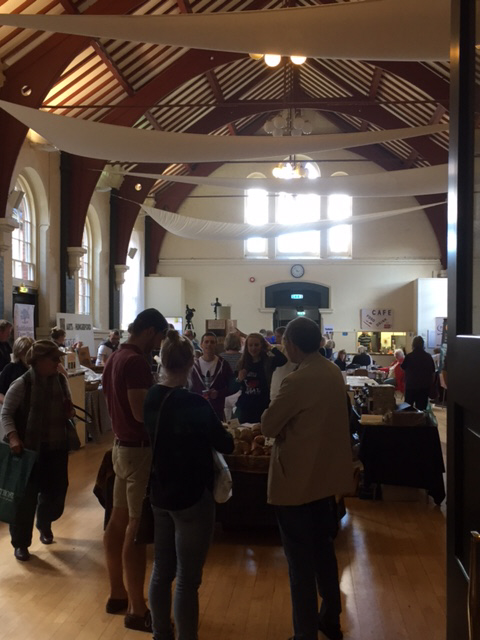
 Immediately outside the Arcade,
 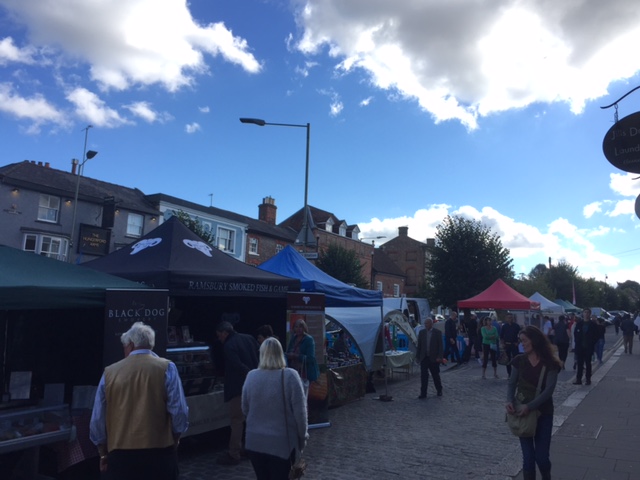 Home and overseas customers excitedly snapped away with their cameras and thoroughly enjoyed themselves. In fact, everyone had a great time. I think there will be a lot of excess baggage going through the airports on their way home.

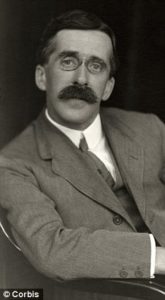
 Arthur Mee (1875-1943). For those who have not gathered his acquaintance, he was a British writer who is perhaps best known for his Children’s Encyclopaedia and his massive topographical and historical book series which stretched to some forty-two volumes. Arthur Mee’s guide to the counties. Some people saw the series as a modern day Domesday Book and who am I to disagree.
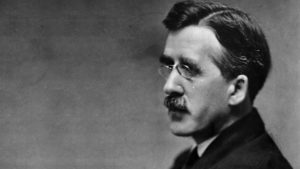 My day in Porlock was interrupted when a rather unpleasant storm rolled in off of the Bristol Channel and I was forced to take tea with Arthur in a nearby café. We chatted for quite a while and parted promising to meet again sometime in the future.
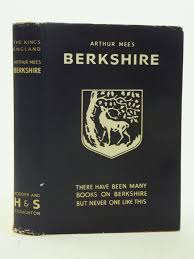 You can recognise our little town even from these bite size pieces and that it what the Mee books are all about. It you want more detailed histories then there are plenty of books on the market including some excellent ones written about Hungerford. Each of us has a favourite county, whether we were born there or have happy memories of the county. Arthur’s books cover most of these counties. The contents appear to be in alphabetical order (which makes life quite easy) and indeed, the Berkshire book starts with Abingdon (then in Berkshire until the madness of 1974) and concludes in Yattendon (where Robert Bridges once lived).
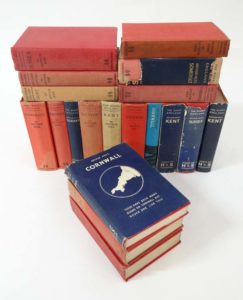 re some county guides rarer than others?
 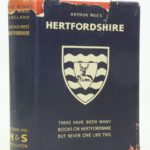 In 1939 the editions ran from Bedfordshire and Huntingdonshire to The West Riding of Yorkshire. There was also an introductory volume called Enchanted Land (which sadly I have not seen for quite a while). In these fast days we often look at the countryside and wish we had time to stop the car (or get off the train) and just stroll. Maybe with a companion or someone closer. To just stop in the middle of a small hamlet and share its history. To be in the deep countryside. I am lucky for I have been an acquaintance of Arthur for many years and he has helped me to see things through his eyes and after that my own.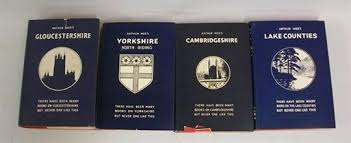
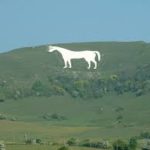 I must be off now as I am visiting the Westbury White Horse. I have packed Arthur’s guide to Wiltshire and hope that the summer keeps its good temper.
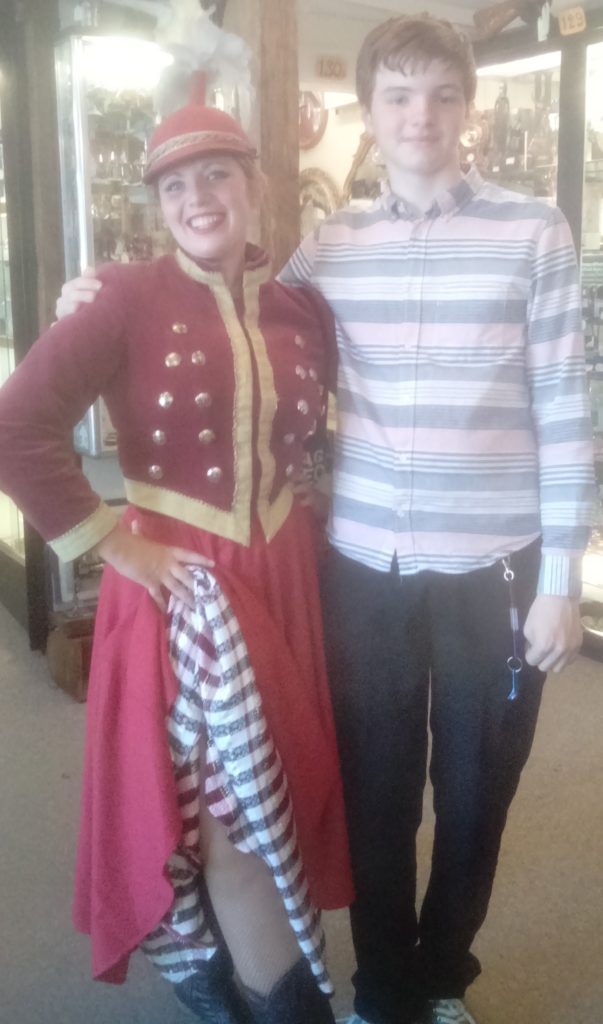
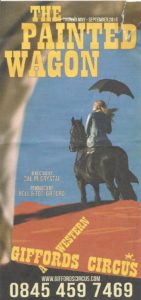 The Painted Wagon rolled onto Marlborough Common on the 25th August and will be there until the 5th September 2016. It is a spectacular show and wherever you are, take a look on their website by clicking on this link