Midwinter Modern melamine teaware
The chemical melamine has many uses; from an ingredient in some mixtures of concrete, to an additive in industrial fertilisers. But mix it with formaldehyde and it becomes an incredibly strong, light and easily moulded plastic.
The relative light weight and strength of melamine led to its use as dinnerware aboard some ships in the US Navy – which in turn led to its use in millions of homes in the US and here in Great Britain.
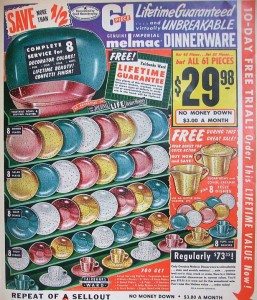
1950s advert for “Unbreakable” Melmac
During the Second World War, metal was expensive. But aboard a Navy ship, it is my assumption that dinner plates falling on the floor was a very common occurrence, so everything had to be made out of tin – a light-weight and durable metal. As I mentioned, metal was at a premium and an alternative was needed. I’m sure they tried with other plastics such as bakelite, but it was brittle and didn’t stand up to repeated exposure to moisture and heat. This is where melamine comes in. The manufacturers touted it as “Break resistant” and “Virtually unbreakable” and that turned out to be quite accurate which made it the perfect material to use for military dinnerware.
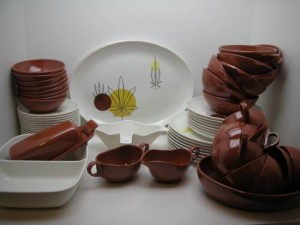
Rare Fantasy dinner service designed by Joan Luntz
After the war, designers such as Russell Wright and Joan Luntz worked with companies in America to bring melamine into the nations kitchens with modern designs and bright colours. It wasn’t long before the craze made it to this side of the Atlantic and for some time, ceramics companies such as Midwinter were so worried about melamine taking over completely, they released their own range of modern dinner sets using the revolutionary material.
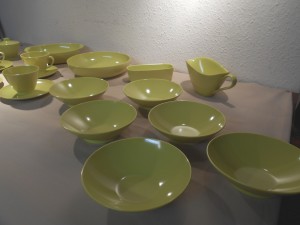
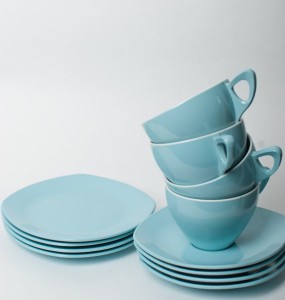
1960s melamine dinner set found in The Arcade
The set I have taken pictures of here is most probably of 1960s English origin. The box seems like it is original as all the pieces fit nicely inside internal compartments but I am unable to find any other evidence that Royal Tudor Ware ever made any melamine crockery. But as I mentioned before, some English ceramics companies did produce melamine for a short time to try to keep up with a changing market.
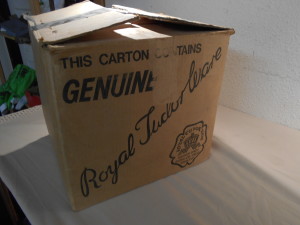
Original box for my melamine dinner set?
As with all things, fashion changed and a move back to the traditional china and ceramic dinnerware was inevitable. By the 1970s melamine had been relegated from the dining room to the picnic basket and the camper van (which is where I keep mine!). But today, if you were to do a quick search on eBay or Etsy you will find some of the big names in melamine are making a comeback. Mid-century design hasn’t been this popular since… well, since the mid-century!
Alex Rogers



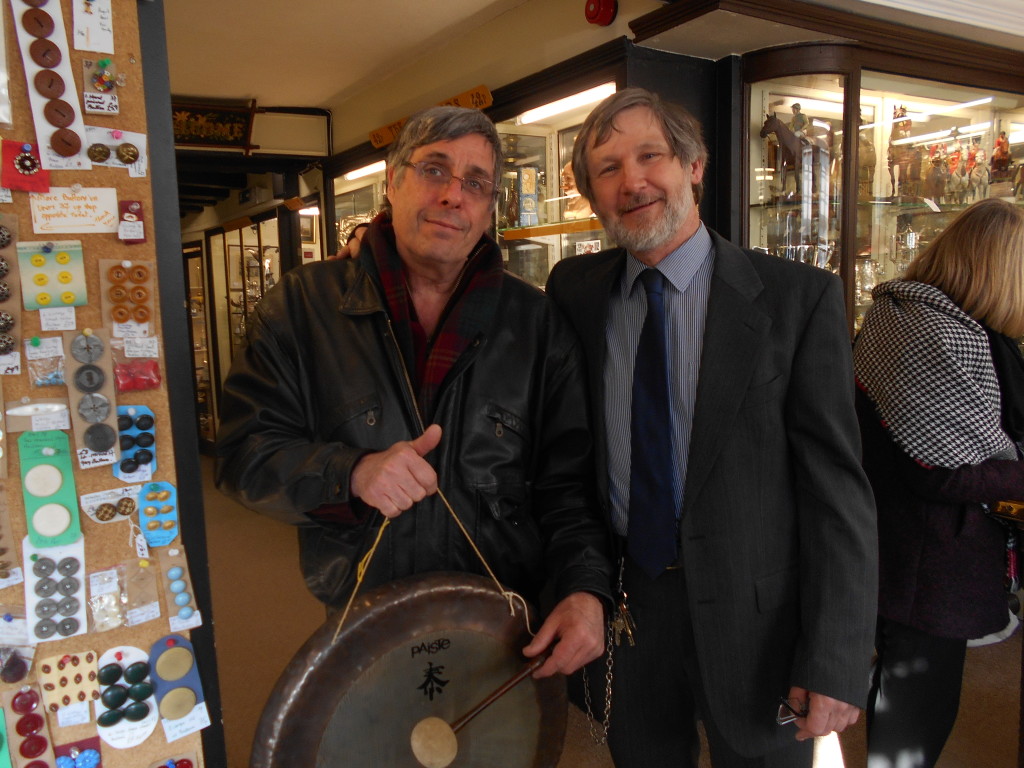

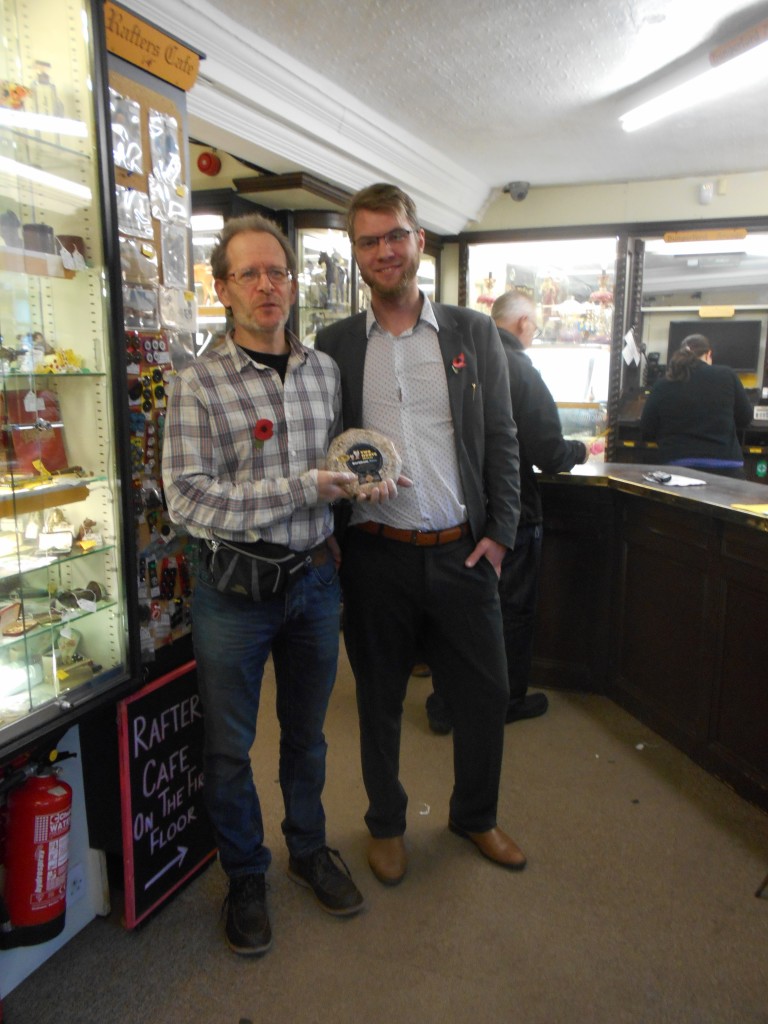 Tony Hammond, otherwise known as The Cheese Agent.




 Mr Punch was beginning to make inroads into the ancient building. Was he a Fifth Columnist and what was the reason that he was beginning to show his face in our fair town? But there was no need to worry, as his mission was to amuse and educate us about trifles past and if the subject was serious, then make serious points but with the trace of a smile on his face.
 It was also obviously sold in many other outlets but this was my memory when I worked at main line termini during the 1970s.
 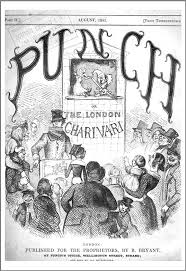 Punch or The London Charivari to give its other name, was founded in 1841 by a certain Henry Mayhew and his friend the engraver, Ebenezar Landells and at once helped to change our perception of the word cartoon which, in its modern meaning, supposes a humorous illustration away from the lesser known artistic meaning.
 The title was taken from the beloved glove puppet and became a favourite of the Victorians as it favoured sophisticated humour and was not grossly offensive like other magazines (this said, Punch did share Charles Kingsley’s view of our Irish neighbours which historically is to be regretted).
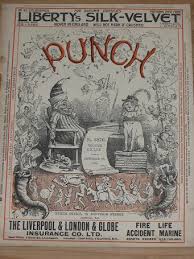 It sat comfortably with The Times and The Westminster Review and because of this, its readership spread and spread.
  By the freewheeling 1960s, I suppose that Mr Punch’s humour was seen as old hat, a humour enjoyed by the older generations.
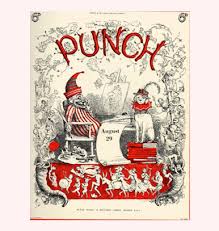 Beware, Mr Punch sometimes wears his best coat and often appears behind stiff handsome covers which enclose a years’ worth of his magazines.
 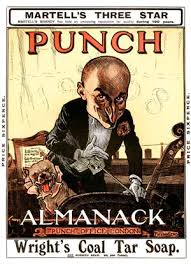 Quite recently, I purchased a number of copies of Punch dating from the 1930s and they are a joy to read.
  For the present then, let us preserve Mr Punch and ensure that he is around for many years to come.