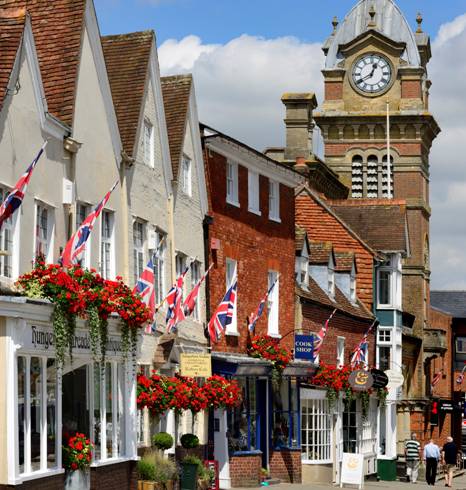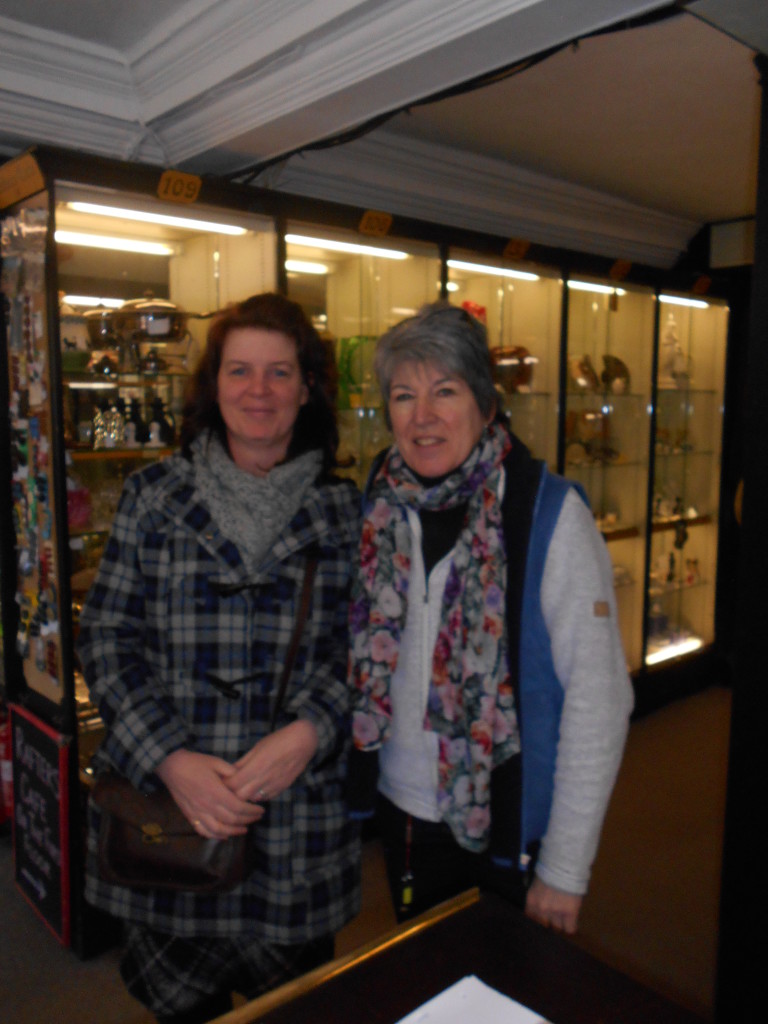
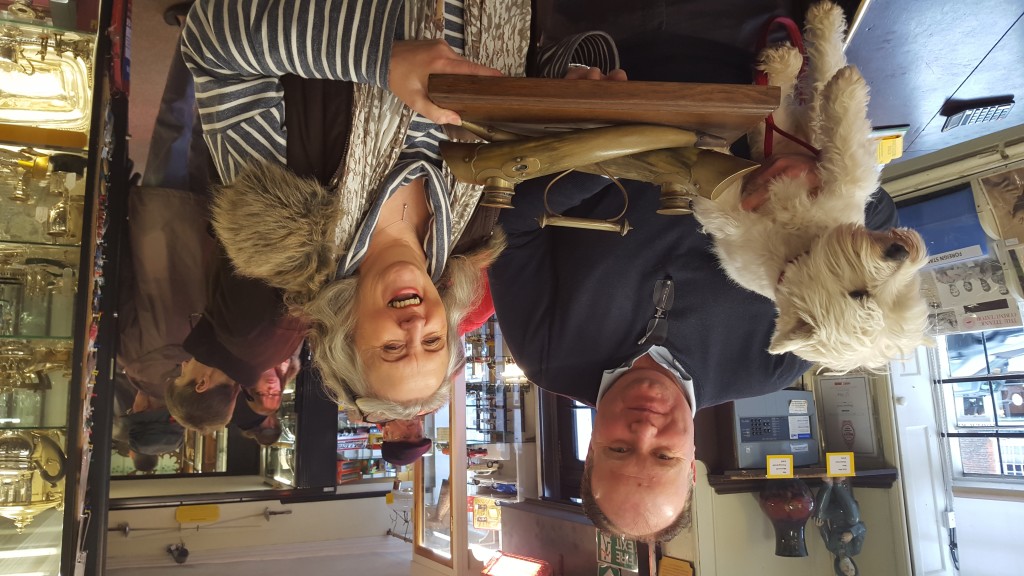
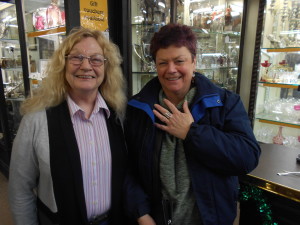
Wendy with stallholder, Kathy Coen
At Hungerford Arcade we always look forward to meeting lovely people with a story to tell and Wendy Dobbenie has a wonderful one about how she makes animals and scenes from 1960’s and 1970’s crockery into mosaic art. Here you can see Wendy with stallholder Kathy Coen and below with Arcade co-owner, Adrian Gilmour. Further down, you will see the wonderful work Wendy does with the crockery in making her mosaics.
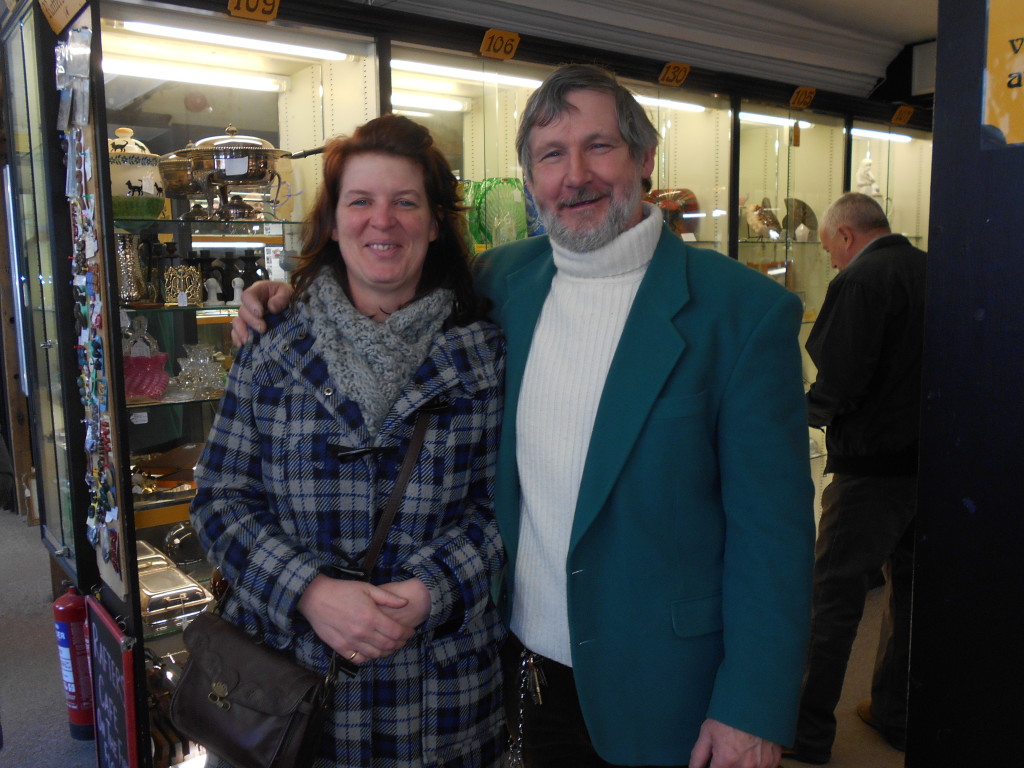
Wendy with Arcade co-owner, Adrian Gilmour
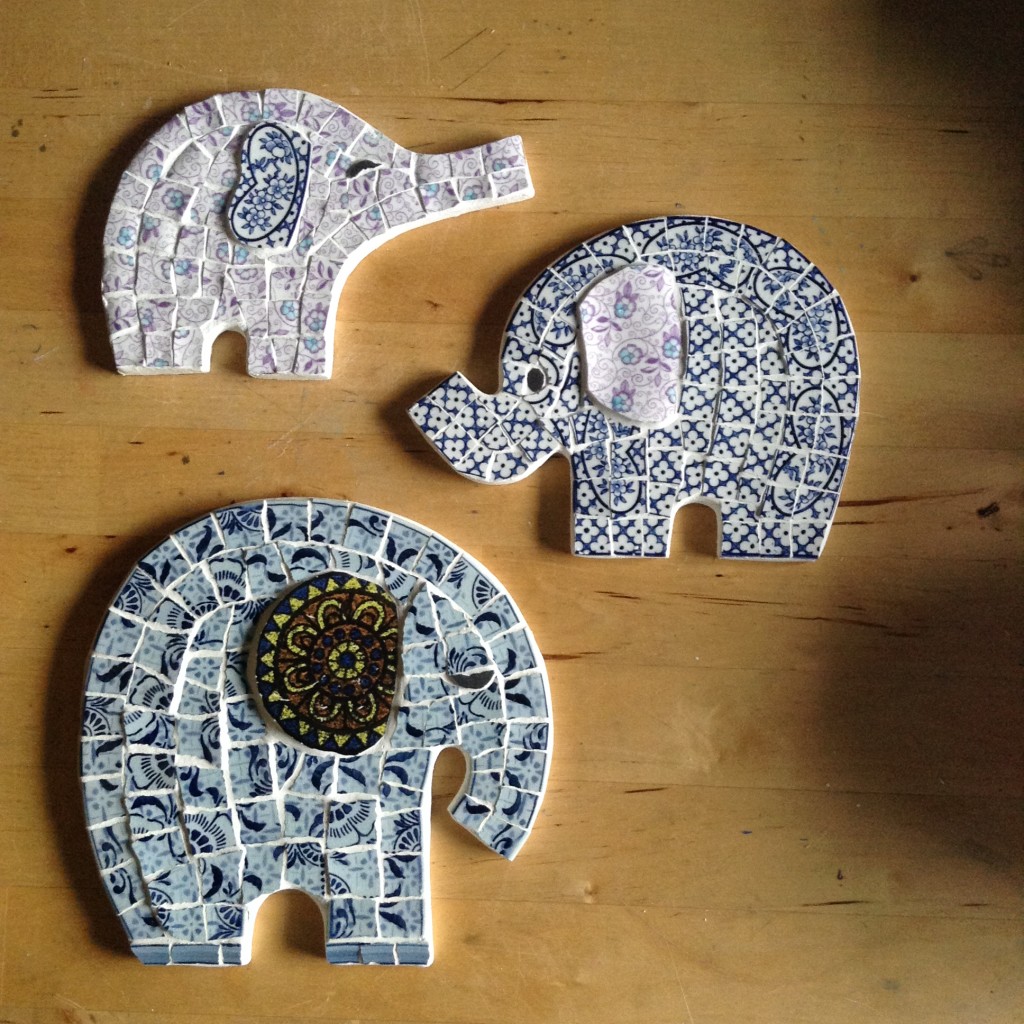

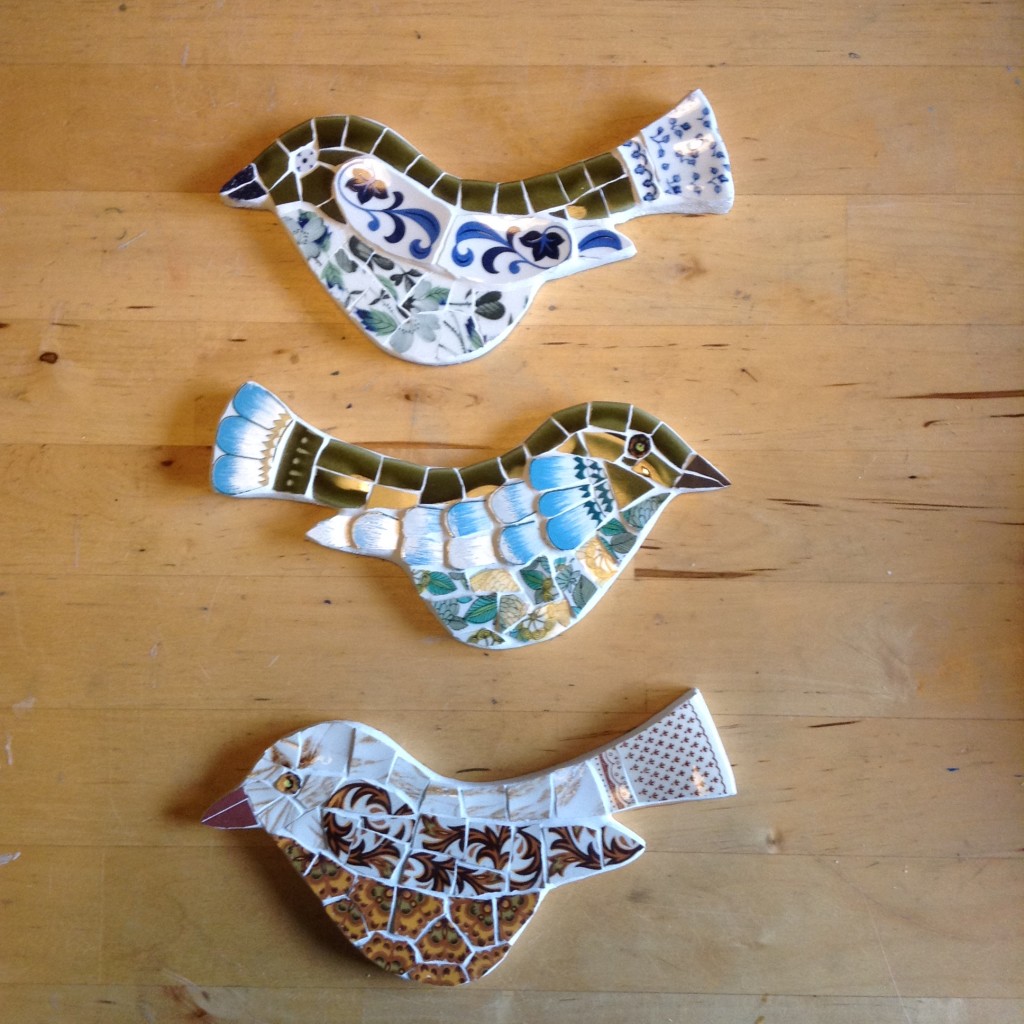
Wendy started doing mosaics a few years ago purely as a hobby and something to do in her spare time. Wendy said “I enjoy de-stressing by smashing up crockery and creating new pieces with it”. As you can see, it works!



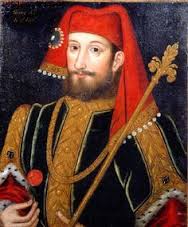 What is noticeable when one is in Hungerford, are the references to a certain John of Gaunt. There is an inn named after him near the two rivers as well as a school that bears his name on the hill above the town. But who was John of Gaunt and why is his name so intertwined with the history of Hungerford? To find out we will have to go back to the reign of Edward the Second (1307-1327).
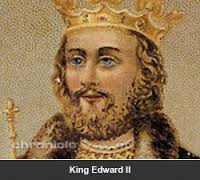 It is known that the King visited the town on June 19th 1308. But let us jump forward some fourteen years as this is a record of history only. A certain Thomas Earl of Lancaster and Leicester who was beheaded for treason in Pontefract in 1322 and had his properties forfeited to the Crown. The King however, learnt that Thomas’ widow, Alice, had Hungerford settled on her after her husband’s death along with the profits from the manor.
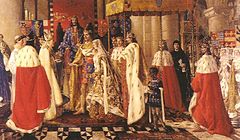 John and Blanche were married at Reading Abbey on Sunday, the 19th of May 1359, which although very much changed, still exists and is well worth a visit. I have recently read an account of the marriage in a book called The Marriage of John of Gaunt and Blanche of Lancaster at Reading Abbey (1917), which apart from giving an account of the wedding, gives pen-pictures of both John and Blanche which I will share with you.
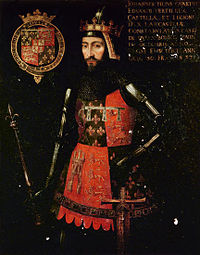 John of Gaunt was the fourth son of King Edward the Third. He was just nineteen years old when he married his cousin Blanche, the second daughter of Henry Duke of Lancaster. John is remembered as a tall and soldier-like man with a determined yet thoughtful countenance. Chaucer spoke of him as
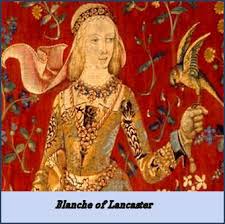 Blanche is noted as being a beautiful English blonde (An English Rose), who was tall like her husband and graceful in disposition. She was soft of speech and must have made an impression on Chaucer as she is mentioned in his Book of the Duchesse as follows;
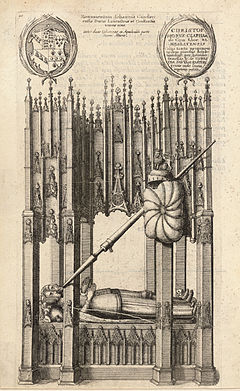 The description is typically Chaucer’s and with most of his work, can be read in a number of ways. But Blanche, who was an early patron of the poet, would I believe, have been amused (if not flattered) by his description of her. Blanche, who was a years younger than John and in the ten years of their marriage, bore him five children, one of whom married the future King of Portugal. Sadly, Blanche died of the plague on the 12th September 1369, her sister and father having already succumbed to the disease. She was buried in St Paul’s Cathedral and was later joined by John on his death in 1399.
 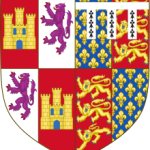 Upon his marriage to Blanche, John inherited North Standen as well as Hungerford Manor and Sandon Fee (a rural estate that lay around the town). He also held the manor of Charleton (Charnham Street) as well as the Overlord-ship of nearby Eddington
 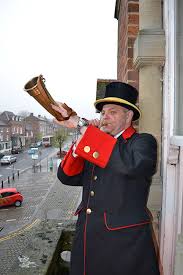 There is also the John of Gaunt Horn, which is supposed to have been made to guarantee the previously noted rights. The horn has Hungerford on one side with the word Actel (or Astel) on the other along with the crescent and star, which is now recognisable as the badge of the town. This said, the horn dates from the fifteenth century (John died in 1399), but what is known, is that for some two hundred years (1365 -1565), Hungerford enjoyed John of Gaunt Privileges with the profits of markets and fairs as well as the free fishery being a right.
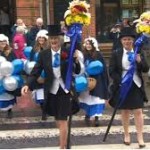 Why this came to an end is the subject for a different article, but whilst you cannot still fish freely on the Kennet, the sight of the yearlings grazing freely on Hungerford Common and the annual Hocktide (Tutti Day), gives a clue to the town’s past.
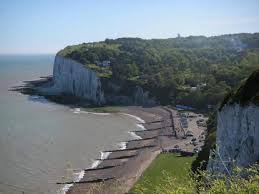
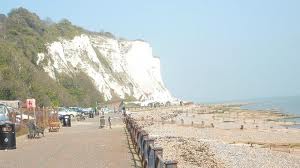 The answer is St Margaret’s Bay in Kent which I had the pleasure to visit with my lovely wife a few days ago during our holiday in Kent. St Margaret’s Bay, where is that you may ask? The answer is just a stone’s throw from the town of Dover. Basically it is just a small bay around about three miles from the famous town. Yet it could not be more different. Whilst Dover (which I have always liked) is currently a rather sad and shabby coastal town, St Margaret’s Bay and the village above the bay St Margaret’s at Cliffe are typically Kent tranquil. This is the Kent of our childhood. There is one shop and a number of pubs. The buses do not run on time. And you need to be pretty fit to survive the climb between the beach and the village above (it is indeed a three part village if you
 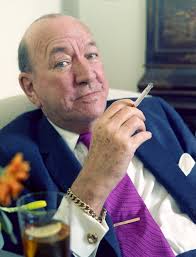 But enough of this geography. Why does this now obscure bay still have a claim to fame? Well it is not that it was the last place on the mainland to be bombed during World War One. It was because of a certain Noel Coward who lived in St Margaret’s Bay between 1945 and 1951. He actually owned another house Goldenhurst which had been requisitioned by the army and in 1945. He purchased White Cliffs which was in pretty bad shape at the time as it had been torn apart by British and Canadian troops in preparation for D Day.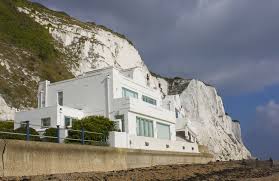
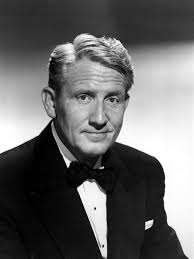 After the house had been repaired, the guests began to arrive and soon the small bay began to be known by the name Piccadilly on Sea (as it had been named many years previously). Celebrities such as Gertrude Lawrence and Daphne Du Maurier were frequently seen as was the actor Joseph Cotton. But, it was the arrival of the Hollywood stars Spencer Tracy and Katherine Hepburn which attracted the attention as they would often drive down from London see Coward and his friends. Kate was also famed for her morning dips in the sea (often in freezing weather) which she undertook on a regular basis. I
  actually paddled in the sea there (with great difficulty as it is very rocky and the pebbles were not all that kind to your feet) and can assure you, that even in July, the waters were
 During his time at White Cliffs, he worked on Blithe Spirit and he rewrote This Happy Breed and Brief Encounter so that they could be filmed (although I think This Happy Breed does predate his stay).
 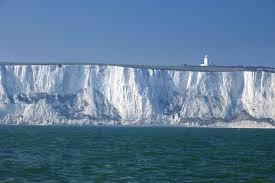 His other memorable creation Chitty Chitty Bang Bang, was also partially set in Kent, when the famous car flew to the nearby Goodwin Sands where the Potts family enjoyed a picnic in the middle of the channel. Today, in my view, St Margaret’s Bay is full of ghosts (especially if you are aware of the history of the area). As you walk towards the beach on the lane above the only inn, there are the remnants of a wall built during Napoleonic times to help defend the area. This is a reminder of how close St Margaret’s Bay is to France (which is visible on most days). I am told that this is the nearest point on the English mainland to our continental neighbour (just over twenty miles) and obviously would have been an early calling point should an invasion have occurred.
 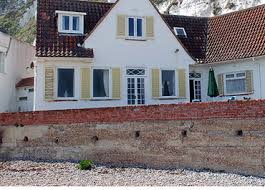 located in the area have been removed, one can still clearly see the wartime defences in situ (there is an accessible pill box located at the Dover end of the bay). This is haunting enough, but what I found most haunting was the presence of the modernist houses at the far end of the bay which initially hide White Cliffs. In a way it is odd to see them there right on the beach and when one gets closer
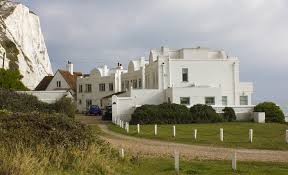 White Cliffs, when I visited it was empty and obviously had been a little changed by owners since 1957. I looked over the wall onto the terrace (now totally empty) and thought of all the parties and gatherings that must have taken place there. I looked at the beach, where Kate used to reach the sea in all weathers. Everything was quiet and apart from a couple of German visitors, I was alone.
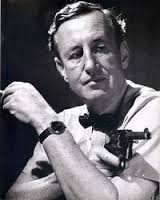 His great friend Ian Fleming, who I have already noted purchased White Cliffs from Coward in 1951, is, in my view, an underrated author. His success with the Bond novels overshadowed everything else that this very talented man produced. I remember that one of the first books I was given was a paperback copy of Goldfinger which I read (after a fashion) aged nine. For some reason this book opened up my imagination and soon I was writing rather childlike short stories about the secret agents of C.H.A.N.N.E.L and their fight against evil. My hero was called Victor Shoreway instead of James Bond and I was
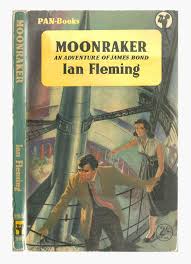 Having walked along many a road and lane in this area of Kent I can assure you that the situation has not improved in the last fifty years. One can buy copies of the James Bond novels quite cheaply in paperback form and outside of first editions, hardback copies are quite reasonable to buy. If you are after a first edition of one of his Bond novels then you can, at times, expect to part with quite serious money. I have, I believe, read the whole series of his Bond novels and occasionally re-read one when on hols. I was going to take a copy of Moonraker down with me this year but, as normal, l could not locate it in my study.
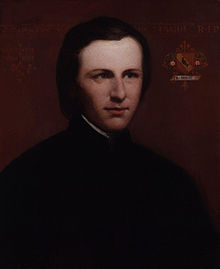 Although the Palace of Westminster is very much a secular building, my interest in Pugin comes mainly from the many churches he designed.
 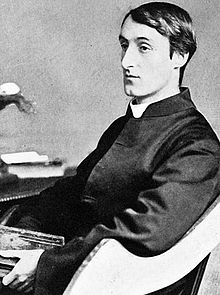 Like Pugin, another one of my Victorian hero’s Gerard Manley Hopkins was heavily influenced by The Oxford Movement and produced some of the most astonishing poetry ever written during his short and tragic life.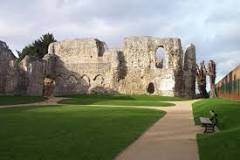
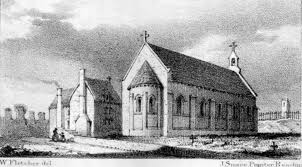 The foundation stone was laid on the 14th of December 1837 and the church was formally opened on the 5th of August 1840 by Bishop Thomas Griffiths.
 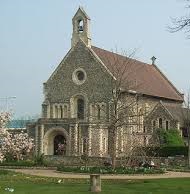 My wife and I visited the church recently on one of those magnificent autumn days where the light is so sharp and high in the sky that the seasonal trees almost seem to glow with colour.