 I have lived in Hungerford for just over ten years and thought that I had seen most things at the Arcade. However, when Caron and I popped in today to buy some teapots for tea party, we found an item that even in our wildest dreams we would not have expected to find. Why were we so surprised you may ask?
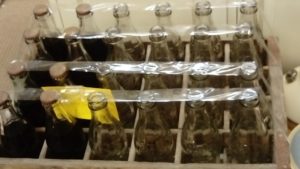
 Well it was a crate of 1950s Coca Cola bottles that gathered our attention. But what really surprised me was that a few of the bottles still had their original contents within.
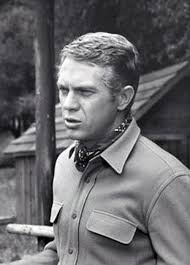
The stallholder on the ticket had wisely noted that the remaining soft drinks should not be consumed. Saying that, I would imagine that if consumed after fifty or so years the taste would not have differed greatly from the warm flat cans of coke that one can find in the £1 stores today. This was the ultimate in retro I thought. Original untouched drinks from the era of Jimmy Dean and Steve McQueen.
 Just imagine how impressed your friends would have been when they popped around for a summer gathering. After admiring your Edward Hopper print on the wall they would be blown away by your vintage wooden coke tray and its aged contents.
I have to admit that I am something of a Coke addict and often retire to coke dens in Hungerford to satisfy my cravings (well if you must know the Hungerford Arms opposite the arcade). Although it is not that good for you (and can damage your social image if you get my drift), Coca Cola is one of the most refreshing drinks you can find. I always find that if I am that thirsty after walking miles or travelling on a putrid hot train that to have an ice cold glass of coke is just the best sensation one can experience. As most of you know, Coca Cola originated in the USA in the late nineteenth century and there lies a rather sad story.
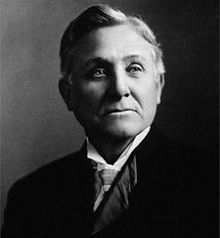 It was invented by a certain John Pemberton (1831-1888) who received a sabre wound to the chest during the Battle of Columbus which was fought on the 16th of April 1865.
This battle is sometimes thought to be the last battle of the American Civil War as President Johnson declared the civil war over on May the 10th 1865. There was a skirmish at The Battle of Palmito Ranch on the 13th of May 1865 but the Battle of Columbus was really the last major clash of the war. In a way this was good and bad news for John and was indirectly the reason that the world’s favourite soft drink was invented.
Sadly, John had become addicted to morphine which he used to ease the pain he was suffering. Knowing the inherent dangers of his morphine addiction (he had trained to be a pharmacist), he began to look for painkillers which would be an opium free alternative.
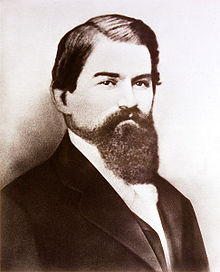 After a few false starts, he began experimenting with coca and coca wines and soon created a recipe which contained both kola nuts and damiana. He called this brew Pemberton’s French Wine Cola. As you can see this drink was a little alcoholic (no bad thing) but when faced with temperance legislation in 1886, he was forced to create a non-alcoholic alternative. Again with trial and error (and with the assistance of a certain Willis E Venable), John perfected the recipe of what became Coca Cola. Mind you John did not invent its now world famous name. A Frank Mason Robinson (1845-1923) can lay claim to this. He came up with the name because of its alliterative sound (which was quite popular at the time) and it also referred to its two main ingredients.
Sadly John fell ill soon after Coca Cola hit the streets and nearly became bankrupt. This sale was partially motivated to fund his continuing morphine addiction. However, he had a feeling that Coca Cola would soon become the national drink so he attempted to retain a share which he could pass on to his son. But his son wanted the money and in 1888 John sold the remaining part of the patent to Asa Griggs Candler (1851-1929) who went on to found the Coca Cola Company. The rest as they say is history.
Sadly, John died in poverty still addicted to morphine in August 1888 followed tragically by his son Charley (Charles Ney Pemberton 1854-1894) six years later.
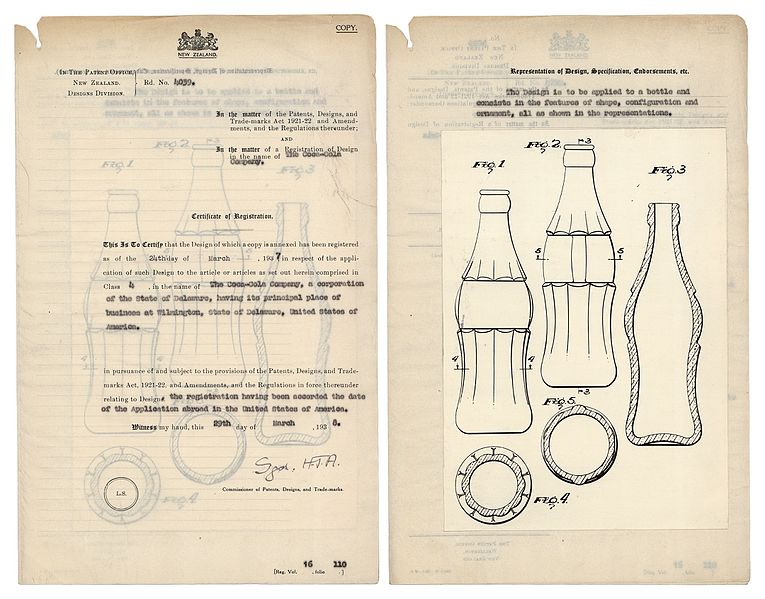
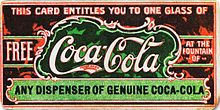 As you can see, the famous brand name was very simple Coca (Coca leaves) Cola (Kola nuts). Its formula is reported to be a trade secret although I would in these days of advanced technology doubt that.
The Coca Cola logo which is in Spencerian Script is world famous and instantly recognisable. It has had its competitors such as Pepsi Cola (1898) but really is the main drink. The word has entered the English language to some extent
Two cokes please
I would like a Coca Cola
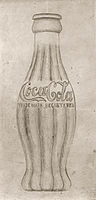 No matter whether you are in Australia or Argentina ordering or purchasing a Coca Cola is not problematical. The name is the same in most if not all languages.
But I have strayed a little because of my surprise at what I discovered (I did not purchase the item and cannot remember its ticket price). What I did do was walk to Hungerford Common with my wife and order two glasses of Coca Cola from The Downgate which sits on the edge of the common. We sat on the Fairy Tree which can be seen easily from the inn and contemplated life and the beautiful April weather.
As normal, we spoke to our distant children and as an addition to our conversation I mentioned what I had seen for sale in the Arcade. They both agreed with me that it was the most retro thing that I was likely to see in many a month.
If you are lucky the case of Coca Cola bottles might still be there when you next pop into the Arcade. If so, take time out as I did to contemplate the products fascinating history.
It’s the Real Thing
Happy Hunting
Stuart Miller-Osborne



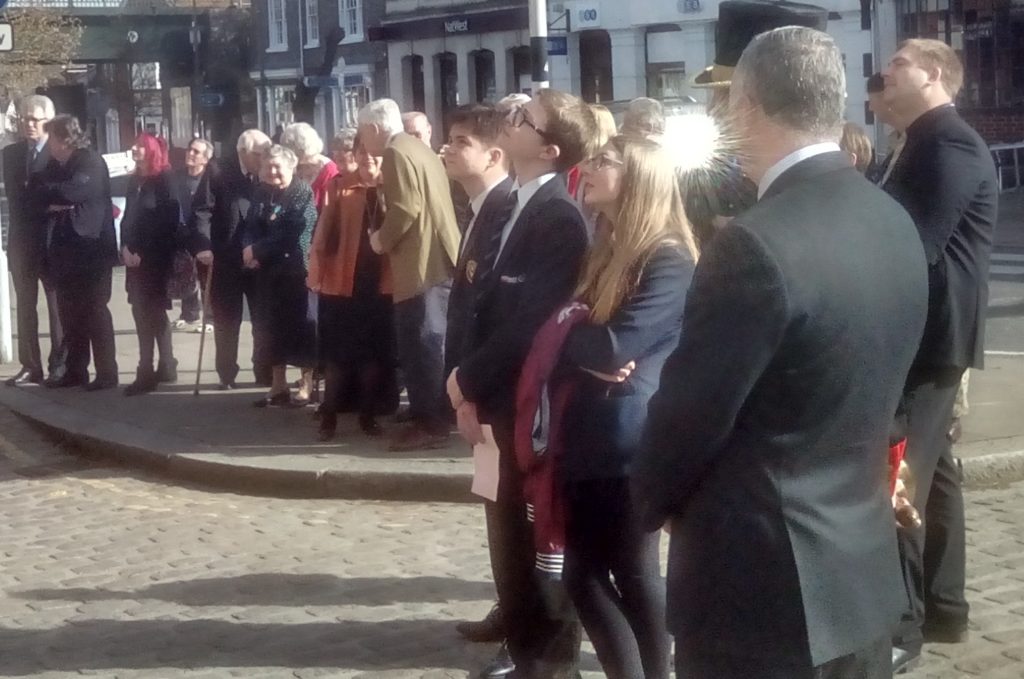
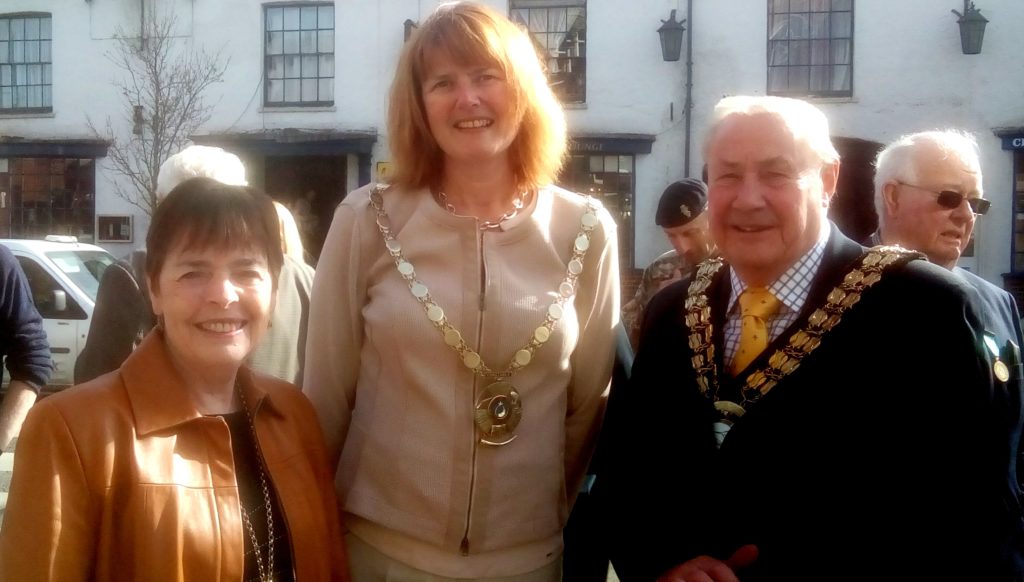
 All 52 countries of the Commonwealth celebrate Commonwealth Day.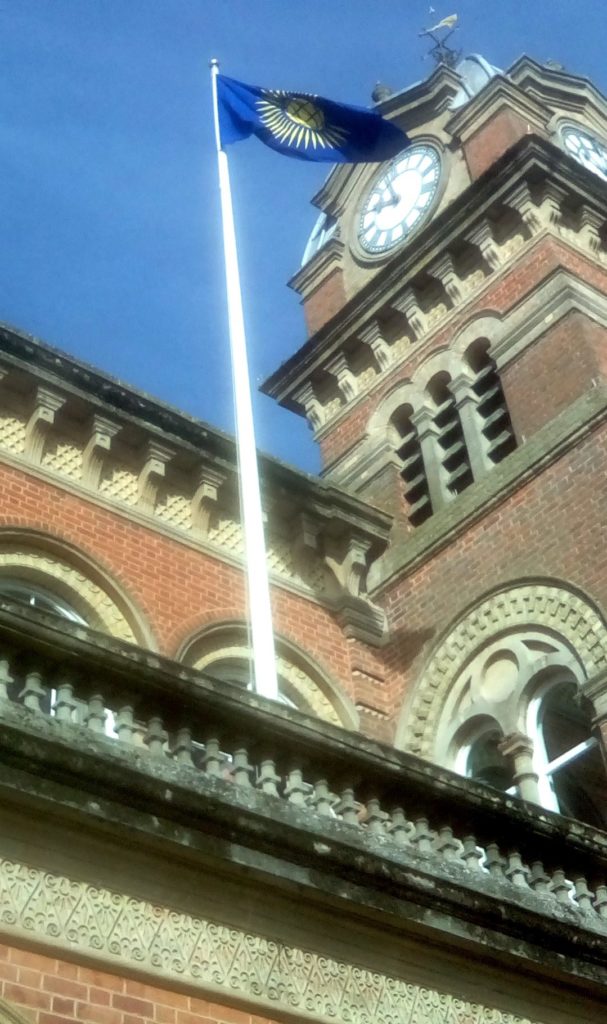

 Hungerford Arcade met a very interesting gentleman at the weekend, Mr. Neil Macbeth.
 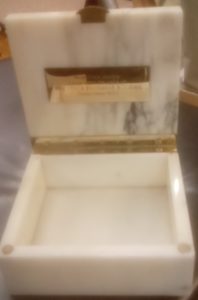 As Neil was so impressed with these boxes, his boss said that he will do his best to get him one. At that time in 1970, Neil’s wages were £16 per week. The marble cigarette boxes cost £25 each and they were in very high demand. In fact, they were selling for a premium straight afterwards. Much to his delight, Neil was lucky enough to get one of these boxes which cost him well over a week’s pay.
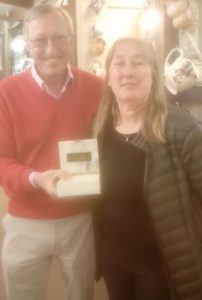 Every so often, Neil and his wife go to Ramsbury over night and always call into the Arcade and find things to buy. This time however, the last thing in the world Neil expected to see was an old marble Stock Exchange cigarette box. Stallholder, Sarah-Jane Harvey could see that he was overwhelmed with his find, asked if there was a story to it and here it is.
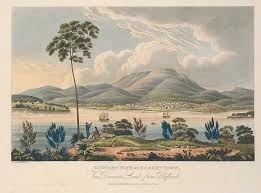 But what is the Hungerford connection?
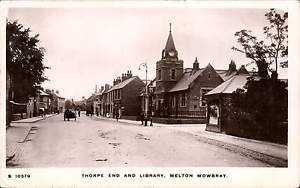 The connection between Hungerford and Van Diemen’s Land and the horrible Thorpe End murders is quite simple.
 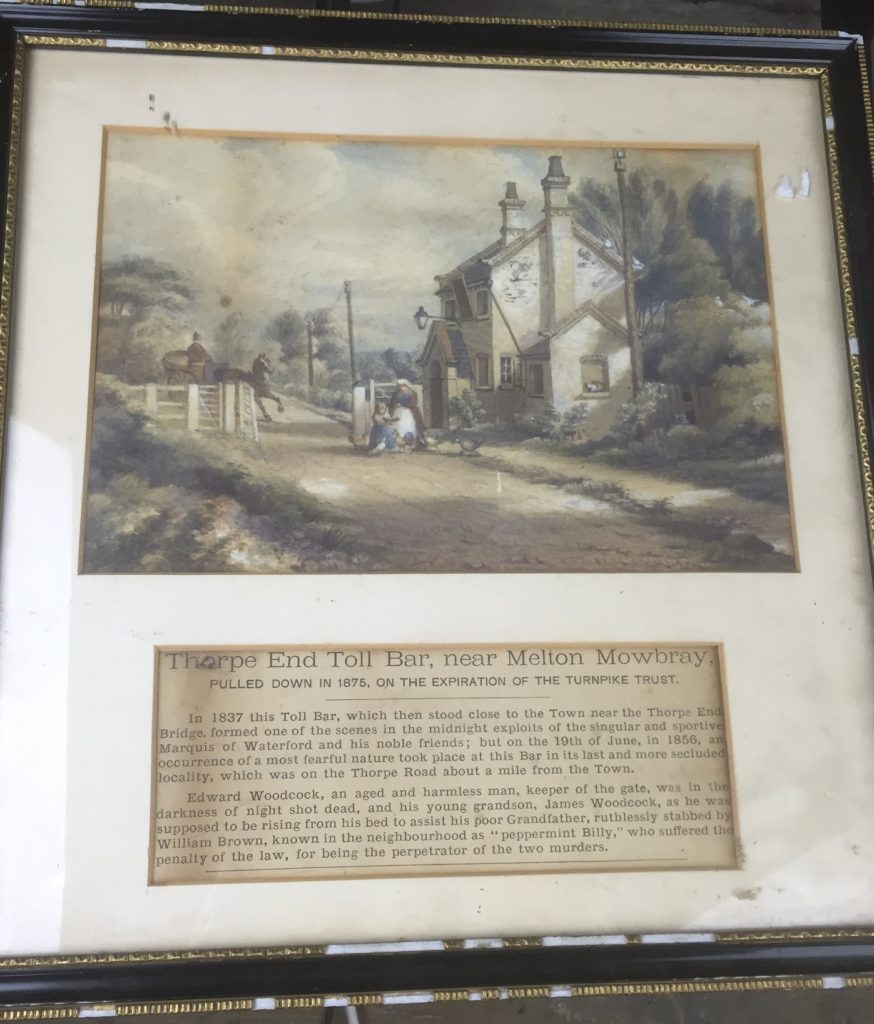 Thorpe End Toll Bar near Melton Mowbray
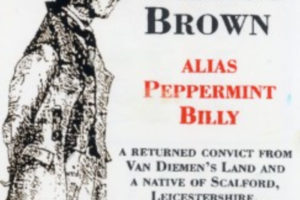 What is interesting though, is that the convict William Brown (Peppermint Billy) who had just returned from Van Diemen’s Land (Tasmania) might have been innocent of the crime that he was hung for.
 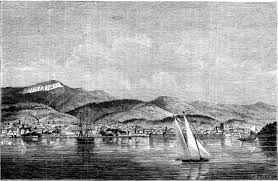 William Brown (aka Peppermint Billy) was only thirty-seven when he returned from Van Diemen’s Land after being sent there for stealing from his employer.
 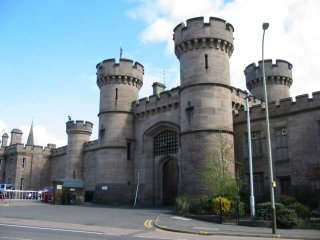 Woodcock was shot and this woke his grandson who ran to assist his aged grandfather.
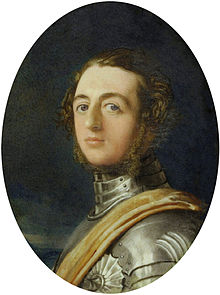 You may have noticed that apart from the account of the murder, the Marquis of Waterford gets a mention even though he was nothing at all to do with the crime.
 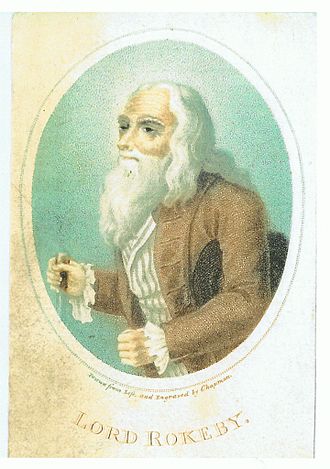 Or the utterly mad Lord Rokeby who so loved the sea that he would spend hours in the water (his servants often had to drag him unconscious on to dry land).
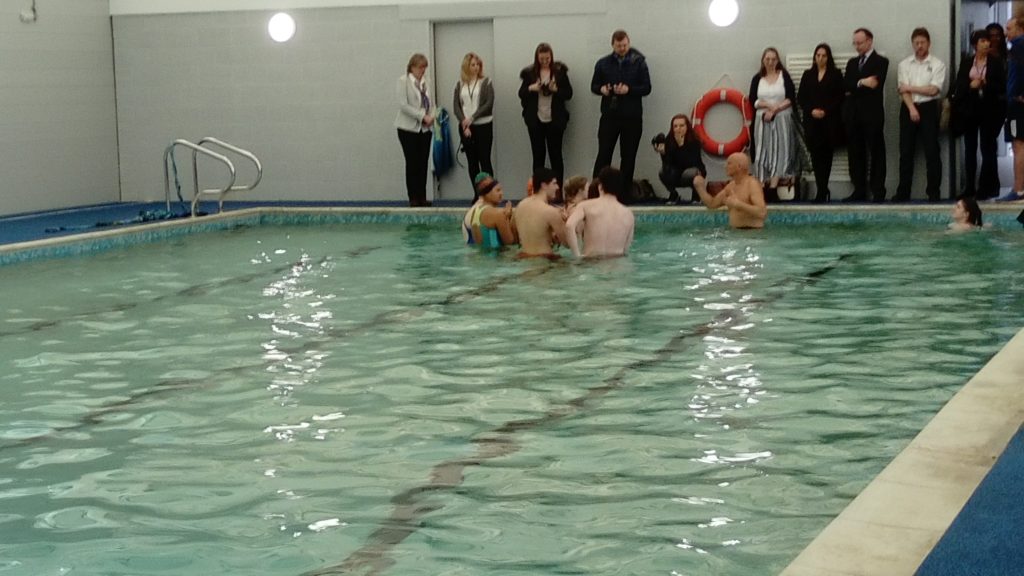 The difficulty was in raising funds for a refurbishment project. Had it been for a completely new swimming pool it would have made fundraising that bit easier. However, having said that, over £400,000 had been raised and yesterday, Adrian Gilmour, Hazel Browne and myself, Rita Kibble had the pleasure of attending the grand opening, representing Hungerford Arcade and Hazel who opened her beautiful garden to the public last summer and raised a lot of money for this project. It was all a great success.