|
| All the Staff and Stallholders here at Hungerford Arcade Antiques & Collectables Wish all our Readers across the World a.. Very Happy Easter |

|
| All the Staff and Stallholders here at Hungerford Arcade Antiques & Collectables Wish all our Readers across the World a.. Very Happy Easter |
|
|
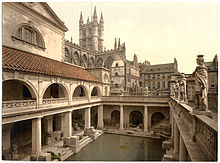
Of all the cities in England, Bath must be one of the most beautiful. Whether you approach it from Bristol or Wiltshire the effect is the same, the gentle Bath Stone soft in the light of the day.
 |
| Robert Francis Kilvert 1840-1879 |
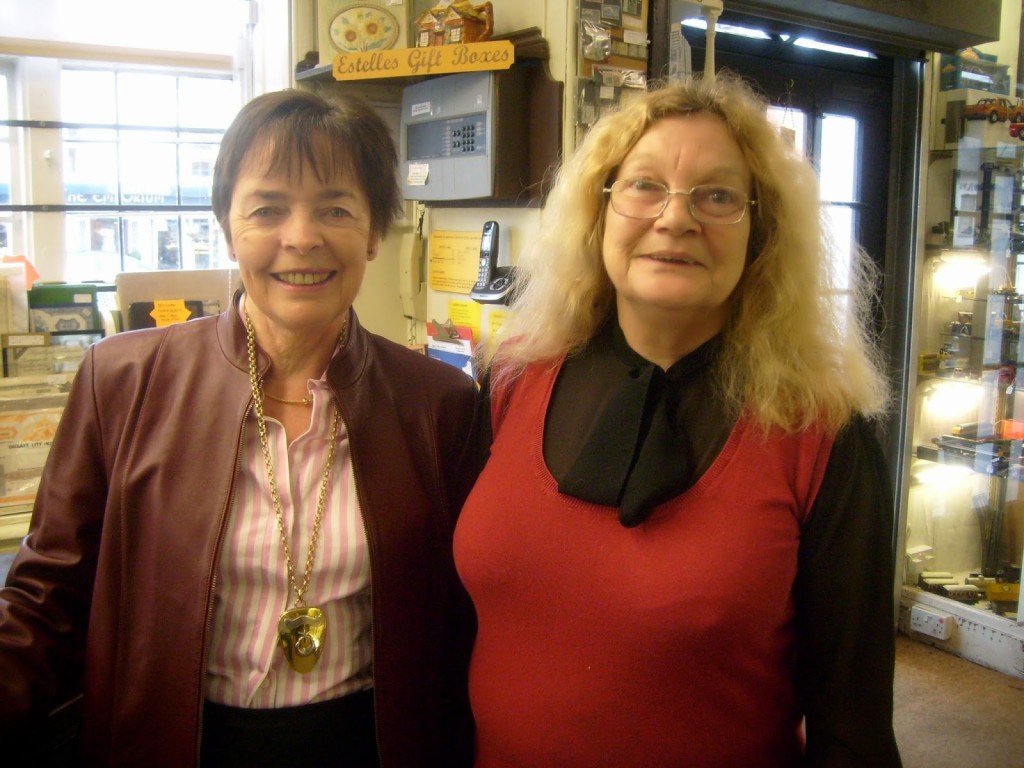 What a wonderful surprise we had at Hungerford Arcade when Virginia Crane, the lady Mayoress of Hungerford dropped in to see us wearing her beautiful chain of office. Virginia, alongside her husband, Martin Crane OBE, the Mayor of Hungerford, (pictured below) have attended many functions over the course of the three years he has been in office. One of the most memorable moments was when they attended a function at Henley College and met Her Majesty the Queen and the Duke of Edinburgh. Virginia said it was a very special occasion.
Rita
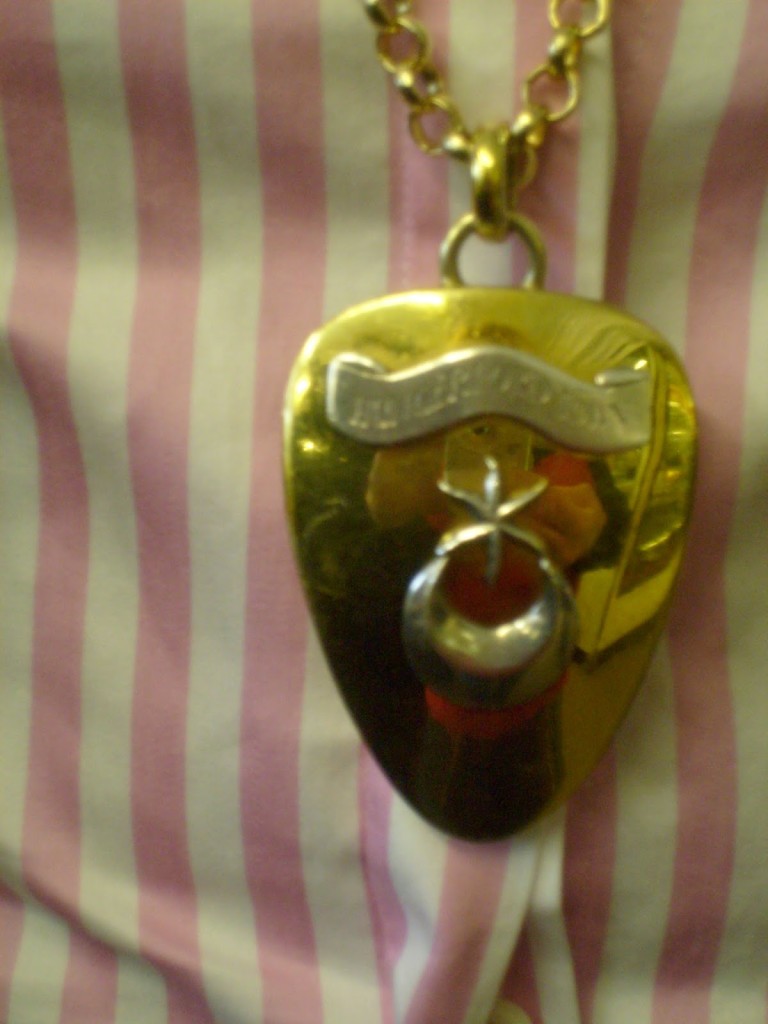 |
| The Lady Mayoress’ beautiful Chain of Office Showing the Hungerford coat of arms |
 |
| Martin Crane OBE Mayor of Hungerford |
As you know, I am a great fan of Stuart Miller-Osborne, I came across this wonderful article he wrote some time ago and thought you might like to read it. I hope you enjoy it as much as I did.
Rita
I am of the opinion that every time that you enter an antiques shop or arcade that you leave knowing (maybe unconsciously) a little more. It may have been that odd shaped inkwell or that oriental wall hanging that took your fancy. Sometimes one has a “Eureka” moment when something hits you between the eyes and you wonder how you have lived without the knowledge throughout the years.
I have had a few but, one of the first is one that has stayed with me for nearly forty years. In late 1973 I decided to visit some of the Charles Holden underground stations in London. I had ticked a couple off of my list when I found myself in Southgate. It was when I was searching for a café to have a cup of tea that I chanced upon an antique shop. As the day was getting colder I decided to pop in to have a look.

I cannot remember how much I paid for the print but if I remember my later cup of tea was more expensive. In 1973 there was no internet so researching anything was quite hard work. I looked through various art books but found no trace of the artist until one day I had a brainwave and decided to go to the Tate Gallery in Pimlico. It was there that I met a very helpful curator who told me that the artist was the short lived Paula Modersohn Becker. He recommended a couple of art books (neither of which were in English) but it was a starting point. Within weeks I had found out a great deal about Paula and also discovered a poet that I still study, Rainer Maria Rilke.
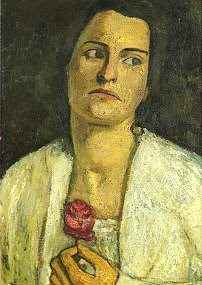 Paula (Becker) was born in Dresden in 1876 to an enlightened family who, to an extent, encouraged her interest in the arts. In 1895 she attended an exhibition of the paintings by Worpswede group of artists. This back to nature school of artists made a big impression on the young Paula and by 1897 she decided to join the group at Worpswede in Northern Germany (some fifteen or so miles from Bremen) in 1898 she settled there permanently.
The Worpswede school of artists had quite a romanticised view of the countryside and countryside life. And after a while Paula began to reject their values and respond more to spiritual values that realistic subjects could project. She was attracted by Paris and left for the capital on the 31st December 1899 arriving there on the first day of the new century.
1900 was a very busy year for Paula, she had been rapidly seduced by Paris but returned to Worpswede as she was engaged to Otto Modersohn a fellow painter. It was during this time that she met Rilke for the first time. They were attracted to each other but as Paula was engaged to Otto he soon became romantically involved with Paula’s best friend the sculptress Clara Westhoff. Both couples married in 1901 and Clara gave birth the following year. Sadly the marriage faded during the following year. Paula and Otto stayed together but she had a restless artistic spirit.
In 1903 she returned to Paris on her own and again in 1905. This placed great strain on the marriage. Whilst he respected her art, Otto was quite traditional and by 1906 Paula had left for what she thought was the final time. She had always been close to Rilke and during the early part of that year they spent a lot of time together. This was a very productive time for Paula and she painted her memorable portrait of Rilke during this year. Rilke believed that some women artists were not meant to bear children. The creation of their art would be their lasting offspring. Paula did not necessarily agree with this. She wanted children but felt there was a great deal of work to be created before she could contemplate having and caring for children.
Not to be put off by his wife’s frequent visits to Paris, Otto travelled to the capital in the autumn of that year pleading with Paula to return to Worpswede. She was financially dependent on Otto and a great deal of pressure was being applied for her to return. In the spring of 1907 she returned to Worpswede. She was also pregnant. On the 2nd November 1907 Paula gave birth to a daughter Mathilde. Eighteen short days later on the 20th November 1907 she died, the victim of an embolism. During her short working life she had completed some six hundred paintings and well over a thousand sketches.
Rilke was shattered by Paula’s death and over a few frantic nights ( October 31st – November 2nd 1908) wrote the haunting Requiem for a Friend as a tribute to her (there are various translations on the internet and it is well worth a read).
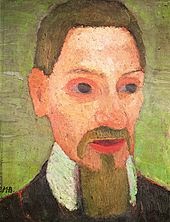 The reason I like Paula’s work is really personal to me. There is an incredible stillness to her work. I can see the influences of other artists but there is an originality that bites you as you view her paintings. Her painting of Rilke is almost mask like, his eyes are featureless but see everything. It is a portrait of silence and of noise. Her self portraits are searching and very honest but incredibly soft. I could write chapters about her paintings but I will let you make up your own mind.
Sometime in the future I plan to visit Worpswede. A lecturer I once knew visited the area in the 1980s and told me that it was bleak even in high summer. I have seen photographs of Worpswede and it seems a place of wild moors and wild brushes (A place that Emil Nolde would have appreciated). From those images and from Paula’s landscapes it appears to be a place that welcomes you and expels you at the same time.
I no longer have my print as the frame soon fell to bits and I placed the work into an art book which I unwittingly gave away a number of years ago. I still have a number of books of poems by Rilke which I purchased at the time and since. If you are interested I do urge you to read his Duino Elegies and his Sonnets to Orpheus at least.
As far as I am aware ( I may be wrong) there are no paintings by Paula in this country, but there is a museum in Bremen dedicated to her work. If you like her paintings, as I do then prints are available on the internet and there are a number of fine books (thankfully in English) to be found.
If you are ever in Bremen and have the time, then do pop into the museum, perhaps I will meet you there and we can compare our thoughts.
Stuart Miller-Osborne
For all the latest news and What’s On, read our Newsletter at www.hungerfordarcade.co.uk
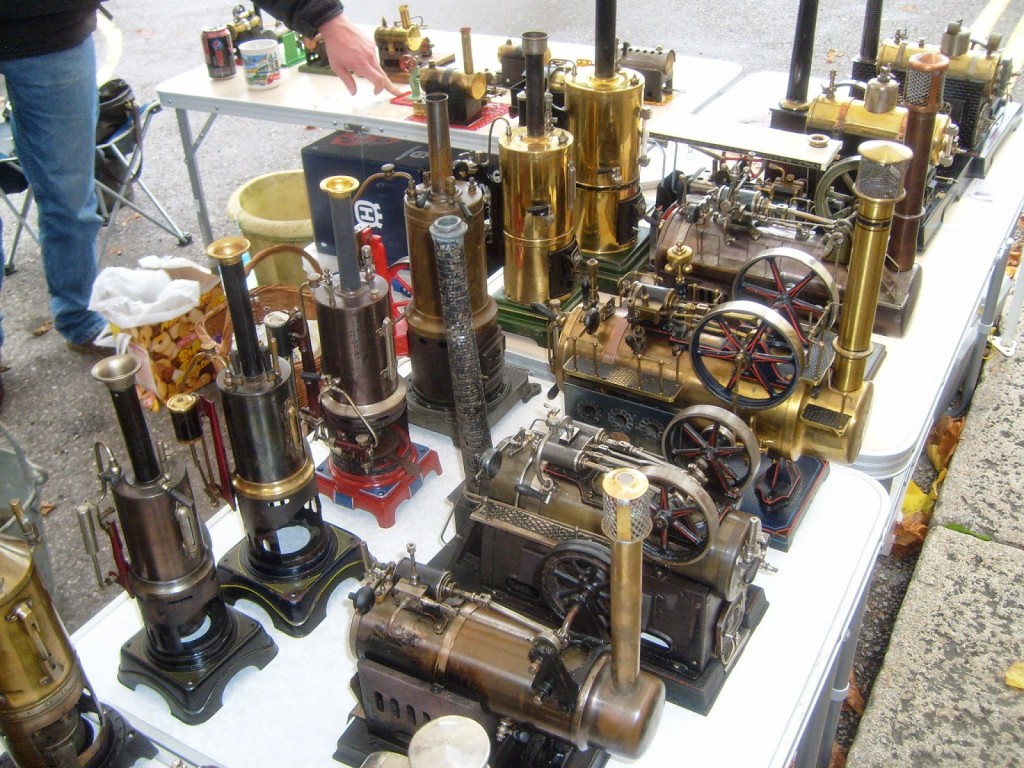
On Sunday, 27th April, Hungerford Arcade are holding a Model Steam Engine event. There will be lots of wonderful working models on display and Daniel and his wife, Sarah will be there to answer your questions and demonstrate how the engines work. There is also a raffle being held and the prize is a working model Steam Engine. The proceeds of the raffle will go to our sponsored charity. Walking With The Wounded. So don’t miss your chance to win one of these fabulous working models.
We are very proud to introduce you to the newest and youngest antiques dealer ever at Hungerford Arcade. Dan is 17 years old and specialises in quality silver items. He plays rugby for the Colston & Clifton team in Bristol where he is the Prop. Dan and his team are off to play in Portugal next week so we wish them all good luck from all of us at Hungerford Arcade.
Hungerford Arcade co-owner, Adrian Gilmour said, “It is wonderful to see the young people of today showing such a great interest in the antiques business”. You can find Dan at Unit 30W.
Rita
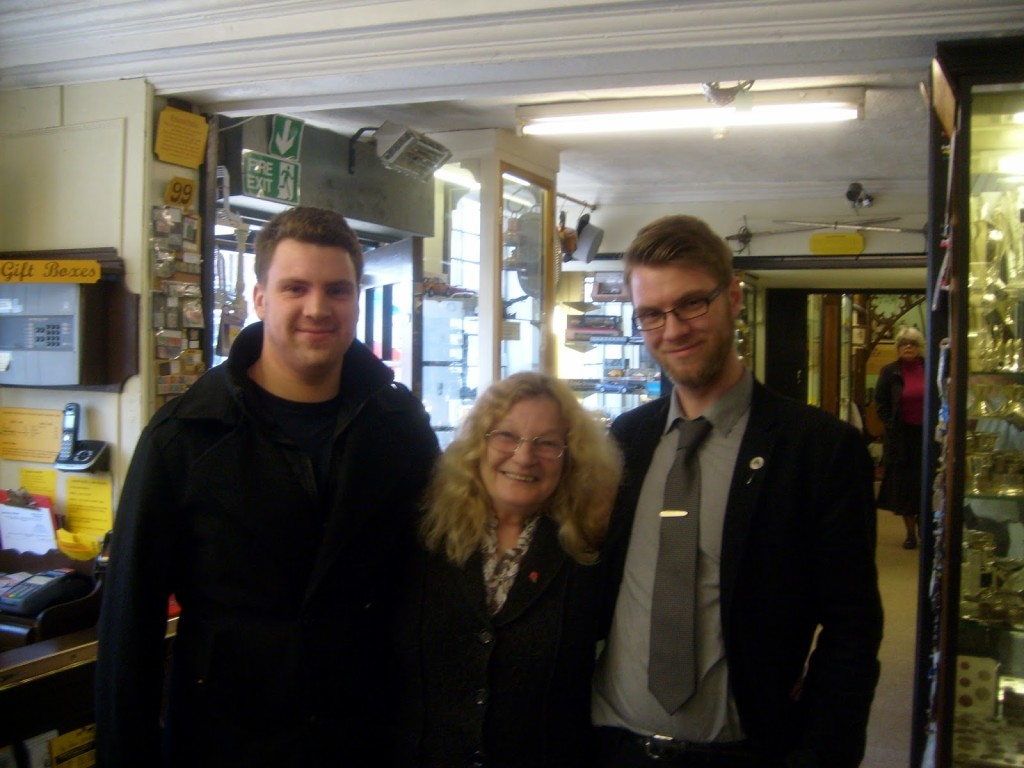 |
| L-R Young Dan, me and manager, Alex Rogers
For all the latest news, read our Newsletter at www.hungerforarcade.co.uk
|
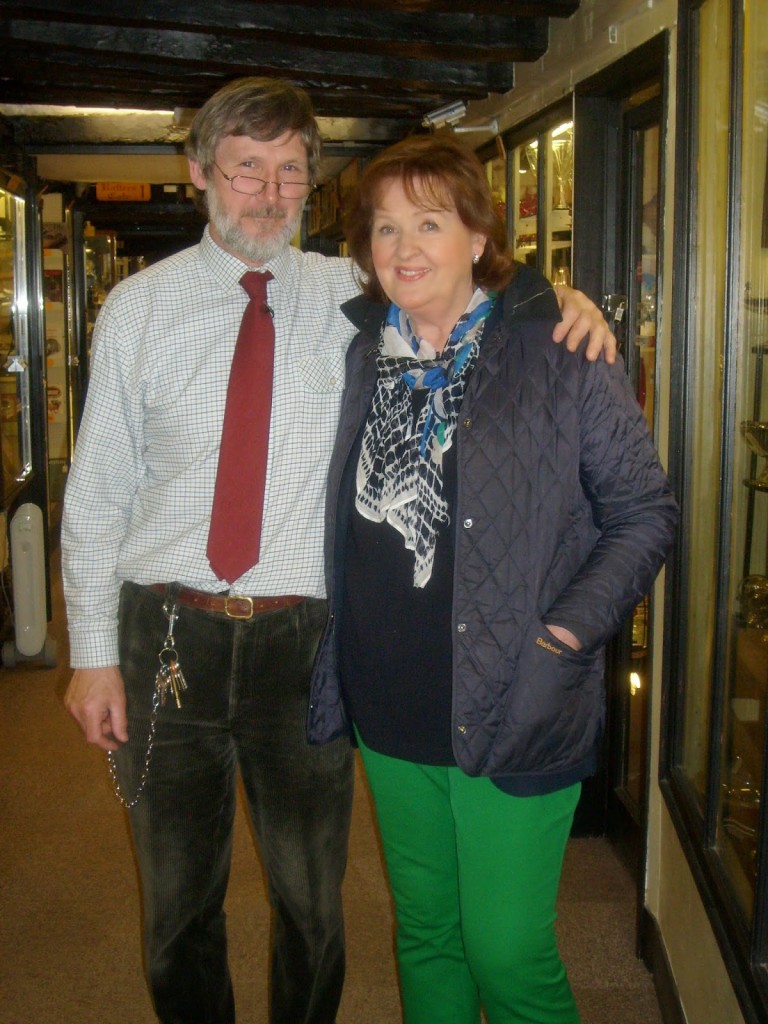 |
| Lovely Margie Cooper with Adrian |
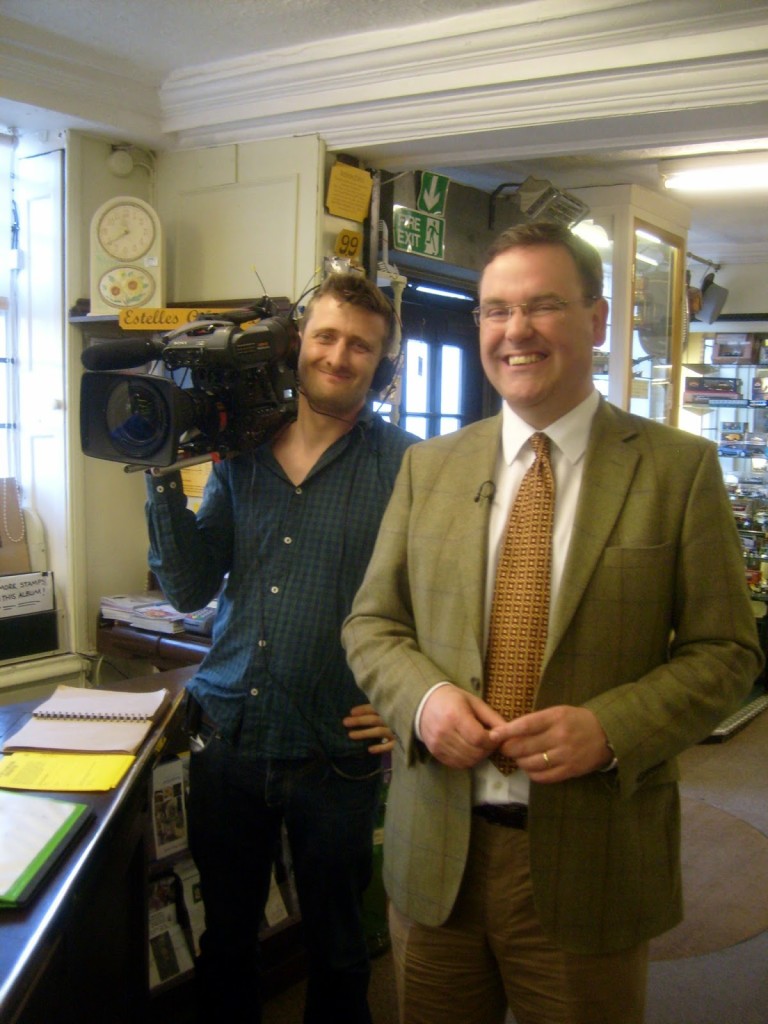
What a fabulous day we had at Hungerford Arcade when the BBC came to film Antiques Road Trip. The two experts were Margie Cooper and Paul Laidlaw. They were both brilliant and such good fun. Arcade co-owner, Adrian looked after Margie and I took care of Paul. The Arcade is an amazing place filled with fabulous things for all pockets.
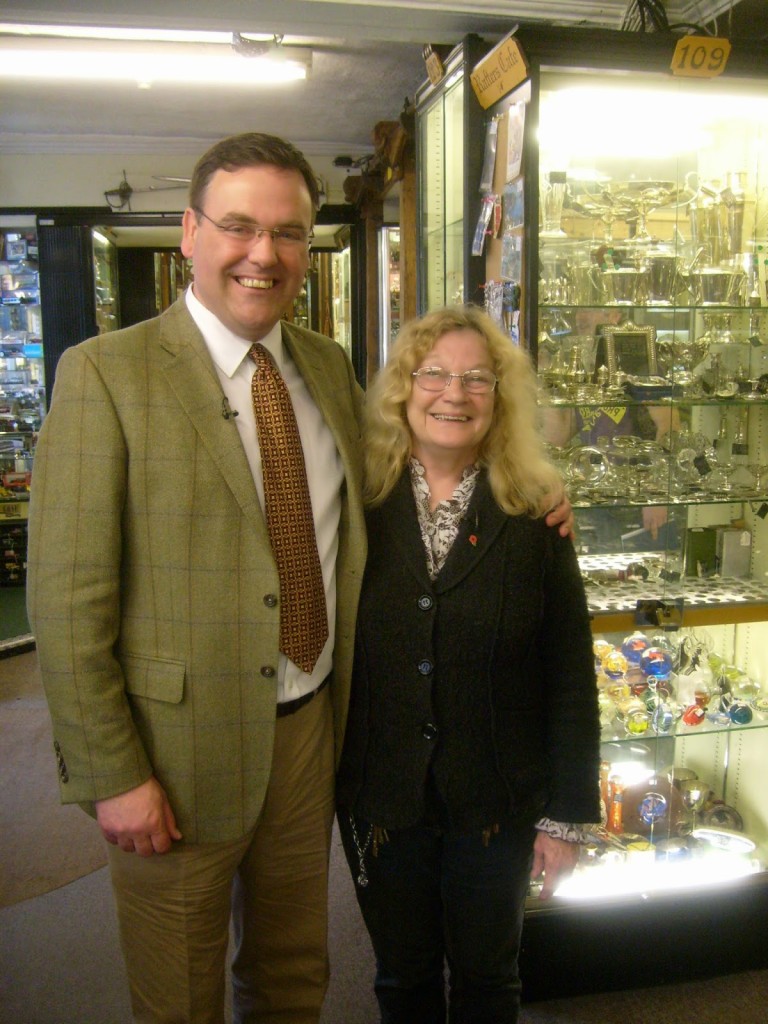 |
| Wonderful Paul Laidlaw with me |
Paul was brilliant. He knew exactly what he was looking for, found it, haggled for it and bought it. A brilliant antiques expert who was a lot of fun.
Margie too was brilliant. She wasn’t sure what she wanted so studied everything that took her eye. She did buy wonderful things and its going to be great viewing watching to see who will come out on top.
The film crew were excellent. Very professional in their work and were such fun to be around. In all, a fabulous day and we look forward very much to welcoming them back to Hungerford Arcade.
Rita
 |
| Film Crew: Paul, Barteck and Stuart – Great! |
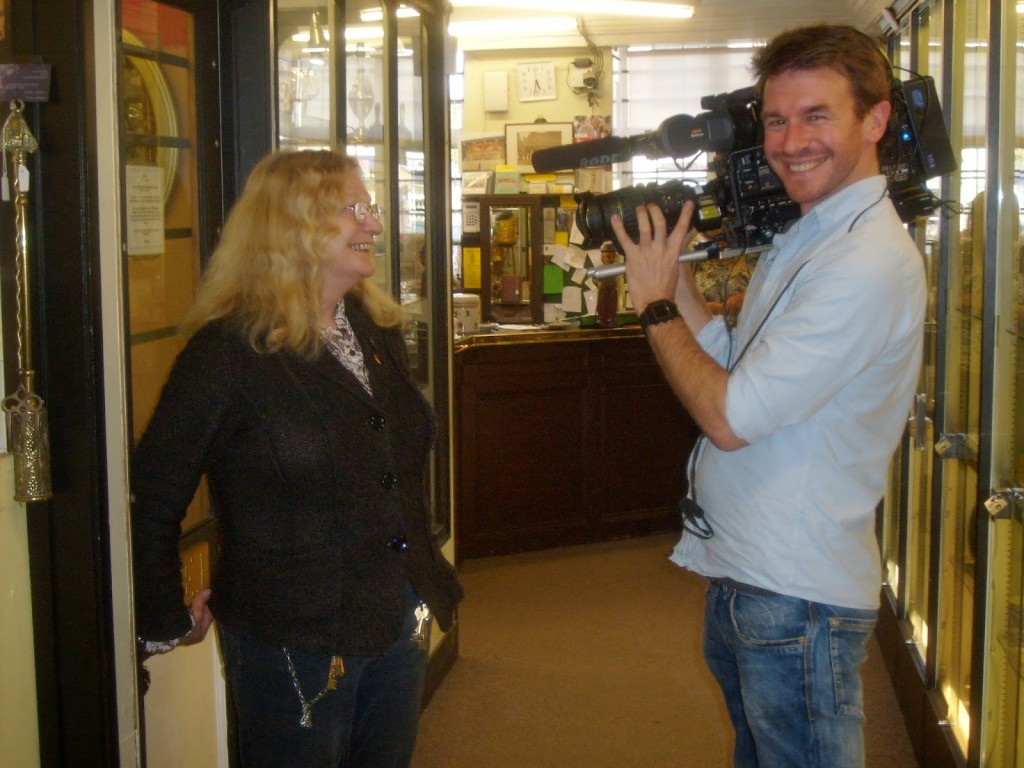 |
| Camerman, Oli having a laugh! |
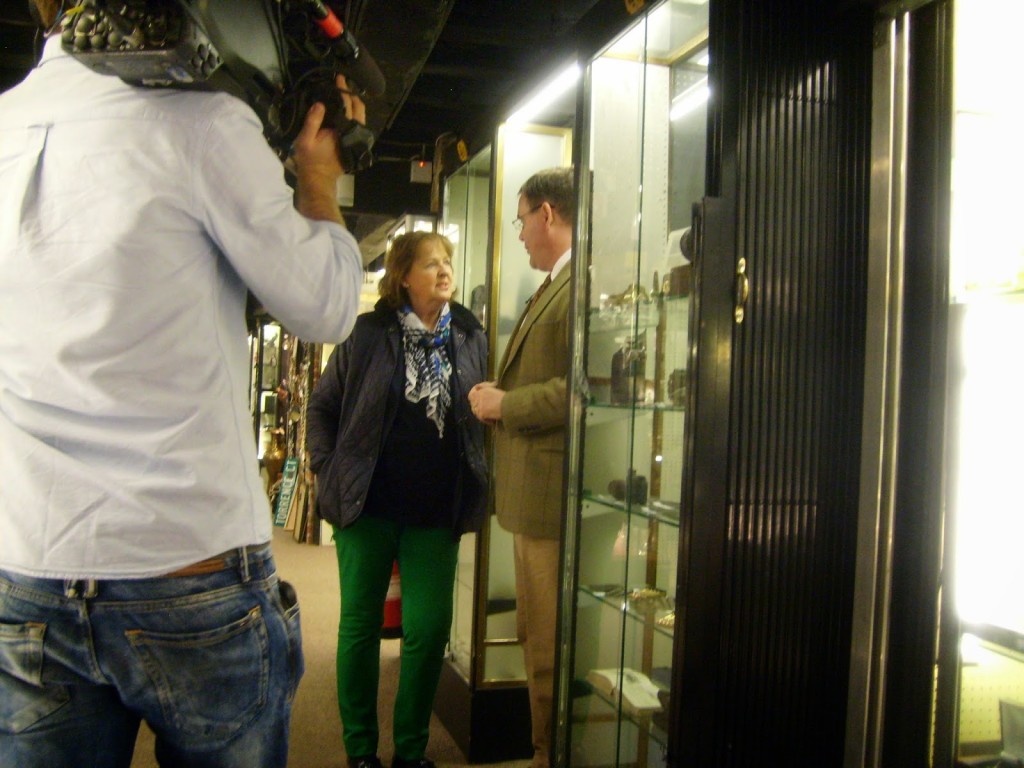 |
| Oli filming Margie and Paul |
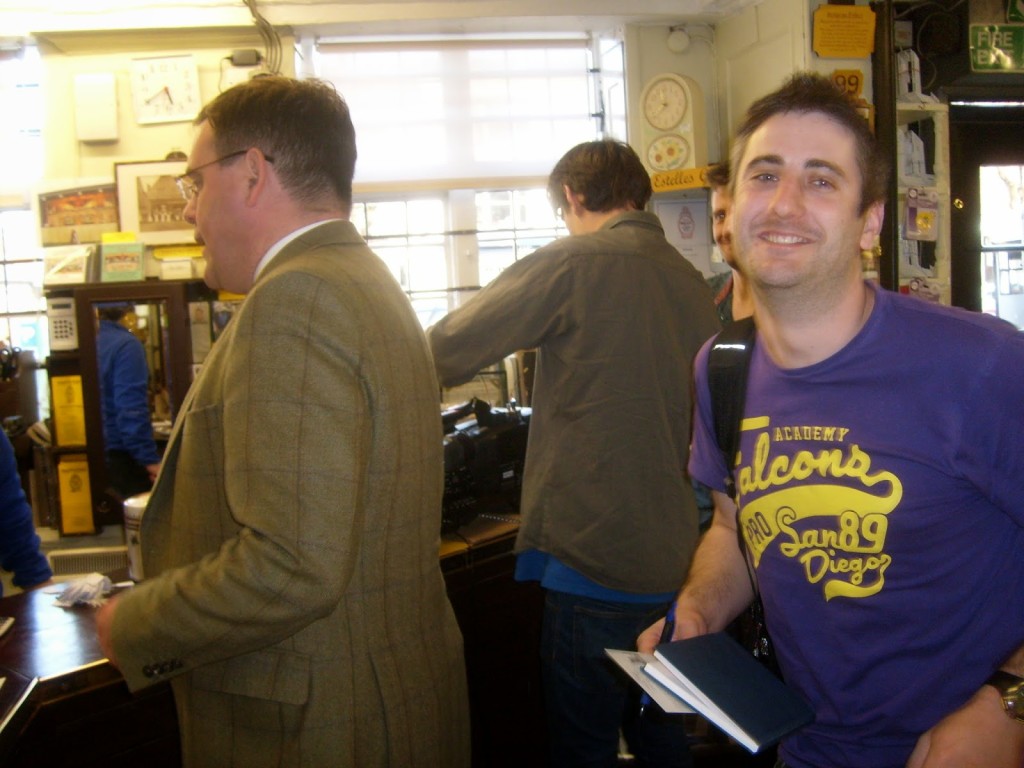 |
| Lovely Stuart |
 |
| Paul with camerman, Jim |
 |
| Liam has been waiting all day for this moment! |
Hungerford Arcade stallholder, James Hill, has worked for 19 years on a Trout Farm which he loves. The storms and flooding were of great concern to James and of course, he was very worried. We found a poem written in 1932. Although there is no name attached to it, it does appear to have been written by a child.
Rita
 |
| Adrian really looks the part! |
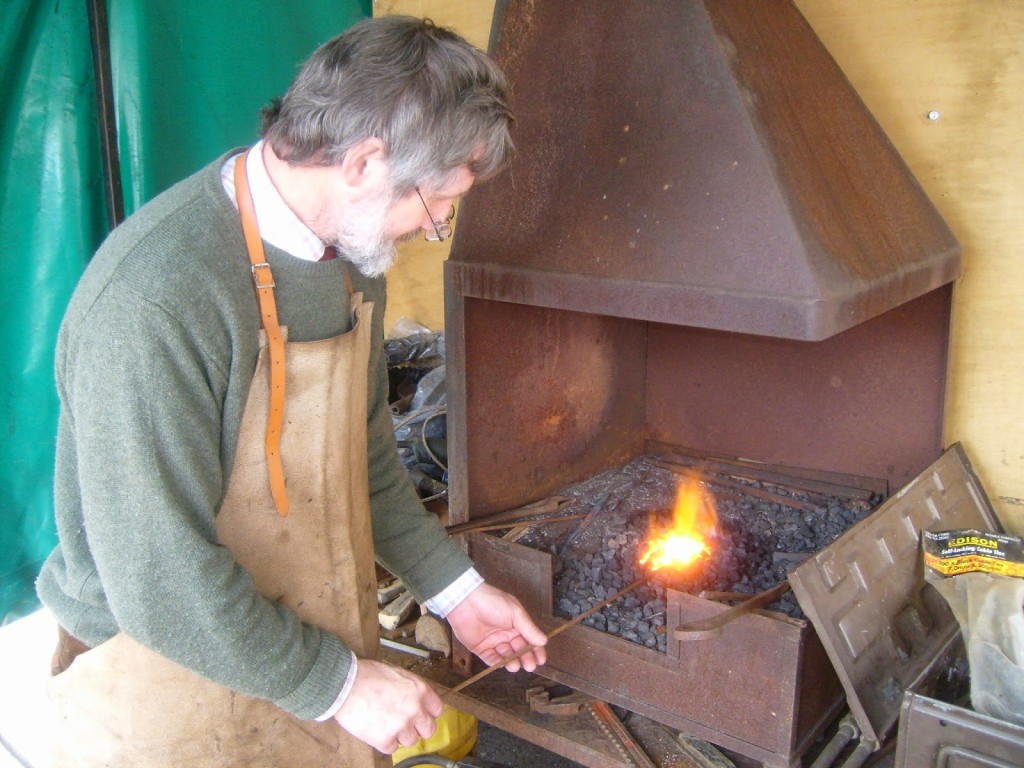
What a wonderful day we had on Hot Forge Day at Hungerford Arcade. Although there was rain, sleet and hail, it didn’t dampen the spirit of people wanting to come and see how a real blacksmith works and even having a go themselves. Hungerford Arcade Co-owner, Adrian Gilmour was in his element. He grew up with Shire horse and can put his hand to anything. A natural!
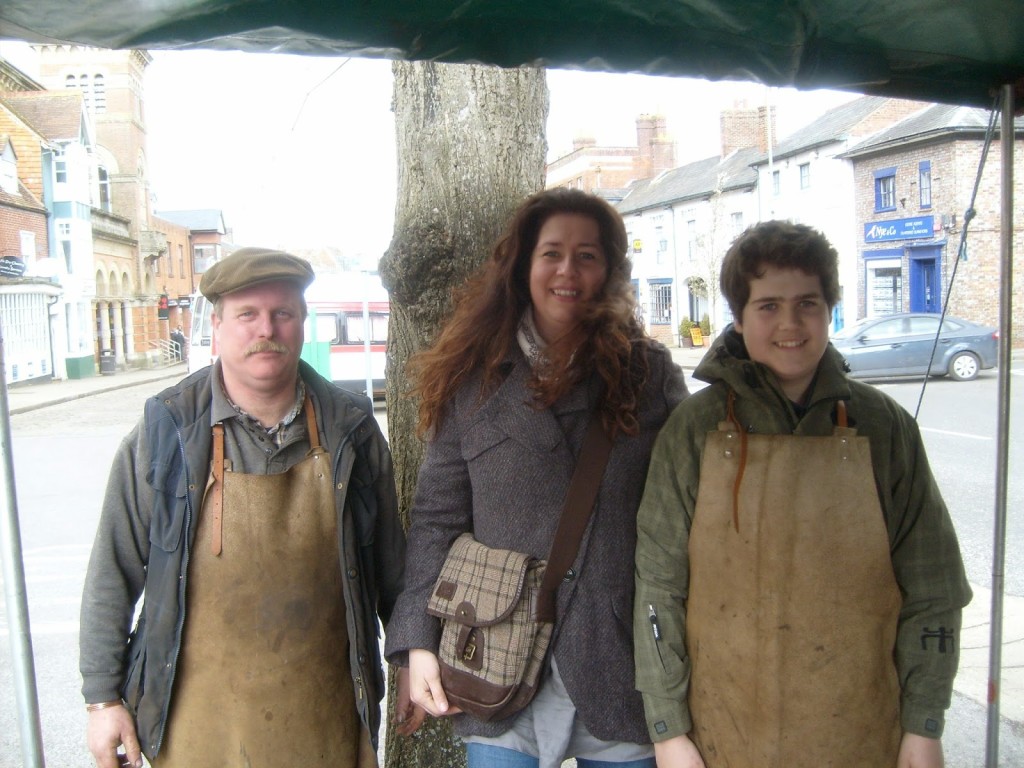 |
| Dave, Sarah & Jobey |
One young man, Jobey Parsons and his mother, Sarah, came all the way from Mere in Wiltshire especially to meet Dave and have a go on the forge. At 12 years of age, Jobey said for the past
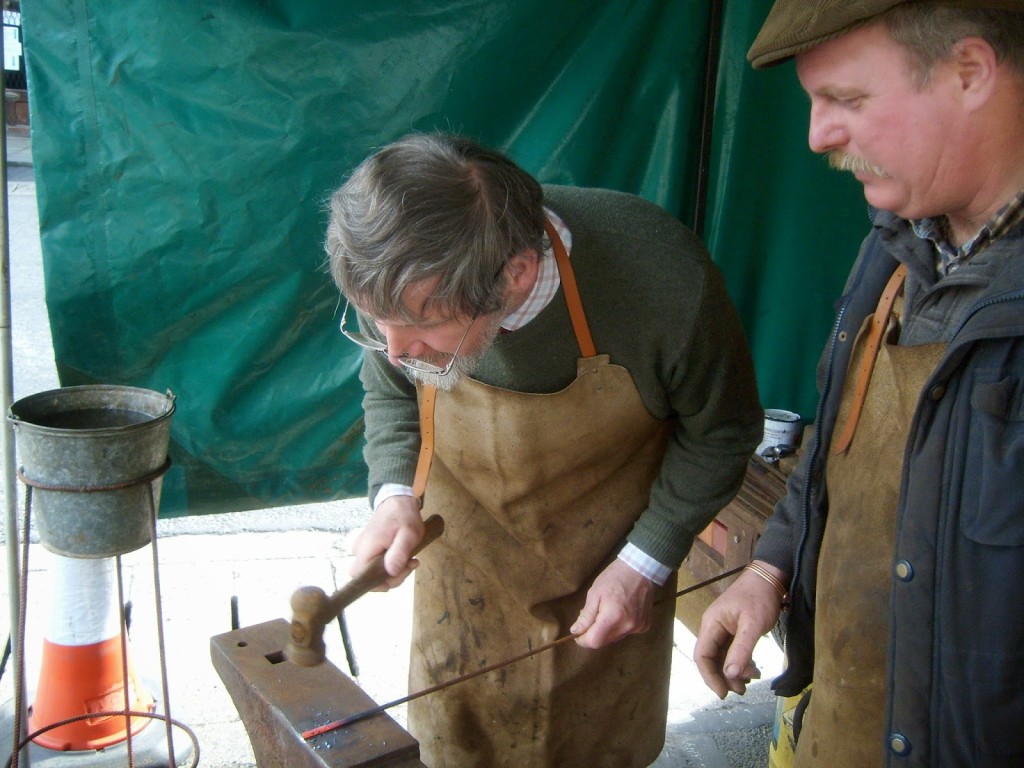
two years, he has wanted to be a blacksmith. To his delight, he got lots of advice and information from Dave. You can see from the photograph below how engrossed Jobey is as he is guided through the process of making a piece of art. He was thrilled to bits and is now more determined than ever that he will be a blacksmith. Well done Jobey…… and Adrian!
Rita
 |
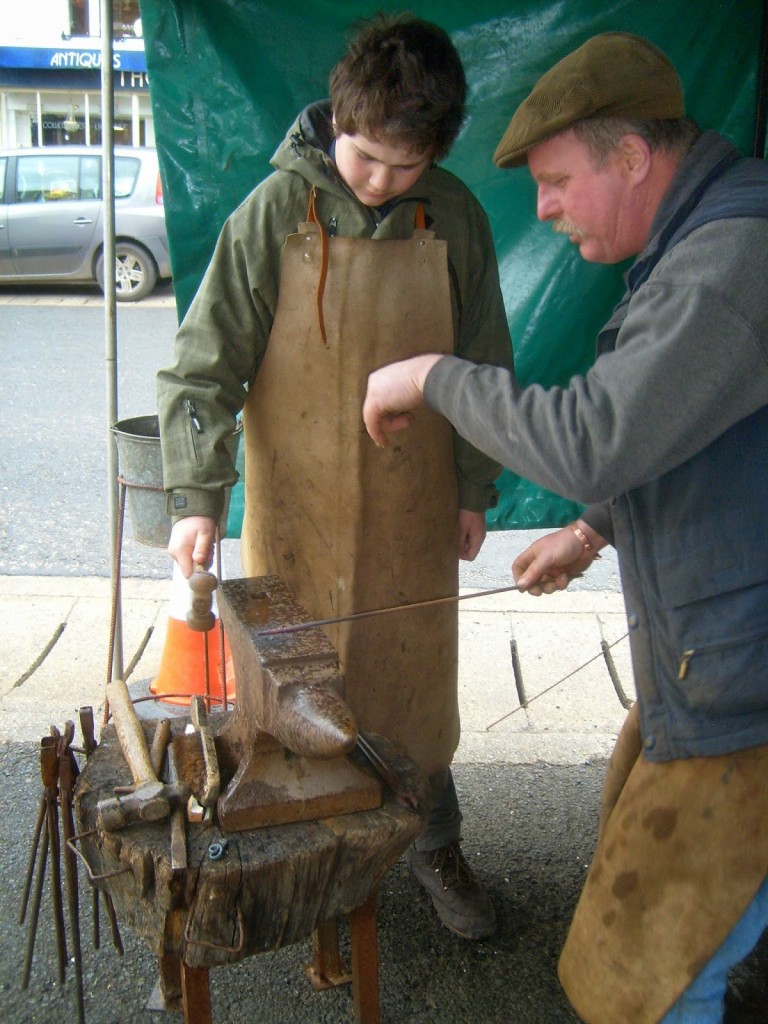 |
| Jobey getting a lesson from Dave |
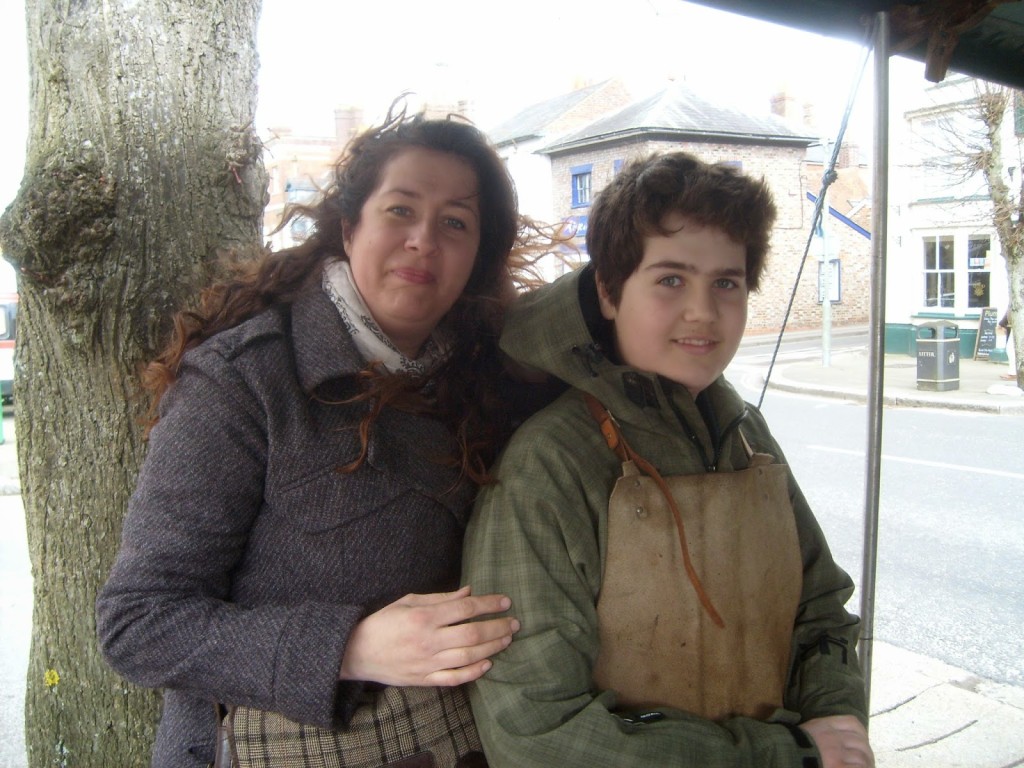 |
| Jobey with proud mum, Sarah |
|
|
For all the latest news read our Newsletter at www.hungerfordarcade.co.uk

 Dave will be arriving outside the Arcade early tomorrow morning enabling him to set up his forge and get it fired up for the day. He will be bringing along some of the fabulous items that he has made and you will also see how he makes them. This will be a great day out for everyone so come along and watch a fabulous old tradition. You can even have a go yourself!
Rita
For all the latest news, go to our Newsletter at www.hungerfordarcade.co.uk