Category: Uncategorized

Hungerford Arcade A WWI Trench Journal – The Dump

The
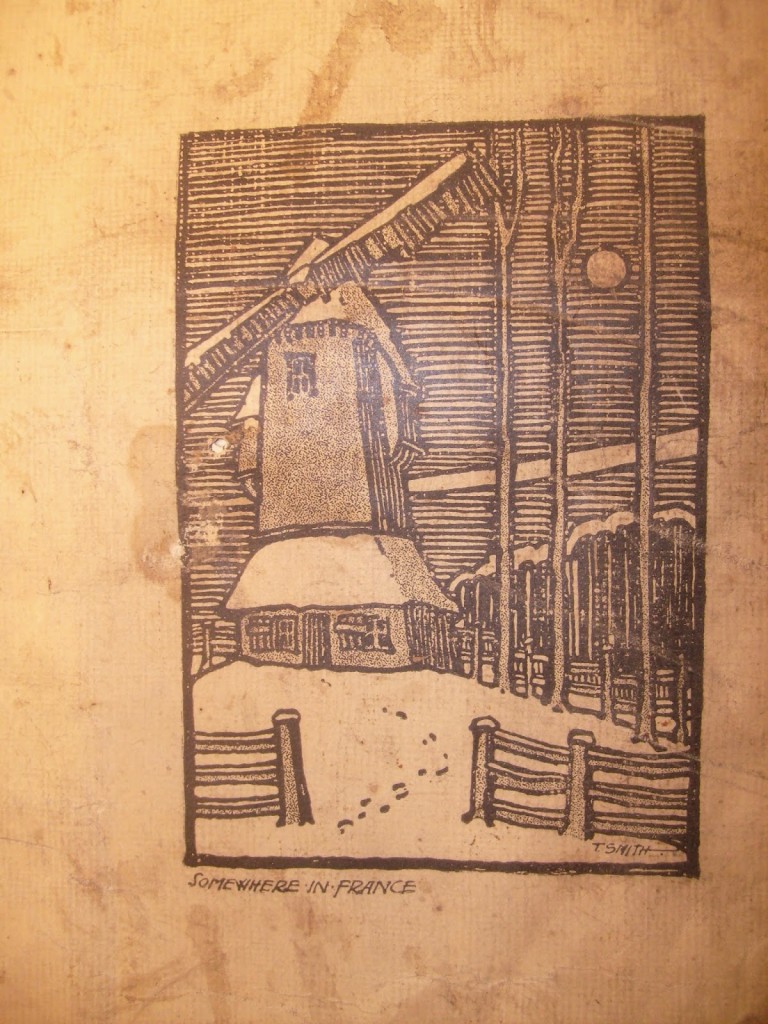
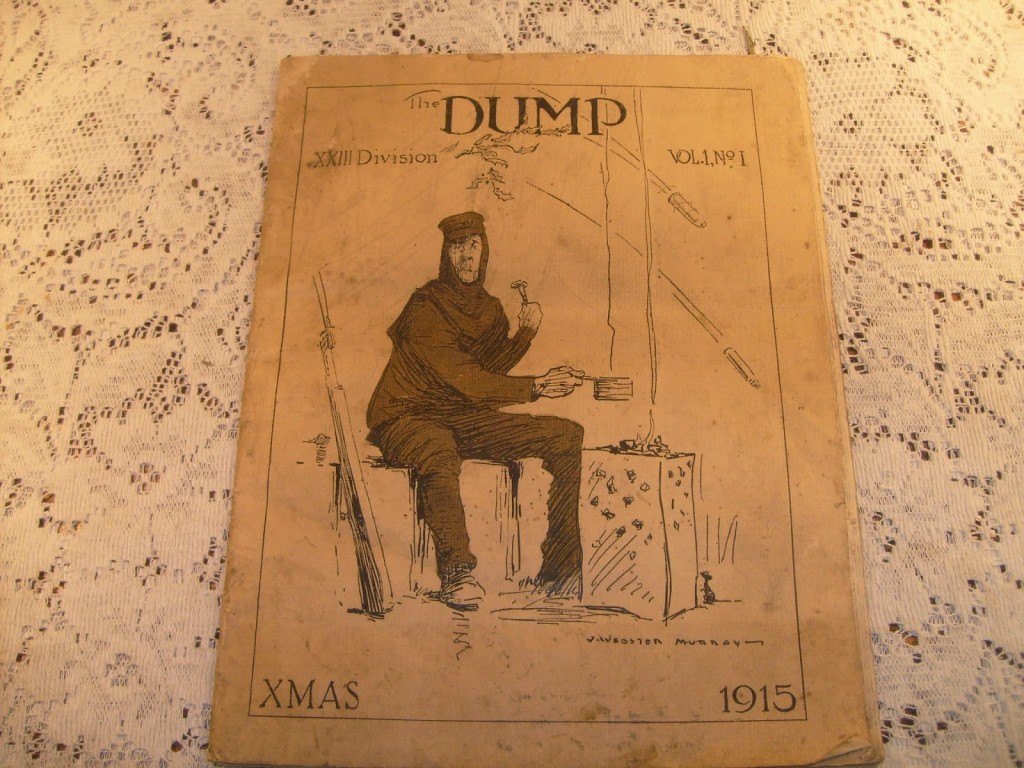
Dump: A Trench Journal
During times of war, when the serving troops are suffering great hardship through situations they can’t control, keeping morale high is one of the biggest
challenges the Army faces.


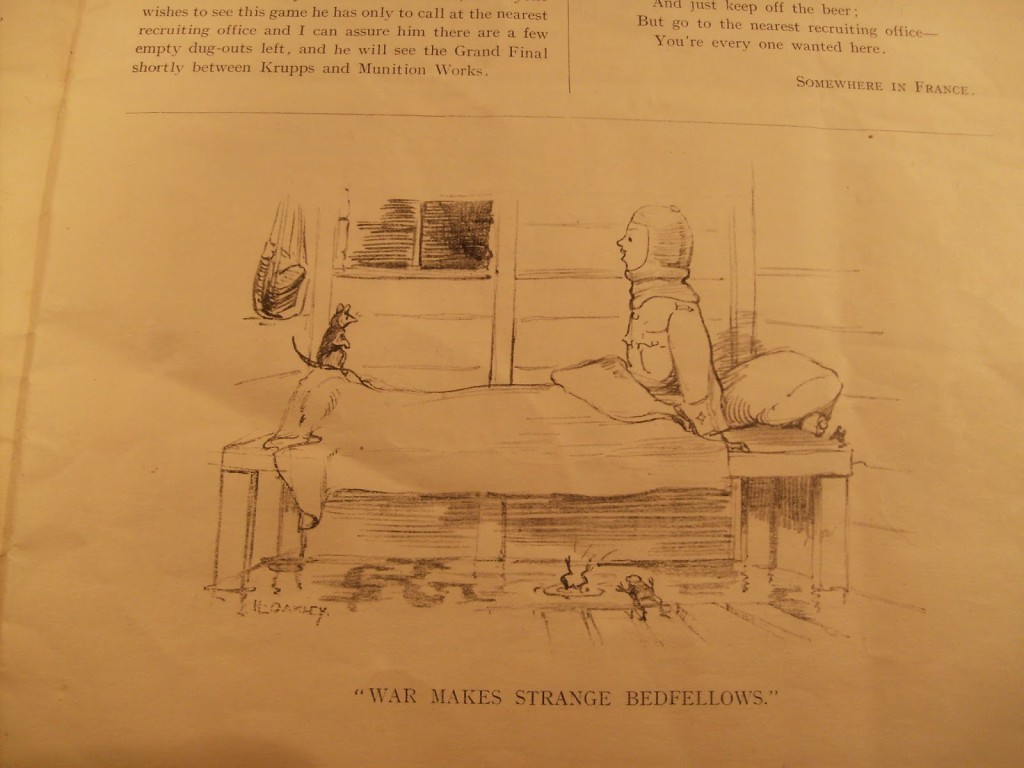
One example of a great morale booster is this wonderful magazine one of our stallholders showed me.  A magazine or “Trench Journal” written for the enjoyment of troops serving in the trenches of the Western Front during The First World War.

The idea of a magazine written by your fellow soldiers was brilliant and
I imagine it offered some much needed comic relief to the poor souls stuck in
the trenches.
 

Some are better known than others such as The Wipers Times (named after soldier slang for Ypres where it was first printed.) of which a BBC dramatisation was produced in 2013.  Others, such as The Dump are very much unknown.

While doing some research I found only one mention of this same edition of the journal on an old auction listing, but no information at all.
It seems that the journal had always been planned to be published once a year, at
Christmas, until the end of the War.
However it is my assumption, and please correct me if you believe me to
be wrong, that this was the one and only published issue of The Dump.


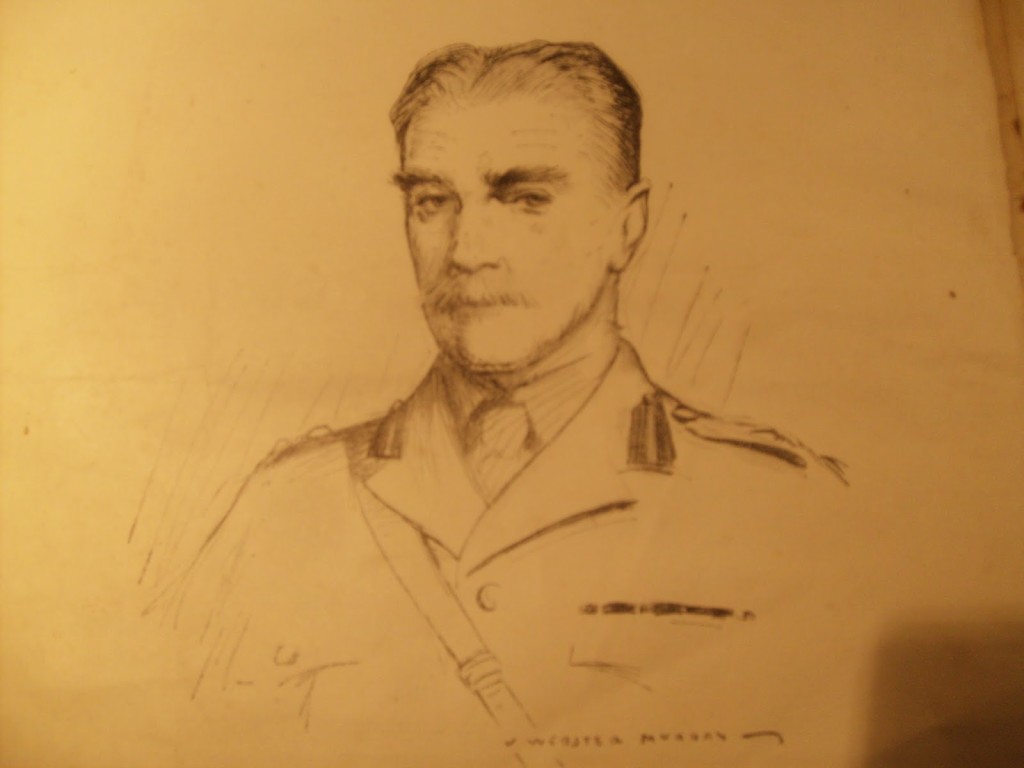
The XXIII Division, under the command of Major-General Sir James Melville, was sent to France in August 1915 and this edition was published in Christmas of that year.  It is my opinion that so much happened on the Western Front during 1916, including the Battle of the Somme, that the XXIII division was no longer able to produce the magazine.

Being one of humanity’s bloodiest battles, it is more than likely that
some of the main contributors of the journal were killed or wounded at the
Somme.
 

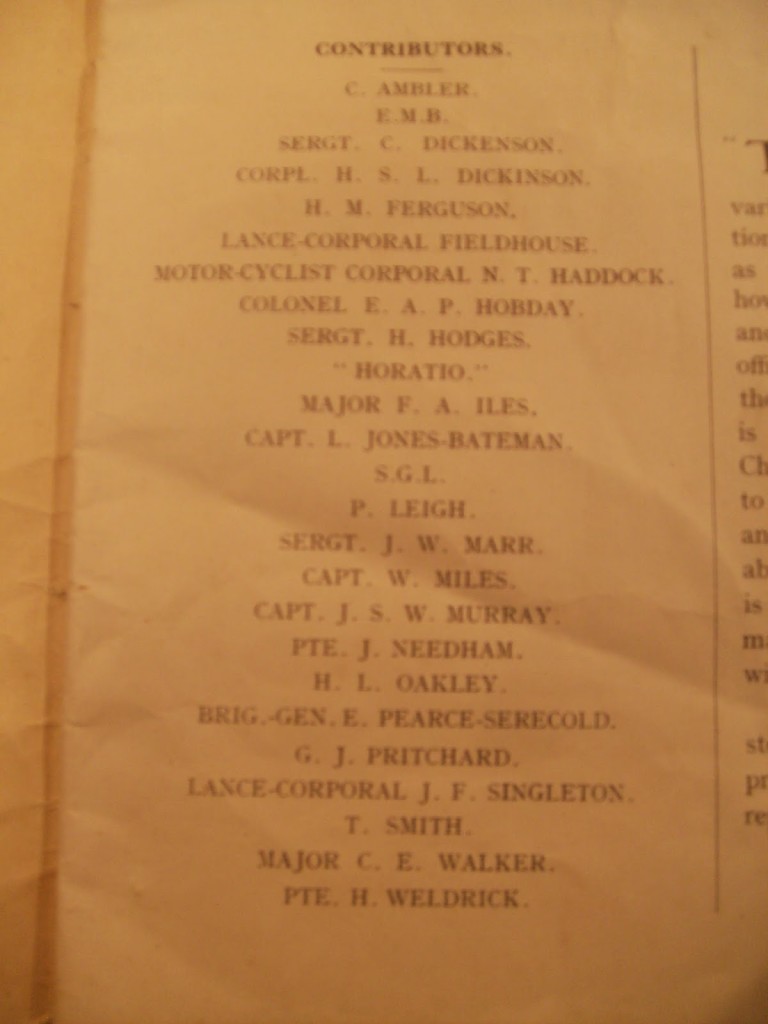
Produced in the winter of 1915 by the XXIII Division, The Dump begins with a message
from the editor in which he talks of various limitations, which have been overcome in the production of the journal, including time, materials and means of illumination.  He goes on to say that
all ranks have contributed in some way towards the publication and the generals and staff officers have been just as ruthlessly sub-edited as the rank and file, if not more so.

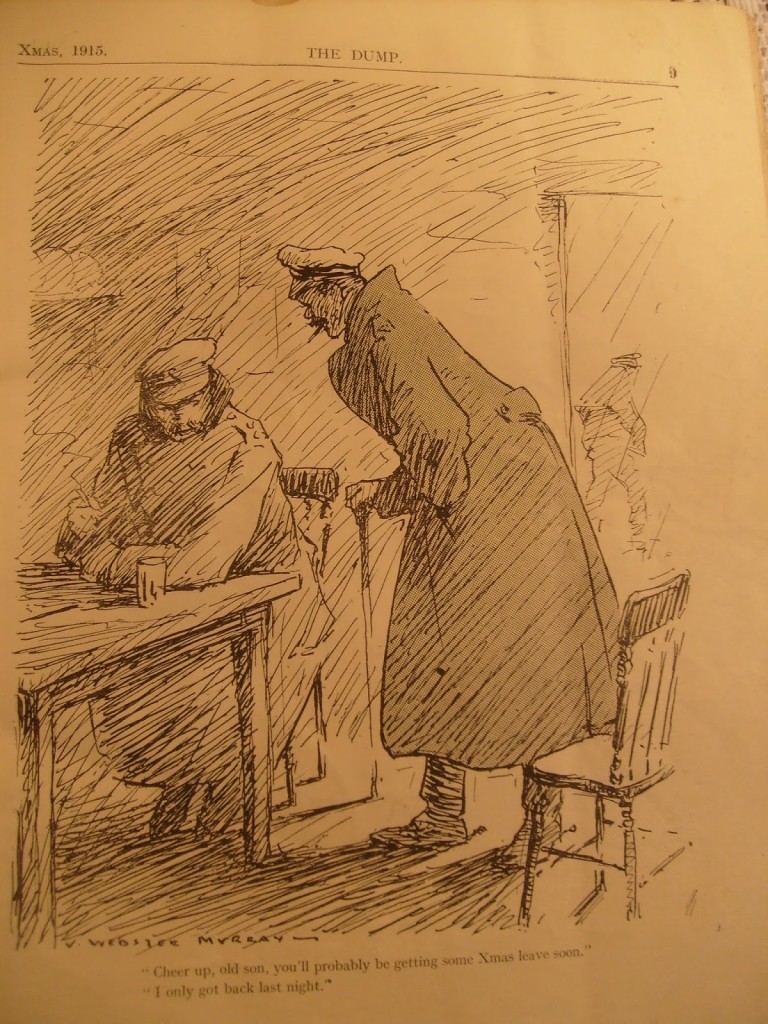
Contrary to what you might expect from a war journal, it is full of humourous cartoons and anecdotes.  Obviously it was aimed at the troops living in the trenches; keeping hold of your sense of humour when in such poor conditions can be all you need to stay sane.
 

On the first page an advertisement for “Wisquerine” appears; “The latest invention for raising hair on the most beardless youth’s cheek.”  One of the testimonials reads, “Your Wisquerine made me a terror to look at in less than a week.”  It is a product I can find no mention of anywhere else and am quite certain it is a tongue in (hairy) cheek advert, simply for amusement.

I have included some pictures of my favourite parts of the journal but here I
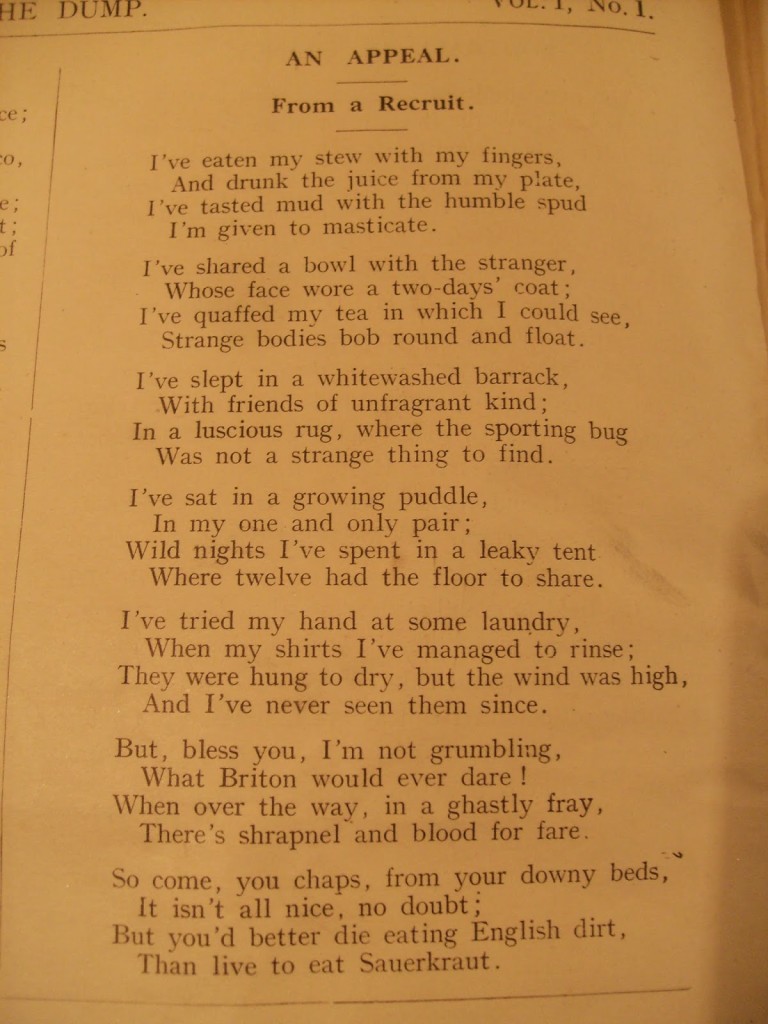
think I will leave you with a poem by “A Recruit” that seemed to stick with me.

Alex Rogers

AN
APPEAL


From a Recruit.


 I’ve eaten my stew with my fingers,

And drunk the juice from my plate,

I’ve tasted mud with the humble spud

I’m given to masticate.


I’ve shared a bowl with the stranger,

Whose face wore a two-day’s coat;

I’ve quaffed my tea in which I could see,

Strange bodies bob round and float.


I’ve slept in a whitewashed barrack,

With friends of unfragrant kind;

In a luscious rug, where the sporting bug

Was not a strange thing to find.


I’ve sat in a growing puddle,

In my one and only pair;

Wild nights I’ve spent in a leaky tent

Where twelve had the floor to share.


I’ve tried my hand at some laundry,

When my shirts I’ve managed to rinse;

They were hung to dry, but the wind was high,

And I’ve never seen them since.


But, bless you, I’m not grumbling,

What Briton would ever dare!

When over the way, in a ghastly fray,

There’s shrapnel and blood for fare.


So come, you chaps, from your downy beds,

It isn’t all nice, no doubt;

But you’d better die eating English dirt,

Than live to eat Sauerkraut.


Share

Deeply Dippy: The Rise and Fall of Pen and Ink

I’m sure many readers of this blog have fond memories of the
days when using biros, rollerballs and ballpoint pens was discouraged in
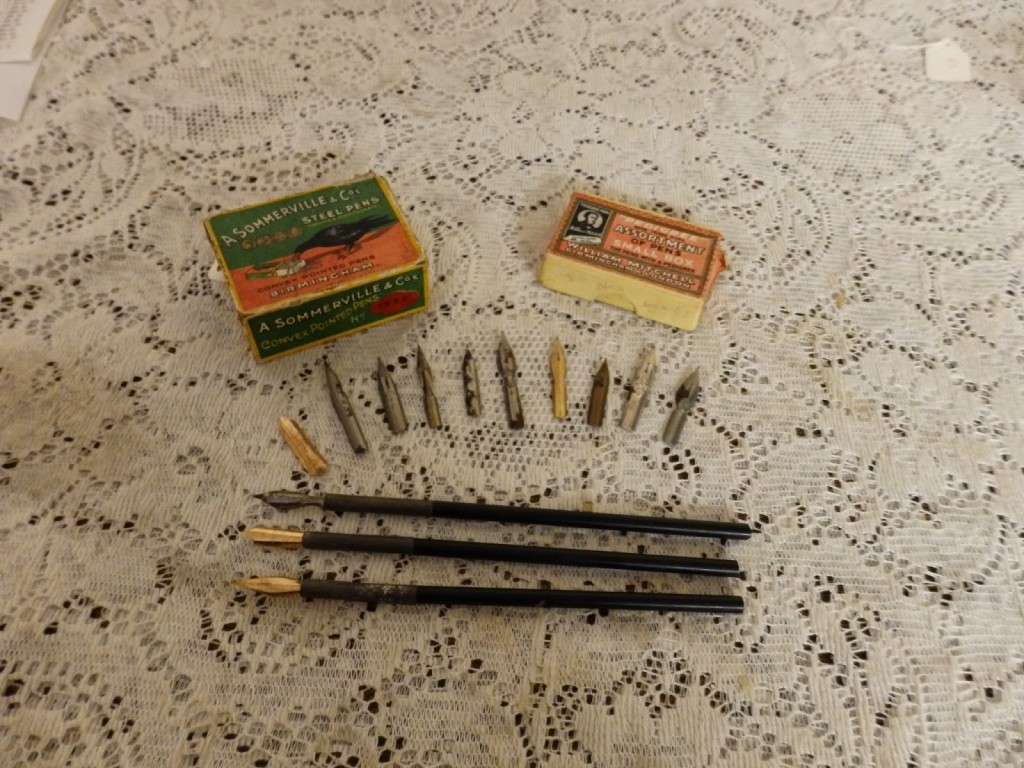
school, in favour of the dip pen.  Now
however, they seem to have become the standard.  I’m sure cost is the main reason, as well as speed with which
they can be used and tidiness.
Up until a few days ago, I had never used a dip pen in my
life.  Of course I used to use fountain
pens in school but handwriting wasn’t of the importance it used to be and I
would lose them or break them and go back to using cheap ballpoints. 

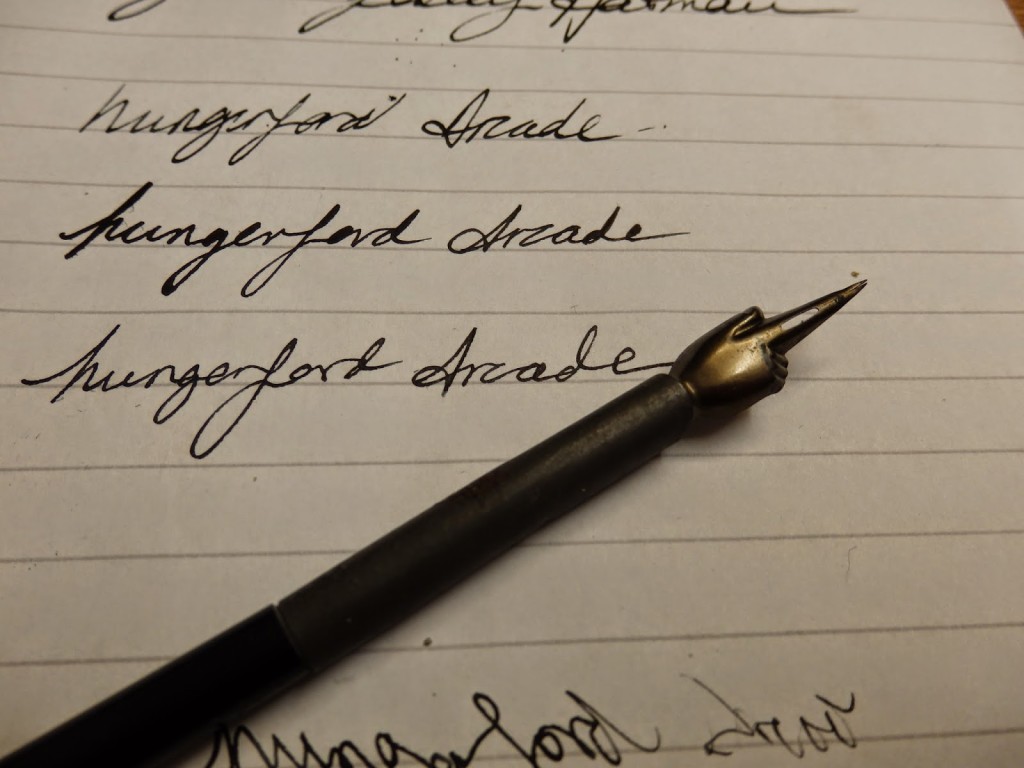
While using the dip pens in the pictures, I discovered that
contrary to my initial thoughts that it would be messier, it actually improved
my handwriting (though it’s still not very good).  The reason for this is that I was paying more attention to the
pen and how I was using it; I had to keep track of how much ink I had left on
the nib so I wouldn’t run out half way through a word; I had to be conscious of
the fact that the ink was still wet on the paper so I adjusted the position of
my hand so as not to smudge the previous sentence.  This may all seem second nature to those of you who used these
pens on a daily basis while in school but as I’ve said already, handwriting
wasn’t considered that important while I was in school in the nineties.
Dip pens have been used since the early 19th
century when they replaced quill pens and continued to be popular up until
quite recently.  
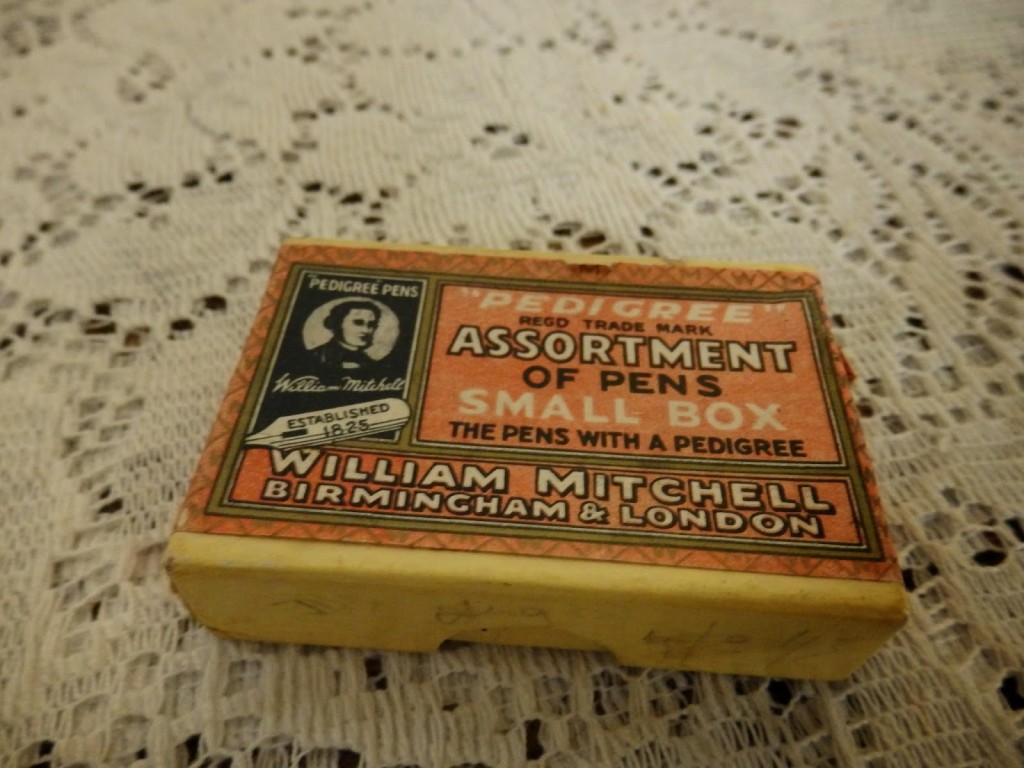
In 1822 John Mitchell of Newhall Street, Birmingham pioneered mass production of pen nibs and was closely followed by his brother William, into the industry.  The Mitchell Family was the first company to use machines to cut steel nibs, greatly speeding up the manufacturing process.  This mass production of cheap, quality nibs meant pens were soon available worldwide at a fraction of the cost of a good quality, hand-made feather quill, but just as functional.
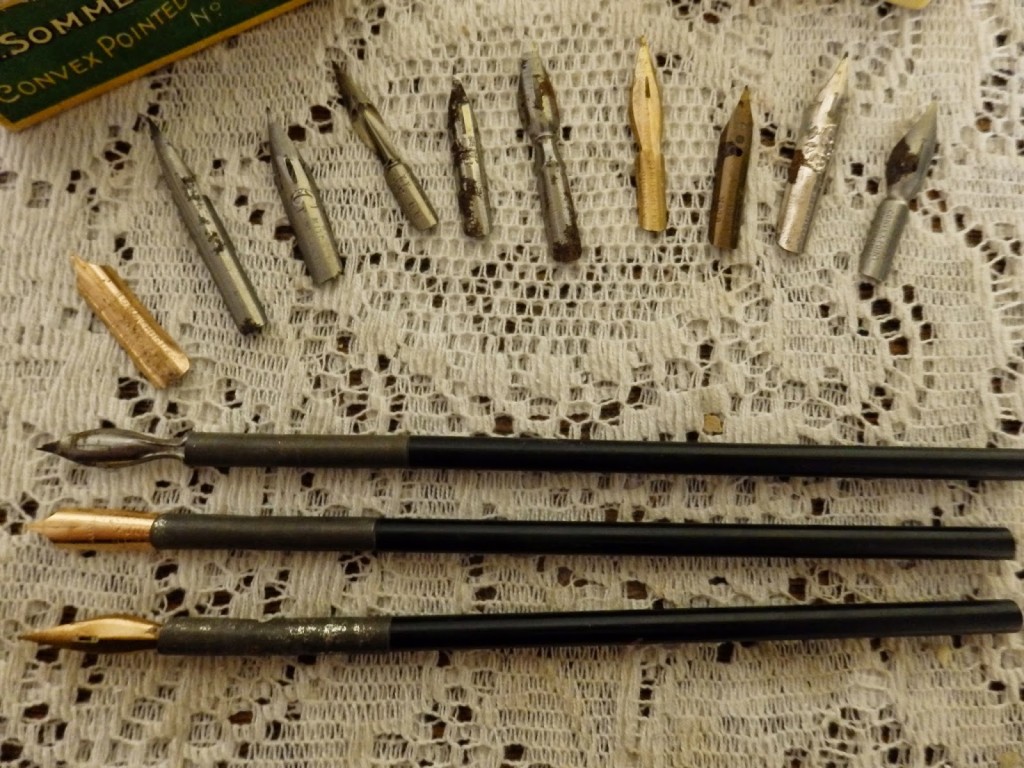
As you can see from the picture, they were available in many shapes and sizes to cater for any style of writing.  This greatly encouraged the development of education and literacy now that writing was available to all.  By 1860, Birmingham was home to over 100 producers of steel nibs and led the world in pen manufacture. 

The main users of them now are calligraphers, illustrators and cartoonists as they can apply a much finer line than any fountain pen and colour changes can be done much more quickly and cheaply by simply wiping the nib and dipping in a different colour ink.  The name dip pen is often not used by these professionals as they rarely dip to recharge the ink, preferring a pipette or syringe to apply the ink to the nib to keep control of the amount of ink used.  Therefore the name nib pen is actually more common.


Even though they are dying out, some people will always prefer to use them.  Whether it’s because they feel it helps them
to be neater, or take more time over their writing or maybe just for the
nostalgia, I’m sure they will never be forgotten about completely.  An author by the name of Shelby Foote is
testament to this by writing his massive trilogy on the American Civil War The
Civil War: A Narrative
using only a dip pen.  His reason was quite simple: 
the frequent need for dipping gave him more time to think about what he
was going to write next.  
 The widespread use of these pens continued into the late 20th
century when fountain pens were developed for use with a self contained
cartridge rather than the need for an ink bottle.  It wasn’t long before mass produced plastic disposable pens were
too cheap to ignore and they have now all but taken over completely.


Share

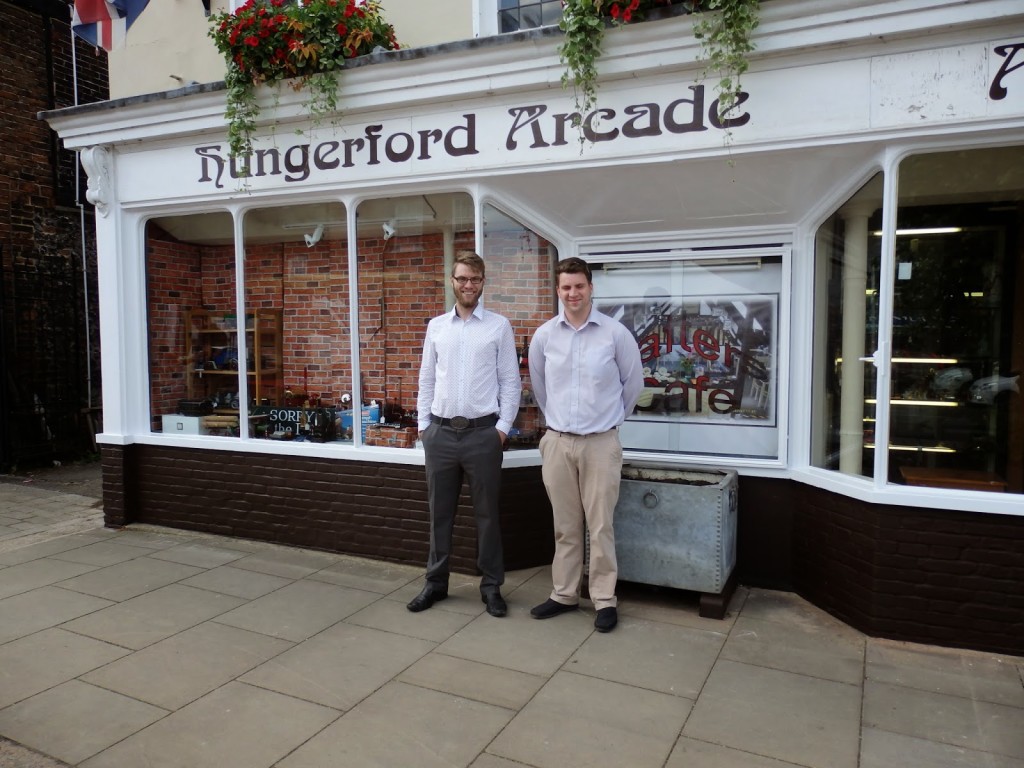
Hungerford Arcade Training Day


Manager, Alex Rogers with
trainee, Dan Evans

Our youngest ever stallholder at Hungerford Arcade, (Dan) Daniel Evans – Unit 30W had a very enjoyable behind the counter training day with manager, Alex Rogers.  He said that he loved meeting the customers and having a chat. All in all, Dan had a great day and would like to do it again some time.

Share

Hungerford Arcade Pye of Clitheroe

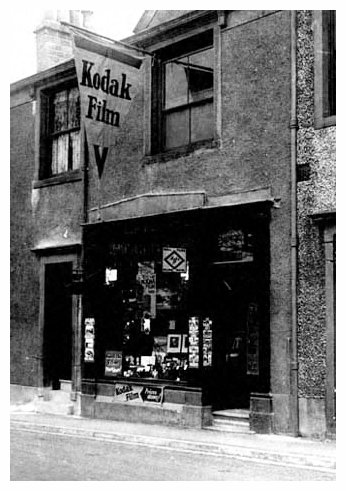
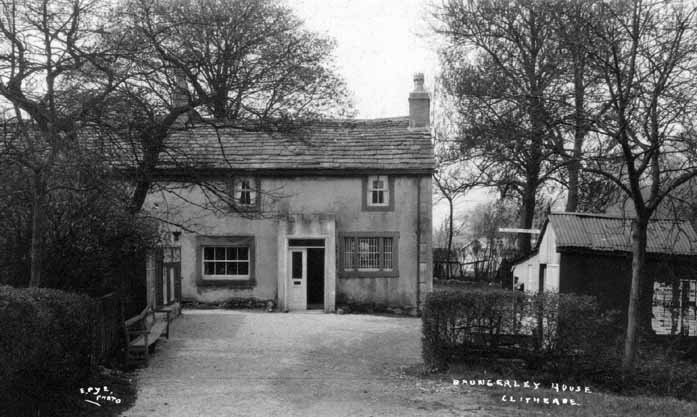
We had a very interesting lady, Catherine, who regularly visits Hungerford Arcade when she and husband, Barrie come down for a holiday.  She told me about her late Grandfather, Edward Pye of Clitheroe and the fantastic history of this wonderful place.  I do not have the photographs to which she refers so the best thing I can do is let Catherine brief you, but you must go to the website www.oldclitheroe.co.uk where you will be taken back in time with old photographs and more.  This is one of the best local history sites I have even seen so please, take a look.
Rita

My husband Barrie and myself,  visit the Hungerford Arcade 3 or 4 times
a year, when on holiday nearby.  We love to see all the different stalls, set out with very interesting, 
unusual and very often splendid antiques.
In October last year we were rummaging amongst the old postcards and came across 2 of great interest to us.  One was of Brungerley Bridge,  Clitheroe,  probably taken about 1920. 

We live in Clitheroe and cross this bridge several times a week. The second postcard

was of Waddow Hall Girl Guide Camp site……then in the North Riding (Yorkshire), but now in
Lancashire. The most amazing thing about this picture, was that it was taken by my late
Grandfather, Edward Pye of Clitheroe……the name being marked on the front of the card.
When I was a young girl, I used to go to Brownie camp at Waddow Hall…….it was just down
the road from where I lived.  Guides and Brownies from all over the World still come to Waddow Hall.
When I mentioned my postcard find, to the gentleman on the counter at the Arcade,  he suggested
I write an article for the Newsletter about  Pye’s of Clitheroe.
Look at those prices!


The easiest way for me to do this is ………………..my nephew,  Michael Pye  (Great Grandson of

Edward Pye who took the pictures) , has put together an amazing web-site, complete with some
moving pictures,  of Pye’s of Clitheroe and how our family business started and  of “Old Clitheroe”.
I am sure yourselves and your readers of the Hungerford Arcade Newsletter will find this web-site
truly adictive as it is very extensive and extremely interesting.
If you put  Old Clitheroe or  Pyes of Clitheroe  into  Google…..the web-site will come up right away.
Hope this will be of interest to you all.

Looking forward to our next visit which will be in June and following that…..in August this year.
Yours sincerely,
Catherine Lancaster…….(Pye)

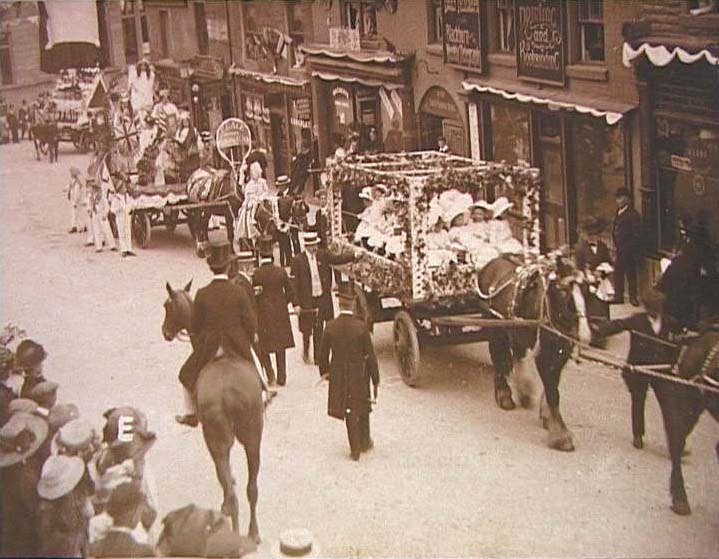
Parade in the old Market Square

For all the latest news, go to our Newsletter at www.hungerfordarcade.co.uk

Share

Hungerford Arcade – A New Life For Max

Arcade co-owner, Adrian Gilmour
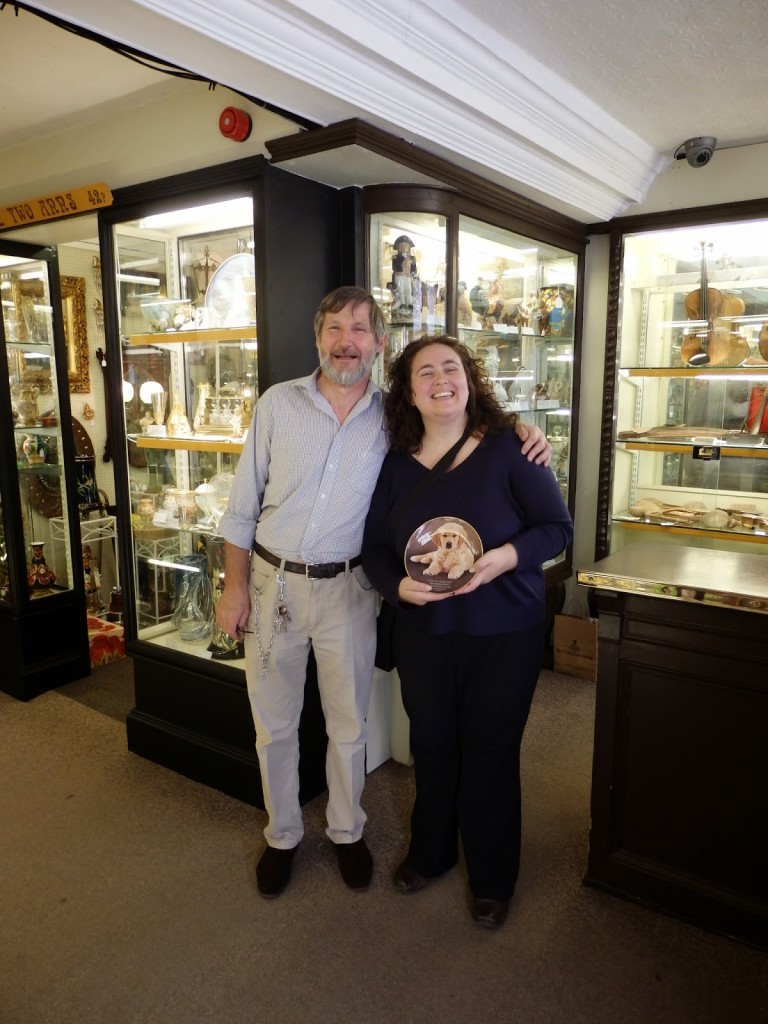
giving Victoria a well deserved hug

A lovely lady came to shop at Hungerford Arcade a few days ago and bought a lovely Labrador puppy plate.  Victoria Graham was such a happy person but sad when she told us about Max.  Victoria is with the charity, GSD Helpline. K9-RR (Rescue Raising) ‘A New Life For Max’ in conjunction with GSD Helpline, are raising funds for Max, a young German Shepherd who will be having a prosthetic limb fitted by world renowned Noel Fitzpatrick.


Max with vet, Noel Fitzpatrick of
the world renowned
Fitzpatrick Referrals, Eashing, Surrey
See more at:
 http://www.fitzpatrickreferrals.co.uk/


When Victoria told us about German Shepherd Max, it was heart breaking.  So that you can get to know Max, here is a brief history of his very sad life: “Max is not a Romanian street dog. He was bought as a puppy by his owners but throughout his life, he was kept outside, chained up and his only shelter was a car in total disrepair.  Sadly, this car was in such a precarious state that it ended up falling and crushing part of one of his hind legs. To make matters worse, the chain to which he was tied was so short that Max did not have the space to move or even lift himself off  the ground. The consequences of this cruelty are sadly all too clear. Max’s back is lowered towards the ground, his good hind leg has not developed and as such, has remained small. Owing to such awful living conditions and the resulting
 medical problems, Max has been living in mud and his own faeces. Even though Max has been through hell, nothing has changed his personality – he is very loving, playful and loyal. We want to help Max a much as possible, but the town where he lives does not have the facilities to provide the type of treatment that Max needs.  We know the UK can provide this because of its great international respect for treating disabled dogs.”

Max’s cause is a partnership with K9-RR and GSD Helpline doing wonderful work raising money for Max’s new limb.
There is also, Animal Lifeline Fundraising – an auction site raising money each month for UK dog charities. Next month is R.A.G.S. (Rescue Aid German Shepherd) and Sadie’s Auction Funds for dogs in the Bacau 
shelter in Romania, as well
as bringing vulnerable dogs
to the UK.


We all wish very Good Luck to Victoria and her colleagues and thank you all very much for caring for these wonderful, tragic dogs.

Tags:
You can follow Max on facebook – A New Life for Max

For all the news, go to our Newsletter at www.hungerfordarcade.co.uk
Rita
Share

Hungerford Arcade Leeds Castle Open Air Concert

I thought you might like to see what one of our stallholder’s got up to at the weekend.


June practising

Stallholder, Gary Cook (Unit 28) and his wife June, are part of the Garrison Artillery re-enactment group.  This particular weekend, they were called upon to fire the 25 pound guns for the 1812 Overture which was being played by The Royal Philharmonic Orchestra. Gary said, “We had three girls firing the guns and the lads loading the guns for them. They all did a splendid job”.  As you will see from the pictures below, they certainly did.
Rita

June & Gary
What a handsome couple!

The Garrison Re-enactment Group
with the 25 pound gun

Share

Hungerford Arcade WWI Centenary

HUNGERFORD ARCADE

1914 – 2014

The owners, mangers, staff and stallholders at Hungerford Arcade commemorate the centenary of the outbreak of WW1 on the 4th August.  Our thoughts and prayers go out to the families of the brave men and women who fought for our country in this catastrophic war and all the wars and conflicts which followed and sadly, still go on today.  
We will remember them!

Share

Hungerford Arcade Mosaicraft

Valerie, daughter Mandy, Rita
and Steve

We had a lovely family visit Hungerford Arcade.  Steve and Valerie Lewis with daughter, Mandy.   On a previous visit, they spotted a very expensive, high end teapot and said they knew it had their name on it and just had to have it.  – which is why they came back so quickly to buy it.


Whilst having a chat with them, Steve and Valerie disclosed that they run a family business called, ‘Mosaicraft’.  They are world leaders in their craft and the only people in Britain to have a shop.  Every picture (except the photograph) you see here is in fact a mosaic. Steve said the mosaic cubes they use are 10 pixels to the inch. You can find out more about them by visiting their new shop at the Clevedon Craft Centre, Studio 2, Clevedon, Somerset BS21 6TD. Or, visit their website at www.mosaicraft.co.uk

Rita

For all the latest news, go to our website at www.hungerfordarcade.co.uk


Share

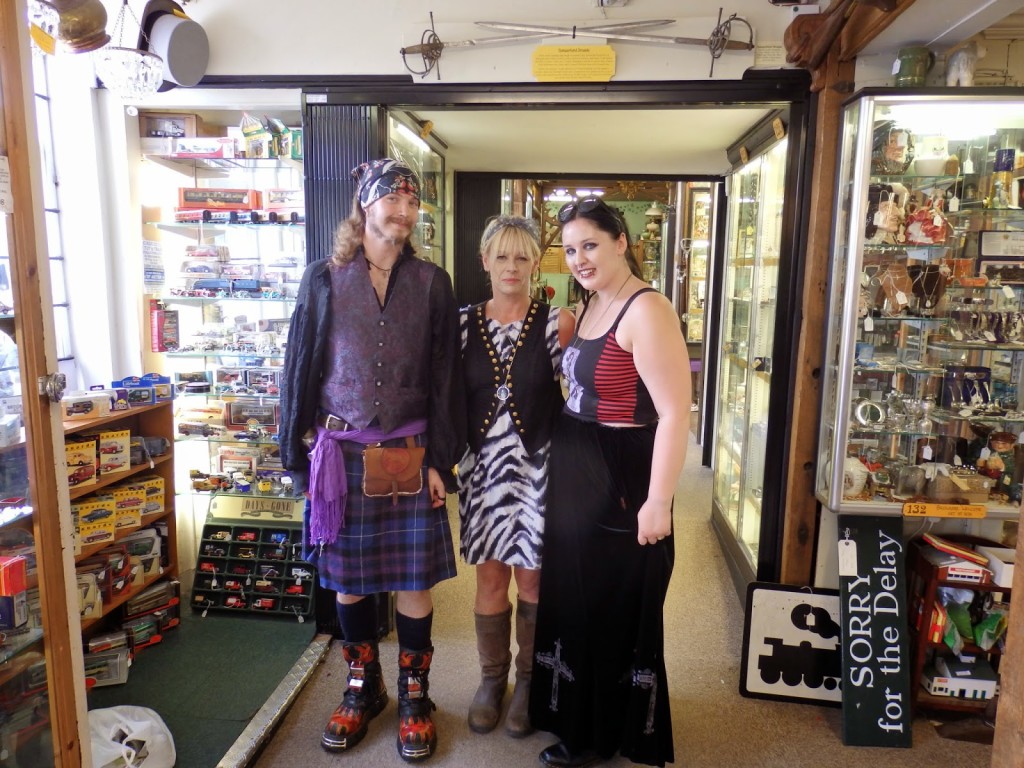
Pirates!

Why are pirates called pirates? Because they “Arr!!”  I discovered this today when these two very
authentic looking buccaneers plundered the Arcade for pewter tankards and
pirate treasure! 

Sam, Gale and Sammi

No, that’s not Jonny Depp! It’s Sam Morton and Sammi
Wynn-Jones with Arcade assistant Gale Harman. 
Sam and Sammi are pirate and medieval re-enactors, taking part in shows
and fairs around the country.  Also an
avid pewter tankard collector, Sam often comes into the Arcade looking to
expand his collection. 
They are members of a re-enactment group based in Basingstoke
called The Greyhounds of St Edmund and will be appearing at Loxwood Joust in Sussex
on Saturday 1st August. 

Stallholder Christine Pym with Sam


Search for The Greyhounds of St Edmund on Facebook to learn more about what they do and when they are coming to pillage a town near you! 
  
Alex

Share