Category: Uncategorized

Hungerford Arcade Railway to Hungerford

Our great author, Stuart Miller-Osborne has written a wonderful article on Hungerford and the railways.  It is a very interesting and nostalgic read, especially when you are relaxing with a nice cup of tea and a biscuit.  Feeling refreshed? Come and visit us at the famous Hungerford Arcade and see what people get excited about!
Rita

One
of the great joys of visiting Hungerford is that you can travel to
the town by either road or rail or, water if you choose to use the
canal. 


The
town is made up really of two main roads. The Bath Road and the
Salisbury Road which meet at the Bear Hotel near the Rivers Kennet
and Dun but if you travel towards the town on the Salisbury Road (the
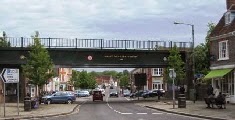
main High Street), you will as you cross the canal bridge, see the
railway bridge which cuts the town in half.

You
will also note that Hungerford is partially built on the side of a
hill and this, when the railway was being planned, would have presented
a number of obstacles.

This
is why for part of its journey through Hungerford the railway was
built on an embankment which can be clearly seen when the railway is
viewed from the main street in the town. 
Obviously
if the railway engineers had planned otherwise then the railway would
have been threatened with flooding as the ground at river level would
have acted like a basin when the rivers overflowed, as they were prone
to doing during the nineteenth and twentieth centuries.

In
my view there is nothing better than being in the High Street when an
express thunders across the bridge at speed. The whole area seems to
rock and shake for a few moments before peace is restored. 

The
railway like the Town Hall, is a part of Hungerford Life and
surprisingly the railway pre-dates our present town hall by some
twenty-five years.

The
first stirrings were in 1845 when a line from Reading to Hungerford
(via Newbury) was proposed. This was some four years after Brunel’s
main line between London and Bristol was opened in 1841 and by the
December of 1847 Hungerford had become the termini for this double
track broad gauge extension from Reading.

The
railway even had a turntable so that engines could be turned and this
is how things stayed for the next fifteen years. 

In
1859 it was proposed that the railway be extended beyond Hungerford
for some twenty-four miles to Seend near Devizes where it would be
linked with the Wilts, Somerset and Weymouth Railway. 

It
was then that the railway really began to take shape and the first of
three bridges was constructed over the High Street and the railway
began to resemble the railway we see today.

There
is a beautiful account of Hungerford in the Bradshaw’s of 1866
which I have copied below. This can be found on the excellent
Hungerford Virtual Museum website along with a number of nostalgic
photographs
Bradshaw’s
Guide [Bradshaw’s Tours, Section II,
1866)
HUNGERFORD.
POPULATION, 2,051
A telegraph
station
HOTEL – Black Bear
MARKET DAY – Wednesday
FAIRS
– Last Wednesday in April and Sept., and first Wednesday in
Oct.
 

HUNGERFORD is a market town which
stands partly in the county of Berks, and partly in that of Wilts.
The Kennet flows past this town, which opens a communication with the
river Thames on the east, and the Avon and Bristol Channel on the
west. The town principally consists of one long main street, with a
few smaller ones branching from it.

In the centre stands the
market house, over which there is a large room for public business
and here is still preserved the Hungerford Horn, presented to the
corporate body by John of Gaunt. It is made of brass, and is blown
every Horn Tuesday to  assemble the inhabitants for the election of
the town constable.

From Hungerford you may follow the
Berkshire Downs round to Reading, past Lambourn, Ashdown (where
Alfred beat the Danes). Uffington Castle, Wayland Smith’s Stone, the
White Horse Hill (893 feet high with the figure of a galloping horse
370 feet long, cut in the chalk). Wantage, along Ickleton
Street (a Roman way on the ridge) to East Ilsley (noted for its great
sheep fairs), and so to Reading, a strip of about 40 or 45 miles,
never to be forgotten by a light-heeled pedestrian.
The Berks
and Hants, a railway 24½ miles long, begins here and runs through a
nearly level country. Although the title would seem to imply, it
forms no connection between the two counties named, taking as it does
a westerly direction from the borders of Berks through the very heart
of the county of Wilts. 

In
those far off days you could travel from Hungerford to Devizes quite
easily or change trains at Holt Junction. In time, the Broad Gauge
tracks were changed to Narrow Gauge and the line which had originally
been a single line was doubled.

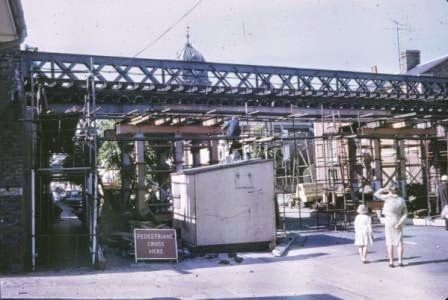
In
1896 the original bridge was replaced (This bridge was subsequently
replaced again the 1960s).

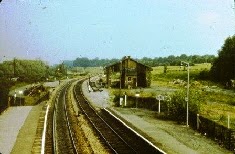
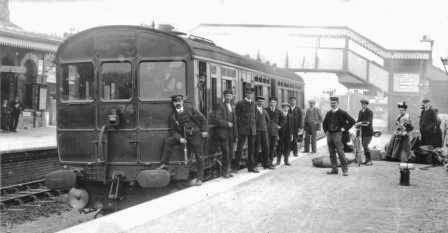
A
fine country station, a goods shed and two signal boxes were also
added.

As
with most things Victorian, it was a tidy compact set up which seemed
to compliment the nearby Hungerford Common. 
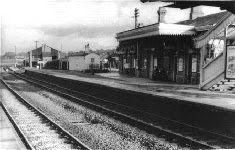
But
sadly whilst the line survived the Beeching/Marples cuts in the 1960s, the station did not. It was deliberately left to go to rack and ruin
and the last buildings were demolished in the early 1970s.

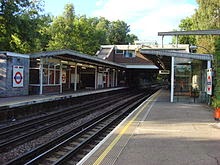
What
we were left with is roughly the station we see today. The initiative
by Network South East in the 1980s can still be seen, although the
spartan waiting shelters are in the process of being replaced. 

Whilst
functional, the state of the current station is a little sad but there is, I hope, light at the end of the tunnel as there are plans to
redevelop the station area, which I trust will include the upgrading
of the station.
As
with a lot of things these days and after the farce of privatisation, there are so many agencies involved that this might be a lengthy
process. Time will tell. 

In
a way current events are mirroring the pioneering days of Victorian
times. The railway is soon to be electrified to Newbury which I have
mixed feeling about having seen the destruction it caused in the
Hemel Hempstead/Berkhamstead areas in the 1960s.

Personally, I do not think that electrification will proceed beyond Newbury for
three reasons. Firstly cost, as there are a large number of small
bridges in the town and beyond. 

To
replace these, (some of which carry just farm tracks), would be very
costly and if the new bridges near Aldermaston are to be the type of
replacements then this would run into enormous opposition.
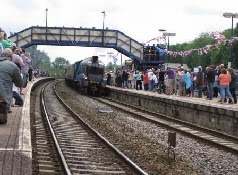
This
also brings me onto my second point as here in Hungerford, we live in
an Area of Outstanding Natural Beauty (the totems and station signs
at the station advertise this) and any thoughts of electrification
would run into a very strong green lobby and the arguments and
counter arguments would take years and years to resolve. 

Thirdly,
the current line does not run towards Devizes anymore but towards
Pewsey and

Westbury which are essentially lightly populated areas. It
would not really make proper economic sense to electrify this part of
the line. 


As
I mentioned, Devizes is no longer connected to the railway. The
station site (which I remember from my childhood) is now a car park
and the tunnel that ran into the station is now used in part by a gun
club. 

Seend
station is just a couple of platforms hidden in the undergrowth with
the once busy track bed a series of puddles. 

I
have not been able to locate Holt Junction station but I was told
locally that it was just another meadow with no trace of its former
use to be seen. 

We
are lucky that Hungerford retained its railway with smaller
communities such as Kintbury and Bedwyn also being served. Although
the railway station is a little scruffy, we have a fine refurbished
railway bridge which adds to the majesty of the town.
I
would like to think that any visitors that do travel to Hungerford
will find the town most agreeable. We have some fine antique outlets
which, if you look hard enough, do sell items connected with the
railway.


Recently
I have seen a couple of cast metal signs for sale plus other railway
memorabilia such as lamps and railway tickets. If you prefer model
trains then these can also be found in the town at reasonable prices.

It
is quite fun to collect things connected with the railway as today in
many areas of the country the railways disappoint. I frequently
travel to Kent and some of the fine Victorian stations are dreadfully
neglected.

Unless
we do not care for the railways at all, there is a sense of nostalgia
when one looks at old photographs of the railway.

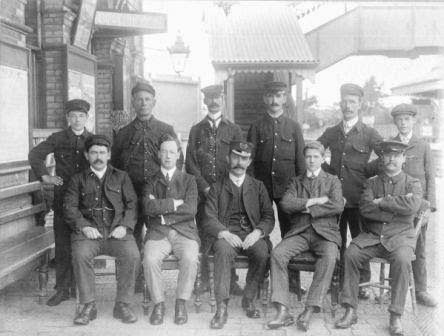
When
sturdy stations were built even for the smallest of villages, these stations were fully manned by caring railwaymen in company
uniforms. 

Perhaps
if you read my article again in five years’ time (2020), and the
proposed development of the station area, maybe the station will
be complete, which would be delightful. 

The
madness of electrification would have been stopped at Newbury and
visitors would able to travel the ten miles to Hungerford and sample
the delights of our town (there are many) and perhaps seek out their
own small piece of railway history when they visit one of the many
antique establishments in the High Street and beyond.


Stuart Miller-Osborne

For all the latest news, read our Newsletter at www.hungerfordarcade.co.uk
Share

Hungerford Arcade Jo May and the Spoon for Dotty Day


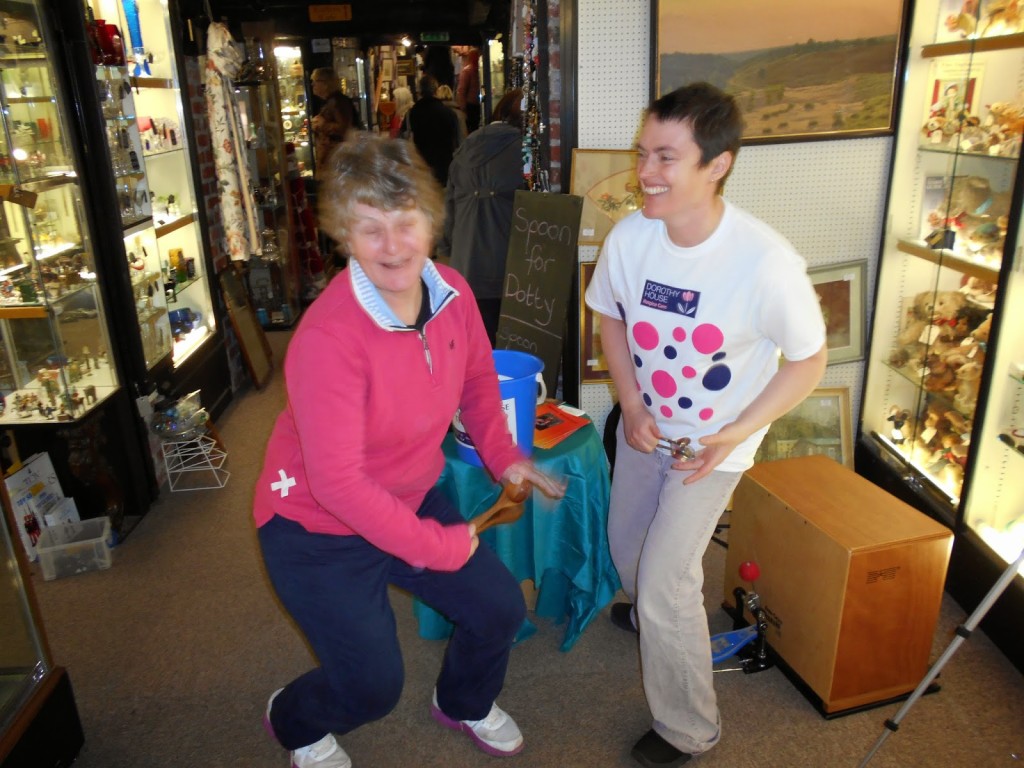
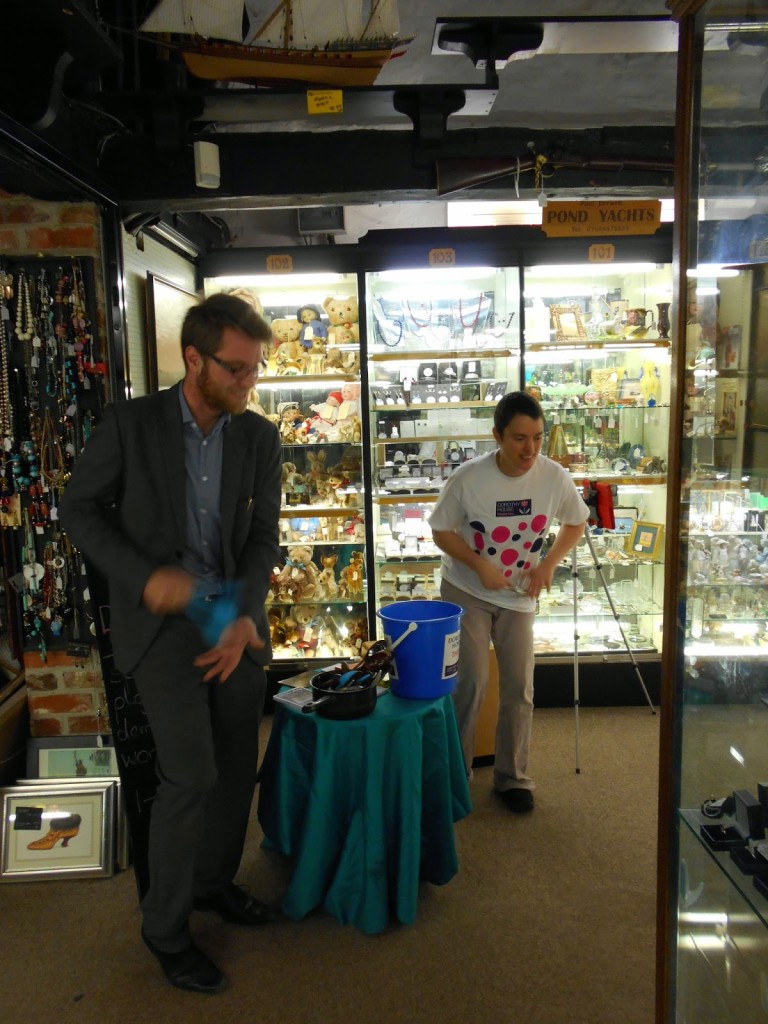
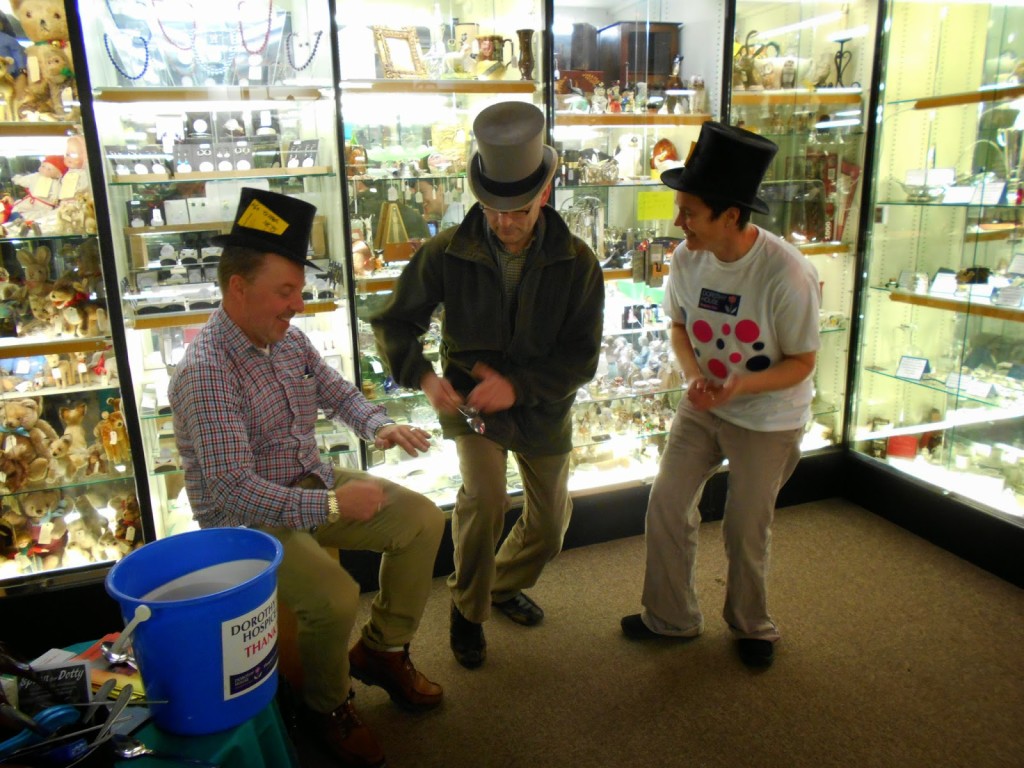
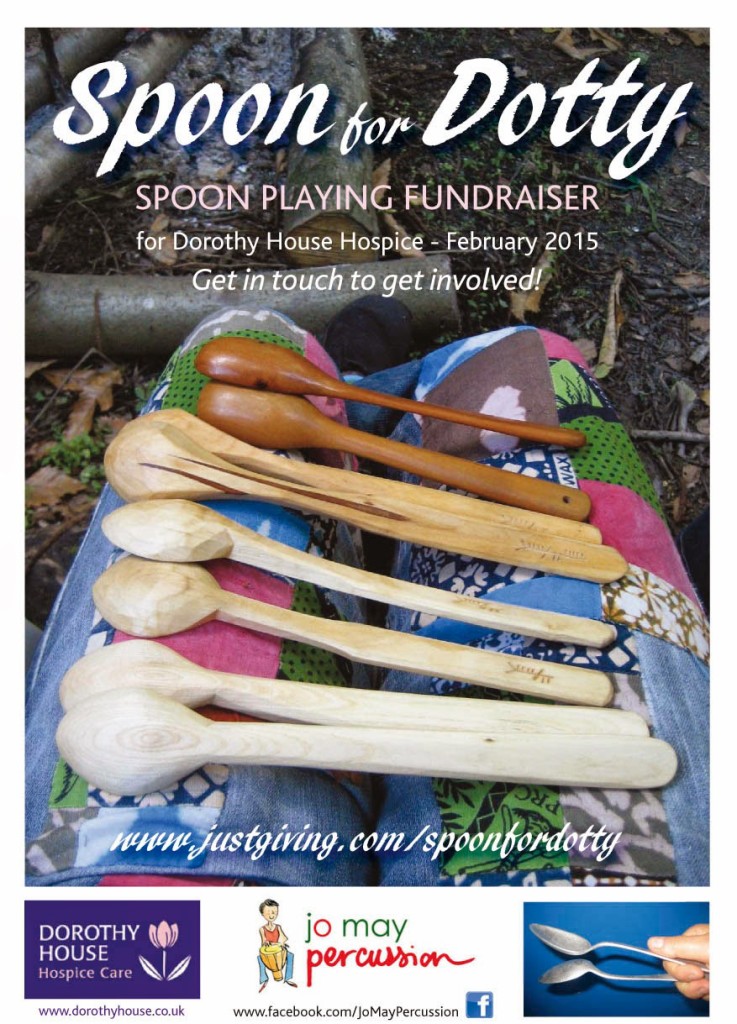
What a great day it was on Saturday at Hungerford Arcade.  The door burst open and in came this bright, bubbly, fun lady, professional percussionist, Jo May.  Jo came to the Arcade to play the spoons and do workshops for all those wanting to take part.  After setting herself up, there was no shortage of people wanting to have a go and even do a duet with Jo.  First up was Arcade manager, Alex Rogers, closely followed by stallholder, Ian Spuffard.  Ian, Jo and another gentleman wore top hats which all added to the fun. Next up was stallholder, Ann Parker and I must say, they were all very good.  Jo played the spoons almost non-stop from when she arrived just before 1.00 pm to 6.00 pm. 


The story behind this event is, in Jo’s words, ” I’ll be doing a spoon-playing fundraiser throughout February 2015 for Dorothy House Hospice in support of my sister Karen who was diagnosed with secondary cancer two years ago”.  Hence the name, ‘Spoon for Dotty’.  The customers and the staff thoroughly enjoyed the whole afternoon and Jo collected over £130 towards her goal of reaching £1000 by the end of February.


You can follow Jo on the following links
Rita
www.youtube.com/watch?v=qFR79e_WMUE
www.youtube.com/watch?v=rWTBJf9zLc0
www.facebook.com/JoMayPercussion


For all the latest news, go to our Newsletter at www.hungerfordarcade.co.uk


Share

Hungerford Arcade – Farewell Paddy

HUNGERFORD ARCADE
24/4/1928 – 6/2/2015

It is with great sadness
that we announce the passing of  our
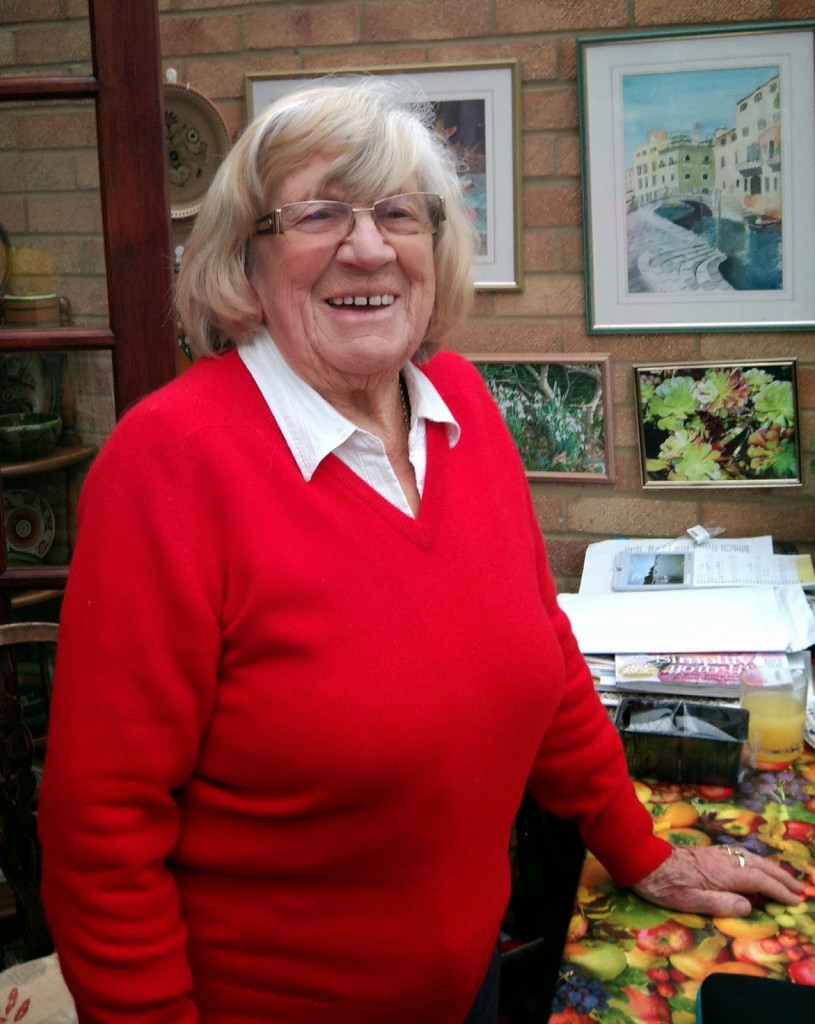
very dear friend, Paddy (Patricia Joan May Porter). 
Paddy has been a stallholder here at the Arcade for over 30 years and
will be sadly missed.
We send our sincere condolences to Paddy’s family and
friends.  Our thoughts are with them at
this very sad time.
Funeral taking place at St Mark’s Church, Coldash at 12.30 p.m,
Thursday, 19th February 2015

Family flowers only. 
Donations to The Newbury & District Cancer Care Trust.
Adrian, Hazel,
Managers, Staff and Stallholders
Share

Hungerford Arcade: Birthday Brooches

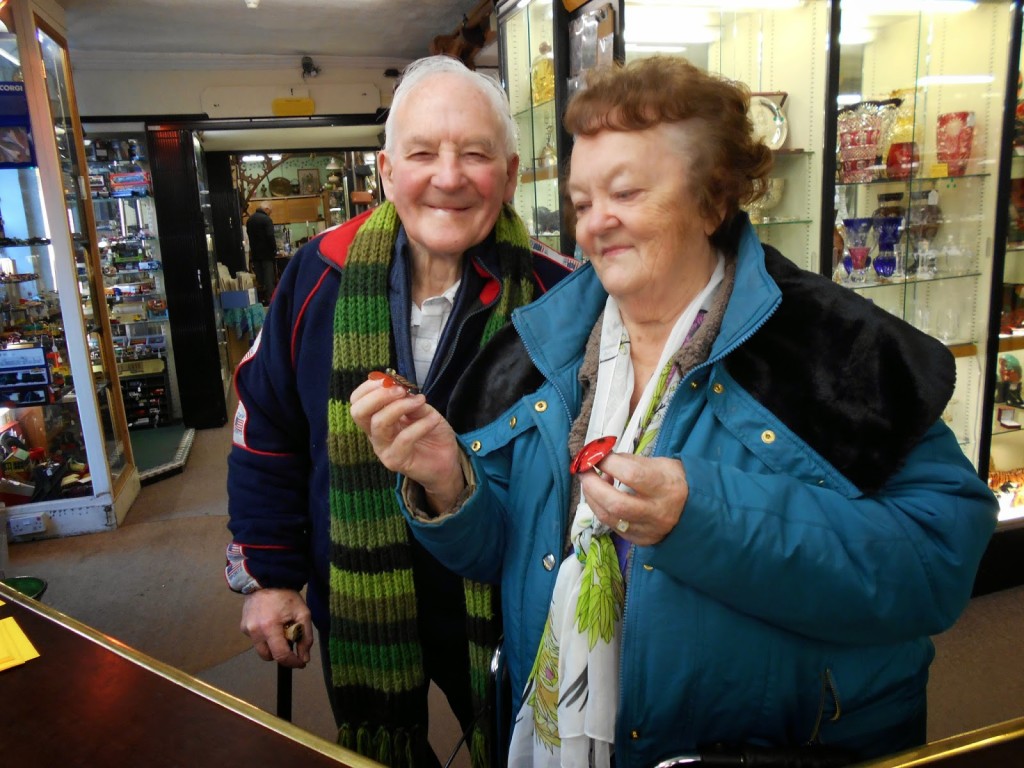
Happy birthday to Mrs Harman from Swindon!  Not only has she been put up in Littlecote House Hotel for two days by her lovely husband to celebrate her 80th birthday – he topped it off by buying her these two fantastic Lea Stein brooches to remind her of a brooch she once lost.  She was overjoyed with her presents.  

Happy Birthday from everyone at the Arcade!

Alex
  
Share

Hungerford Arcade Deb’s Candle Cups


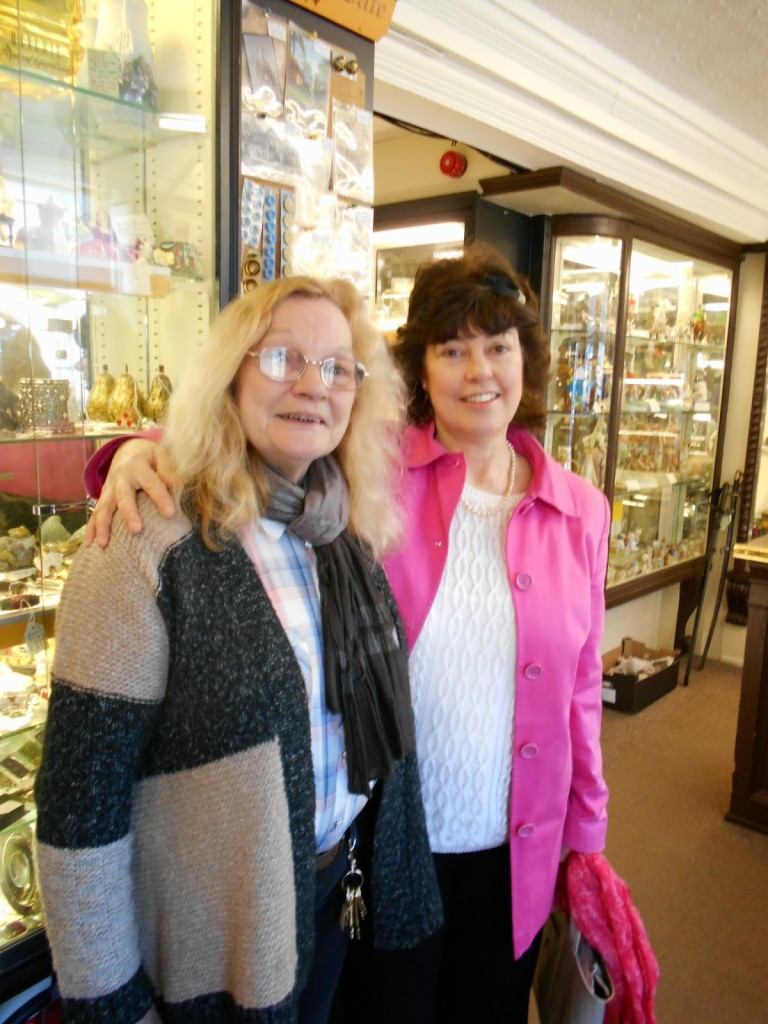
We are very fortunate here at Hungerford Arcade because our customers love to talk to us and tell us why they are buying certain items and what they intend doing with them.  Today a lovely lady, Debbie Turner came into the Arcade and was buying all types of china.  There were cups and saucers, vases, small pots, an assortment of all shapes and sizes. Debbie said she buys this type of china to put candles in so that she can sell them for a charity close to her heart, the Camberley Cats Protection 

Rita and Debbie

League.  Debbie is a very busy lady working at the Gordon House Veterinary practice in Blackwater, Camberley as the Feline Behaviour Advisor for Blackwater Valley Vets.  With such a busy work load, she has still found the time to come all the way to Hungerford to fulfill her mission, once again at the Arcade.  It was lovely to meet you Debbie and good luck with your wonderful candles helping the beautiful cats.
Rita 

Share

Hungerford Arcade: Busking Piano

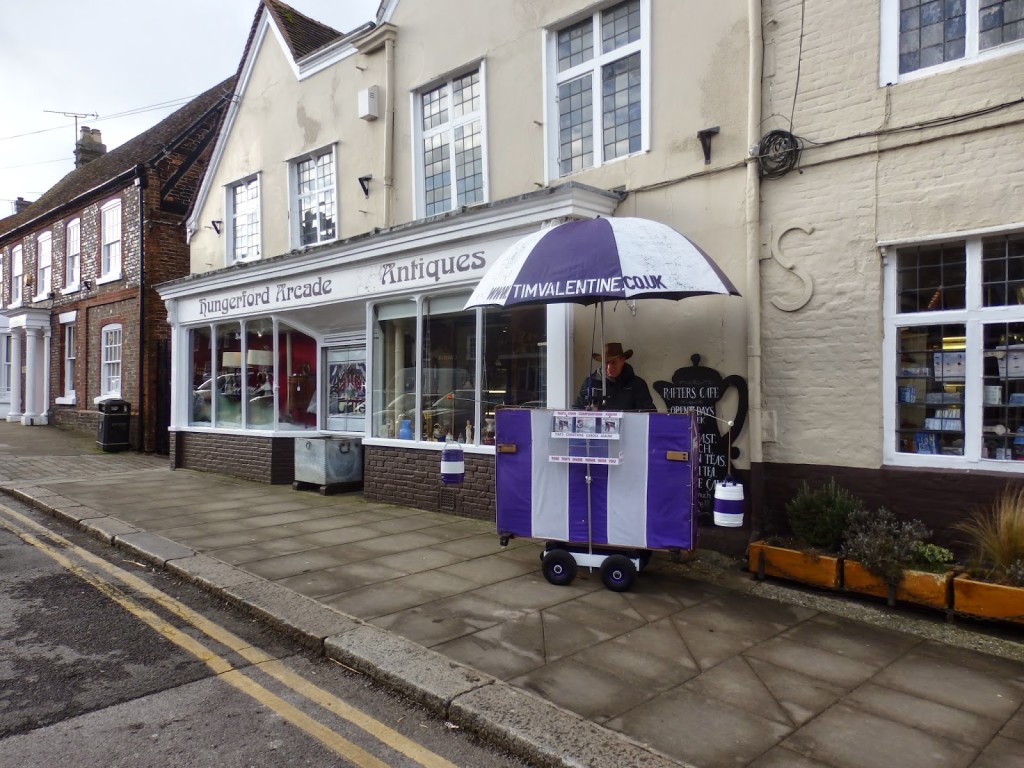
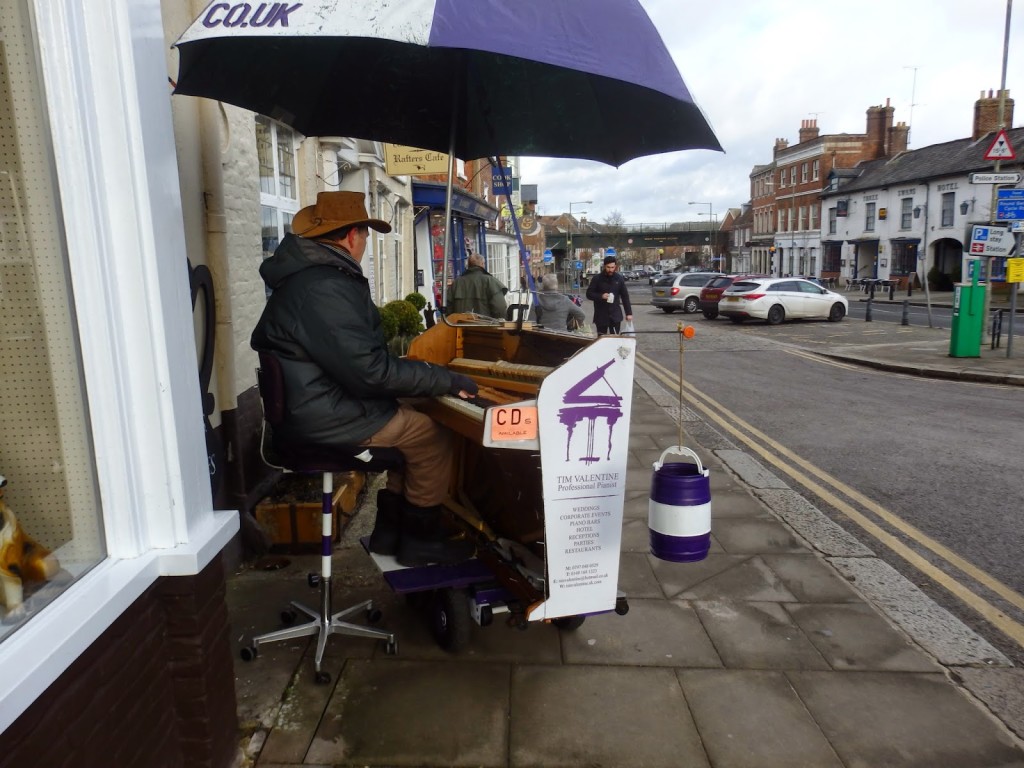
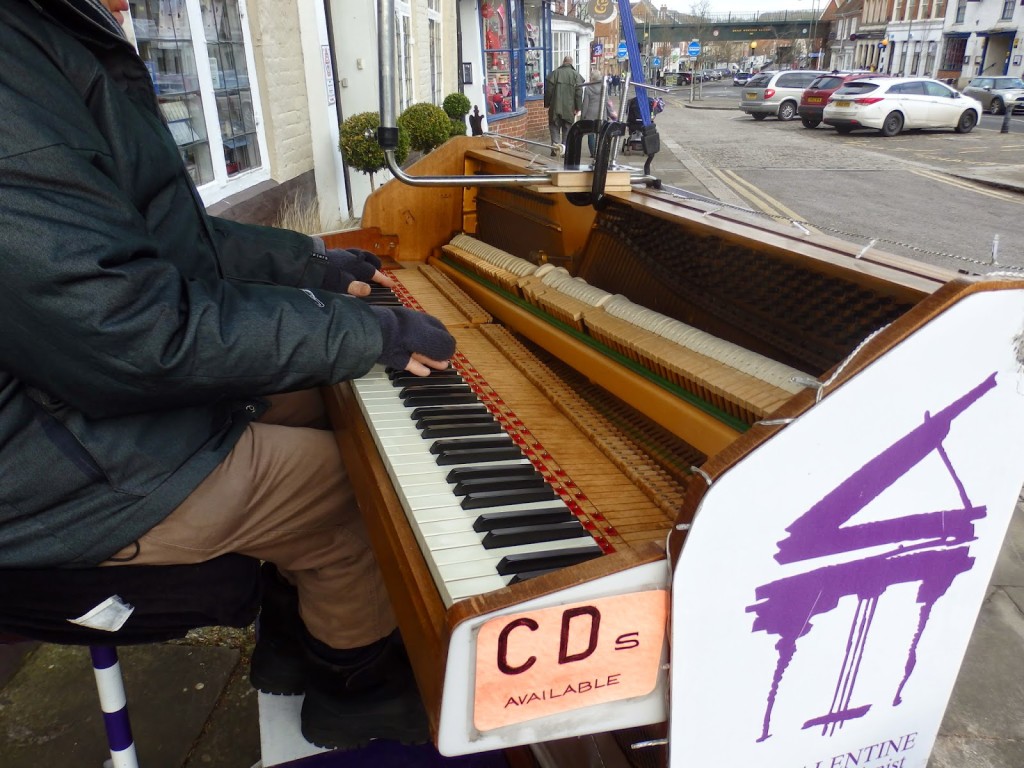
You don’t see many buskers on the streets of Hungerford, but when they do show up, they do it in style!  I noticed Tim Valentine through the window of the Arcade, unloading a huge shipping case from his car.  I had no idea what was going to come out of it.  As it unfolded, a stool appeared.  Then an umbrella went up!  But soon it all became clear.


It turns out that Tim is a travelling pianist and what he brought to Hungerford was his famous Busking Piano which he has adapted for playing almost anywhere, in all weather conditions.  From local streets to grand halls, Tim has played all around the world and it was a real pleasure to hear him play some classics outside the Arcade.  Come back soon Tim!

Check out his website at www.timvalentine.co.uk 

Alex

Share

Hungerford Arcade Spoon for Dotty

We are very proud to welcome to Hungerford Arcade on Saturday, 7th February Jo May.  Jo will doing a spoon playing and workshop fundraiser raising money for Dorothy House Hospice near Bath, in support of her sister who was diagnosed with secondary cancer a couple of years ago.  It’s called Spoon for Dotty.  Every day in February, Jo will be going to a different kitchen or cutlery-related venue, raiding cutlery drawers, trying out different spoons. Jo was so excited when she saw Unit 10 here at the Arcade, owned by Barbro Rees who specialises in cutlery.  She fell in love with it when she saw the wonderful spoons in there.

You can find out more about Spoon for Dotty and Jo on the following links:
Do come along and give Jo a huge welcome here at Hungerford Arcade this Saturday, 7th February from 1.00 pm to 6.00 pm. Hopefully, later on in the afternoon, Jo may be accompanied by guitarist, Matt Sullivan.
Rita
For all the latest news, go to our Newsletter at www.hungerfordarcade.co.uk
Share

Hungerford Arcade Mrs Beeton


Our resident author, Stuart Miller-Osborne has written a wonderful article about Mrs. Beeton and all that she achieved in her short life.  I enjoyed reading it very much and I am sure you will too.
Rita


ISABELLA BEETON


Before I start, let me confess that I am probably the least qualified person on the planet to write about Isabella Beeton. I am one of those unfortunates who have no ability in the kitchen and if left to their own devices would most probably starve to death in an attic room. 


But why write of Isabella (as I shall call her)?  She has been at rest with her husband Samuel for nearly one hundred and fifty years at a cemetery in West Norwood but visit any cook shop or book shop and you will find many references to Isabella.

But why has Isabella travelled the years with ease whilst a contemporary such as Eliza Acton (1799-1859) is almost forgotten? I think the main reason was that she was really in the right place at the right time. A number of people think her writings inferior to Acton (Who was a great influence on Isabella). I am not in a position to discuss this but on researching Isabella’s life I can see their point. Whilst being ultimately a very unlucky woman she had many things going for her which I will reveal as I progress. 

Isabella was born on the 12th of March 1836 at 24 Milk Street in Cheapside, London. This was the first coincidence of her short life as her future husband Samuel Orchart Beeton (1830-1877) was also born in the same street some six years before Isabella. After her birth father died when she was quite young, her mother remarried a Henry Dorling who happened to be clerk of Epsom Racecourse. She attended a school in Heidelberg in Germany before returning to Epsom (where they were now living) after two years. 

Isabella, the eldest child of a rather large extended family (twenty one in all) and although a talented pianist soon became involved in many household duties which held her in good manner for famous book. 

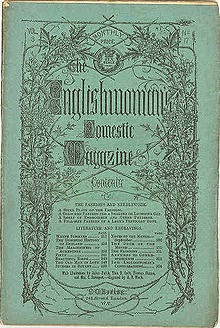
Isabella met her future husband through her mother. Samuel was already the publisher of various books and magazines. He had an early success with the publication ofUncle Tom’s Cabin by Harriet Beecher Stowe in 1852 and also published the successful The Englishwoman’s Domestic Magazine as well as The Boys Own Magazine

She and Samuel were married in Epsom on the 10th of July 1856 and soon moved to Hatch End in North London. Her first child (Samuel Orchart) was short lived but she had another child in 1859 (also named Samuel  Orchart). During this time she wrote articles on household management and cooking in general for her husband’s magazines including a monthly supplement to the The Englishwoman’s Domestic Magazine.

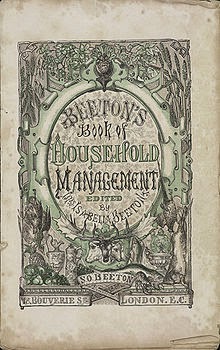
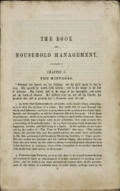
In 1861 these articles were collected together and published in a book format with the huge title of The Book of Household Management, comprising information for the Mistress, Housekeeper Cook, Kitchen-MaidButlerFootmanCoachmanValet, Upper and Under House-Maids, Lady’s-Maid, Maid-of-all-Work, Laundry-Maid, Nurse and Nurse-Maid, Monthly Wet and Sick Nurses, etc. etc.—also Sanitary, Medical, & Legal Memoranda: with a History of the Origin, Properties, and Uses of all Things Connected with Home Life and Comfort or The Book of Household Management for short.

As with certain publications today, it hit a certain vein with the public. It sold in excess of 60,000 copies initially and by 1868 (three years after Isabella’s death) it had sold some two million copies.  One would have thought that this success was the beginning of great things for Isabella and Samuel but sadly, it was in a way the beginning of the end. 

The book that was often known as Mrs Beeton’s Book of Household Management offered advice on a large variety of subjects ranging from the treatment of servants to that of animal welfare. It was an essential addition to any household of the time. It was some eleven hundred pages long with over nine hundred recipes noted. 

As photography was in its infancy the book was lavishly illustrated with engravings and its lasting name Mrs. Beeton’s Cookbook  was soon attached to the publication. This name has survived the test of time and the book is still known by that title today. 

The major difference (and what made it so popular) was that unlike Eliza Acton and the even earlier Hannah Glasse (1708-1770), the book was written in an easy format, very much like reading Nigella or Delia in the present day.  

Isabella was sadly accused of plagiarising other cookery related authors, but she and her husband never noted that the work was originally theirs. It was put together as a guide, very much as a travel writer might reference earlier writers in his work.  As with a collector, she was a complier of all the things she found.

But Isabella was more than that and a short piece from her half-sister (which is easily found on the internet), gives you felling of the person. I will quote it in full:

“Different people gave their recipes for the book. That for Baroness pudding (a suet pudding with a plethora of raisins) was given by the Baroness de Tessier, who lived at Epsom. No recipe went into the book without a successful trial, and the home at Pinner was the scene of many experiments and some failures. I remember Isabella coming out of the kitchen one day, ‘This won’t do at all,’ she said, and gave me the cake that had turned out like a biscuit. I thought it very good. It had currants in it.”

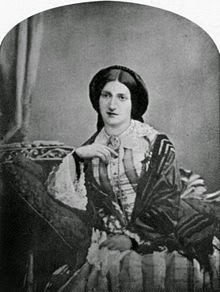
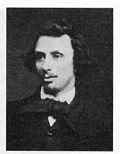
Referencing this passage I can see Isabella juggling everything but not dropping one ball and when disasters occurred, she just cleared up and started again. There is a photo of her online and to me she looks like a minor poetess of the day with dreamy distant look in her eyes (obviously the portrait was heavily posed). She might have been on the fringes of The Pre Raphaelite Brotherhood or the author of sad romances but she was not, she dealt in the reality of the Victorian household and the success of her husband’s business.  

Sadly in January 1865, Isabella, after giving birth to her fourth child became ill with puerperal fever and died at the early age of twenty eight, a week later. What struck me was the amount she had managed to pack into her short life and how some one hundred and fifty years later she is still a household name mentioned in the same breath as all the modern cooks and chefs. 

After the tragic loss of Isabella, Samuel’s life took a turn for the worse, You would have thought that the loss of his beloved wife would have been enough for the poor man to behold but in 1866 due to the collapse of a discount house he was attached to, Samuel found himself facing bankruptcy. To avoid this, he sold the copyrights of his publications for just under £20,000. His later years were marred by the onset of tuberculosis and he died on the 6th of June 1877 at the young age  (by today’s standards), of forty seven.  As I have previously noted, both are buried together in the West Norwood Cemetery. I believe, with their firstborn.

If you are off on the Beeton trail today there is, as far as I can see, very little to see. I am led to understand that their first home in Hatch End was destroyed during an air raid in 1940 although West Norwood Cemetery is still there with its impressive gothic inner gates designed by the architect William Tite who also designed a number of railway stations.

I visited the cemetery in the 1980s to see his work but at the time did not know that Isabella and Samuel were buried there. Should you want to pay your respects to the couple, then I would contact the cemetery directly for information as I will when I finally get around to visiting them.

I do have a scruffy copy of Mrs Beeton’s  All About 
Cookery  which I picked up in Newbury for a song quite recently. It is an Edwardian copy which has seen better days. It has the food stains of years as well as a newspaper cutting noting A Yorkshire Woman’s Recipe  from a certain Florence Ingillson and the recipes in the book range from Apple Ambers to White Rabbit Soup. As I exist in the black hole between McDonald’s and J D Wetherspoon’s,  this is totally lost on me although both seem quite jolly. 

Although widely published an original copy of Isabella’s 1861 publication can be quite expensive. I have never seen one but often come across later Victorian and Edwardian editions which vary quite widely in price. I have seen poor copies as cheap as £5.00 but normally they can be a lot more expensive than that. My tip for what it is worth, is to bide your time, if you are patient then you will come across one (as I did) for the price of a weekend newspaper.

I have noticed in the last five or so years the upsurge in interest in “All things cooking” each  town has one or more cook shops with lots of fascinating objects (most of which are a complete mystery to me). Cooking programmes proliferate on television and the presenters have become household names. My earliest memories were of the fearsome Fanny Cradock and her bullied husband Johnnie. Maybe that is what scared me away from the kitchen. I do not know but I am told I am the poorer for it. 

This said I do appreciate what I call the music of cooking which is my term for the artefacts of cooking. I quite often wander through antique shops and the Arcade and look at these instruments. Sometimes their use is obvious but on other occasions one does not  have a clue until a helpful soul points that you are holding a grapefruit corer or the like. The collection of these beautiful tools need not be expensive and you can quite often pick up these instruments very cheaply. My wife and I often pick up these mysterious and not so mysterious items (some of which you can still use). It is a hobby of kinds and great fun and if you are keen on the kitchen and cooking then I would recommend it.

Modern kitchen equipment (if it is not twee) is very functional (although I sometimes think the manufacturers are more interested in the branding and colour than the actual instrument), but lacks the feel of the older items. This is not easy to explain but I think you will gather my actual drift. To own an inter war mincer as opposed to a modern one or a Victorian saucepan is different. It has the function of history behind it to labour a point.

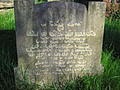
I wonder what happened to the many items that Isabella used. Do some still exist and are some still in use somewhere (I am not aware of any being in museums)?  I think it would be quite nice to hold an instrument she actually used but this is a fancy. I will leave the final word to Isabella through her memorial. Part of the inscription on her grave is quite poignant. I will not quote it in full as it is unreadable in parts but the flavour is there. 

And his wife and fellow worker in many of his literary enterprises Isabella Mary Mayson 

It was a joint enterprise that worked and even all these years later in a rapidly changing world, is the byword for Victorian attention to detail and thoroughness in preparation. We may have Nigella and Delia and Jamie and Gordon but nothing in my view beats Isabella and her famous book.

Stuart Miller-Osborne


For all the news, go to our Newsletter at www.hungerfordarcade.co.uk

  
Share

Hungerford Arcade More Ghostly Goings On

Our wonderful author, Stuart Miller Osborne, is fascinated with Hungerford Arcade and our ghosts, which inspired him to write this fascinating article.  Hope you all enjoy it as much as I did.
Rita
I
read with interest the front page article in a recent edition of
the Newbury Weekly News about ghostly happenings at
the Hungerford Antiques Arcade.
It
did not surprise me that a ghost had been witnessed by the staff as
although I have never seen a ghost at the Arcade, I have noticed an
incredible silence and stillness in parts of the building which can
be sensed even on busy days.
This
is, in my view, most evident in the right hand passage near the unit
that sells postcards. I stood there a few weeks ago and the silence
and stillness of the area was very noticeable. 
Knowing
of the history of the building, I am not surprised if there are ghosts
that do not leave the premises at closing time.
Some
people say that there are ghosts all around us which, to some extent, I
agree with. As with many people, I sit on the wall as to whether
hauntings actually occur or not. Although, if I was pressed, I would
say that I do believe that hauntings occur.
One
has only to visit the nearby Littlecote House and the rooms made
famous by our friend Wild William Darrell to witness the heavy
atmosphere. Indeed, last summer I was chatting to a South African couple
who knew nothing about Wild William’s deeds and the subsequent
haunting, remarked to me of the cold and heavy atmosphere in the
bedchamber and in the nearby chapel. 
In
connection with the report in the local paper, I thought it would be
of interest to explore three recent hauntings. 
I
have visited the site of two of these hauntings and have researched
the other one which is the famous Borley Rectory in Essex.
The
Haunting at the Borley Rectory 
    
Although
I have been in the area of Borley, I have not had occasion to visit
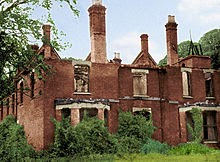
the rectory as sadly, after a fire in 1939, it was demolished in1944.
I
have checked modern photographs of its site and little or nothing
remains. Locals still report odd happenings although in this
day and age, these reports may be for publicity only.
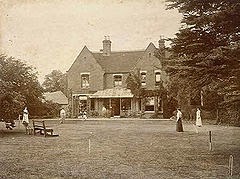
The
rectory was a Victorian mansion built in 1862 in the Gothic style. In
its time it became known as the most haunted house in England and was
visited by the famous ghost hunter, Harry Price (1881-1948) in the
late 1920s.  An account of his investigation was published in the
Daily Mirror shortly afterwards, adding further to the notoriety of
the building. 
In
short, the first account of a haunting occurred in 1863 when
unexplained footsteps were noted and soon there were reports of
headless horsemen and other odd sightings.
In
1900, the four daughters of the then rector Henry Dawson Bull, saw what
they believed to be the ghost of a nun who disappeared when they
approached her.
When
Henry Dawson Bull died in June 1928, the rectory became empty for a
while but in the October of that year, the Reverend Guy Eric Smith
moved into the building with his wife and that was when the fun
really began.
.
One
day, Mrs Smith was cleaning a cupboard when she found the skull of a
young woman wrapped in brown paper and a number of unexplained
incidents occurred which thoroughly unnerved the couple who left the
rectory in July 1929.
However, in the period before they vacated the building, the couple had
contacted the Daily Mirror and in turn Harry showed up and he
immediately witnessed all kinds of hauntings such as poltergeists and
ghostly messages being tapped out on mirrors. 
This
said, as soon as Harry left the rectory, some of these occurrences
mysteriously ceased which made Mrs Smith suspicious of what Harry had
really witnessed and what he had instigated himself.
But
something (apart from the publicity) must have forced the couple
to leave in 1929 and one must also take into account their faith
which they must have turned to..
Later
accounts of hauntings at the rectory were later discredited as a
cover story for an illicit sexual affair but something rather odd
happened in 1943.
On
the 27th of February 1939, the new owner of the
rectory a Captain Gregson was unpacking boxes in the hallway when he
accidentally knocked over an oil lamp which set fire to the building
and it was left a ruin. This is where our friend Harry comes in
again.
A
Miss Williams from the nearby Borley Lodge contacted him and noted
that she had witnessed the ghostly figure of a nun at an upstairs
window.
So
Harry being Harry, came to the rectory once more and conducted a dig
in the cellars and discovered two bones believed to be part of the
remains of a young woman. 
There
was a lot of fun and games at the time and the poor woman’s remains
had to be given a Christian burial in the Liston churchyard after the
Borley Parish took notice of local gossip which supposed the bones to
be those of a pig.
Although
I am not sure what happened to the unfortunate woman’s skull, and
whether it was buried with the rest of her remains, there was story
researched by Harry about who the woman actually was.
It
appears that she was Marie Lairre, a French nun who left her order
to travel to England to marry a member of the Waldegrave family who
lived at the Borley Manor House. It appears that she was murdered
some time afterwards on the site of the rectory.
There
may be an element of truth to this story as although Harry was not
always to be believed, he did take his ghost hunting seriously and the
earlier report of the ghostly nun in 1900 could not have been
invented by Harry.
I
do believe that the rectory was haunted as too many rational people
(including the Smith’s) reported unexplained phenomena. As with
anything of this nature, people are going to make up stories and if
you are not careful you are going to end up with an episode of Most
Haunted
.
16
Montpelier Road, Ealing W5
For
many years I used to live on the Ealing/Hanwell borders not far from
the little known haunting at the above address. Again, the original
building does not exist having been replaced by a block of flats some
years ago.
The
problems started in 1887 when a twelve year old girl named Anne
Hinchfield threw herself to her death from the tower of the building
without explanation.
This
was followed in 1934 by the suicide of a nursemaid who had previously
thrown her young charge to her death. Again, no reason was given for
this tragedy which makes it much more sinister that the Borley
hauntings. 
The
house was requisitioned towards the end of World War Two and in 1944
a Mr Green and his father visited the house. Mr Green who later wrote
a book about his experience, noted that as he climbed up the seventy
foot tower, it seemed that unseen hands were helping him up the
ladder. 
The
most terrifying part of his story was when he was on the parapet, he received an unexplained urge to step into the garden as if it was
only inches beneath him. He was in the process of stepping over the
parapet when his father saved him. 
Another
unexplained thing also happened later that day. After Mr Green had
recovered his senses, he took a photograph of the house to show to
friends
.
However, when processed, it showed the clear image of a girl aged about twelve
looking out of an upstairs window. 
The
house had such a reputation as a place of evil, it remained empty
for many years with a number of people refusing to live there.
Even
after the house died in the 1970s, there were unexplained smells in
the new flats and odd noises.
I
have visited the site of 16 Montpelier Road on many occasions most
recently in 2012. Although I know the story well, there is heaviness
in and around the flats (my most recent visit was on a hot summer’s
day when everything was light and airy). 
Also, and I noticed this first in the 1970s, was whilst the nearby trees
were full of birds and squirrels, very few (if any), seemed to spend
any real time near the site of this most evil house.
  
Ickenham
Underground Station  
Many
years ago I used to go to college in Uxbridge (indeed this is where I
met my future wife), and I remember being in the pub one evening with
some pals and we ended up talking about ghosts. It was then I was
told that Ickenham Underground Station was haunted. 
At
the time I thought that I was the butt of a joke, but nevertheless I
researched it for fun and yes, what I was told was true.
It
appears that from the 1950s onwards, the ghost of a woman wearing a
red scarf was seen on numerous occasions. My researches indicated
that near the end of one of the platforms a woman fell onto the
tracks and was electrocuted.
When
seen, the woman appears to wave to others on the platform to attract
their attention before disappearing.
I
have visited Ickenham Underground Station on odd occasions over
the last thirty years and have witnessed nothing although, I have
noticed an unusual silence (as with the Arcade) at the Uxbridge end of
the platforms (this is where I believe the accident/suicide
occurred).
There
is no real reason for anybody to make up a story about a haunting at
a suburban tube station and also, there have been numerous witness
accounts. 
I
tend to believe this one. Nobody has made a big fuss about the story
and it has yet to have more than a passing reference in the media.
The
next time you are in the Arcade, do not look for ghosts (as it is
unlikely you will see them) just let your senses take over and try to
feel a possible presence even if it is a subtle change in the
temperature of the air or an unusual stillness or silence.
You
might just sense something that you cannot rationally explain.
Do
not however be alarmed, as all you are doing is connecting with
somebody from a previous year who,for whatever reason, has not moved
on.  
Stuart Miller-Osborne
For all the latest news, go to our Newsletter at www.hungerfordarcade.co.uk
Share